Oil Tanker M/T Eureka Hijacked off Yemen, Raises Alarm Over Return of Piracy Threat
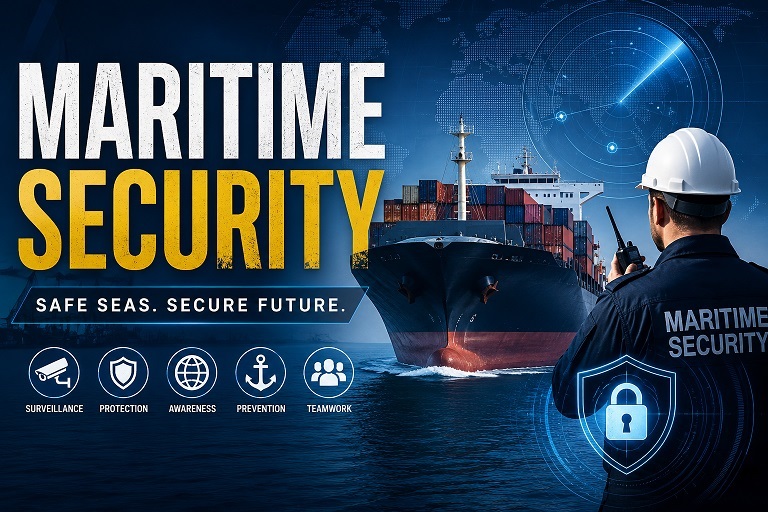
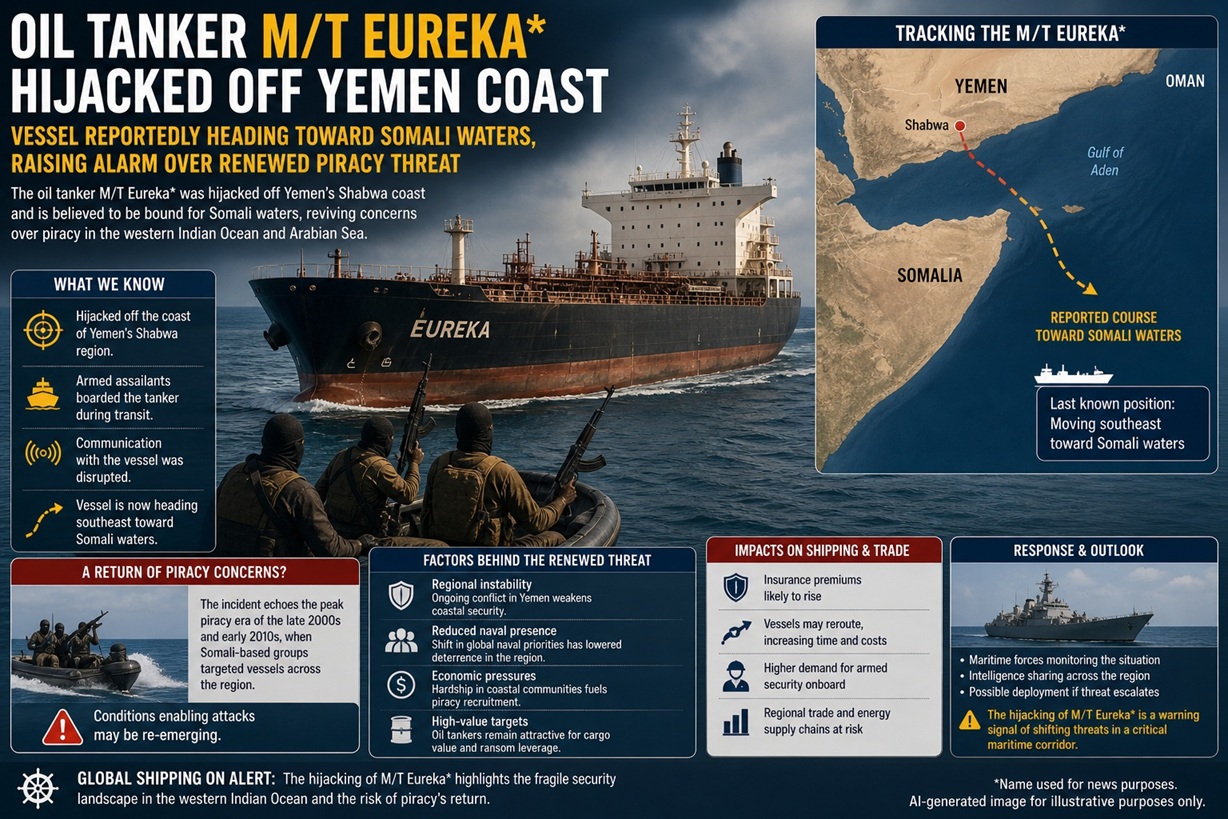
An oil tanker identified as M/T Eureka has reportedly been hijacked off the coast of Yemen’s Shabwa region and is now believed to be heading toward Somali waters—triggering renewed concerns over a resurgence of piracy-style threats in the western Indian Ocean and Arabian Sea.
The incident marks a worrying shift in regional maritime security dynamics, where geopolitical instability and opportunistic criminal activity appear to be converging.
Hijacking Near a High-Risk Corridor
The vessel was intercepted in waters off Yemen’s southeastern coast, an area already under heightened risk due to its proximity to key shipping lanes connecting the Gulf of Aden and the Arabian Sea.
Initial reports suggest:
- Armed assailants boarded the tanker during transit
- Communication with the vessel was disrupted shortly afterward
- The ship altered course away from its original route
Maritime tracking data now indicates the tanker is moving southeast toward waters historically associated with Somali piracy activity.
A Dangerous Echo of Past Piracy Waves
The development has drawn comparisons to the peak piracy era of the late 2000s and early 2010s, when Somali-based groups carried out high-profile hijackings across the region.
While piracy incidents had significantly declined over the past decade due to:
- International naval patrols
- Onboard armed security teams
- Coordinated maritime surveillance
…this latest event suggests that conditions enabling such attacks may be re-emerging.
Drivers Behind the Renewed Threat
Security analysts point to several overlapping factors contributing to the resurgence:
1. Regional Instability
Ongoing conflict in Yemen has weakened coastal security, creating gaps that can be exploited by armed groups.
2. Reduced Naval Presence
A shift in global naval priorities may have reduced deterrence levels in parts of the Indian Ocean.
3. Economic Pressures
Local economic hardship in coastal regions has historically fueled piracy recruitment and support networks.
4. High-Value Targets
Oil tankers remain attractive targets due to their cargo value and potential ransom leverage.
Implications for Shipping and Trade
The hijacking of M/T Eureka is likely to have immediate ripple effects across the maritime industry:
- Insurance premiums may rise, particularly for vessels transiting near Yemen and Somalia
- Shipowners could reroute vessels, increasing voyage times and costs
- Demand for armed security personnel onboard vessels may increase
- Regional ports and energy supply chains could face renewed uncertainty
For countries like India, heavily reliant on energy imports via these routes, the incident adds another layer of vulnerability to already strained maritime corridors.
Industry and Naval Response Expected
Maritime security agencies and international naval forces are expected to:
- Monitor the vessel’s movement closely
- Coordinate intelligence-sharing across the region
- Potentially deploy assets if the situation escalates
However, the success of any intervention will depend on the vessel’s location, the intent of the hijackers, and the speed of coordinated response.
The Bottom Line
The hijacking of M/T Eureka is more than an isolated incident—it is a warning signal of a shifting threat landscape in one of the world’s most critical shipping regions.
As geopolitical tensions intersect with maritime vulnerabilities, the western Indian Ocean may once again face the re-emergence of piracy risks, challenging global trade security and forcing the industry to adapt quickly.