Weekly Marine Intelligence & Fleet Update
REGULAS
SHIPPING NEWS
Global Market Overview — Week Ending 21 July 2026
The global shipping market this week is navigating a period of post-conflict recalibration. Crude tanker rates, which surged to historic levels during the US–Iran strait crisis in Q2 2026, are now on a corrective downward trajectory as transit conditions through the Strait of Hormuz partially normalise. VLCC TD3C earnings remain well above their 52-week average but have shed approximately 29% from their wartime peak, settling at approximately $286,500/day TCE on the AG–China benchmark route.
The dry bulk sector has delivered a notably positive week. Capesize vessels led the charge, with the Baltic Capesize Index (BCI) advancing to 4,655 — a gain of 555 points week-on-week — driven by robust iron ore demand from China and strong Atlantic Basin coal movements. The broader BDI composite is estimated at approximately 1,980 points, with Panamax also holding firm at BPI 2,253.
Bunker markets softened across Asian ports this week as crude oil prices retreated on a combination of OPEC+ supply signals and easing geopolitical risk premium. Singapore VLSFO is now trading around $645/MT, down from the $670–680 range seen in late June 2026. This reduction provides a modest but welcome cost relief for fleet operators currently on Cape of Good Hope diversions.
On the geopolitical front, a grave development demands immediate operational attention: Houthi forces resumed attacks on commercial shipping in the Red Sea for the first time since 2024. Two Liberian-flagged vessels were targeted on 6 and 7 July respectively, with one — the Eternity C — sinking by 9 July. Full details are covered in Page 12. Fleet managers are advised to maintain Cape diversion protocols until UKMTO and MARAD advise otherwise.
The S&P market saw moderate activity, highlighted by the confirmed sale of the 2009-built Aframax M/T P. Sophia at $35.65M, reflecting continued firm asset values for mid-age tankers despite the rate correction. Record crude tanker newbuilding contracting continued — H1 2026 saw 407 contracts, nearly three times H1 2025 volumes.
Bunker Prices — as of 18 July 2026
| Port | VLSFO (USD/MT) | LSMGO (USD/MT) | W-o-W Change |
|---|---|---|---|
| Singapore | 645 | 868 | ▼ −18 VLSFO / −12 MGO |
| Fujairah | 791 | 895 | ▼ −14 VLSFO / −8 MGO |
| Colombo | 658 | 882 | ▼ −12 VLSFO / −10 MGO |
| Mumbai | 662 | 886 | ► Flat / −5 MGO |
| Chennai | 666 | 890 | ► Flat / −4 MGO |
Crude Oil & Market Context
Bunker fuel prices across Asian and Middle Eastern ports have softened this week in response to a slide in crude oil benchmarks. Brent crude is currently trading in the $72–75/bbl range, having shed approximately $4–5/bbl from the elevated levels that prevailed during the peak of US–Iran tensions in May–June 2026. The post-conflict de-escalation premium has gradually unwound as the interim agreement between Washington and Tehran showed signs of holding.
OPEC+ continues to manage supply deliberately. The group’s latest communiqué reaffirmed existing output targets, with no immediate signal of accelerated production increases despite pressure from some member states seeking to capitalise on the prior price spike. This controlled supply backdrop is providing a floor under crude prices, limiting a sharper bunker cost decline.
Singapore remains the most competitively priced major bunkering hub, and the $645/MT VLSFO figure represents the lowest level at the port since early May 2026. Fujairah commands a premium over Singapore — currently around $146/MT on VLSFO — reflecting the geopolitical risk premium still embedded in Gulf prices and higher logistics costs for fuel supply to the UAE port.
Indian subcontinent ports (Mumbai, Chennai, Colombo) are trending broadly in line with Singapore with slight premiums, typical of their historical differential structure. Fleet operators with vessels transiting the Indian Ocean should note that the Singapore–India differential remains operationally manageable at under $25/MT on VLSFO.
Scrubber spreads (VLSFO vs HSFO) remain around $70–80/MT in Singapore, continuing to offer meaningful payback periods for fitted vessels, though investment economics are recalculated cautiously given rate volatility.
Tanker Freight Rates — Week Ending 18 July 2026
| Vessel Type | Route / Benchmark | WS Rate | TCE (USD/day) | W-o-W Trend |
|---|---|---|---|---|
| VLCC | AG → China (TD3C) | WS 294 | $286,500 | ▼ −29% from Jun peak |
| Suezmax | Nigeria → UKCT (TD20) | WS 145 | $117,481 | ▼ Easing |
| Aframax | Cross-Mediterranean | WS 185 | $62,000 | ► Stable |
| LR2 | AG → Japan (TC1) | WS 140 | $45,000 | ► Stable |
| LR1 | AG → Japan (TC5) | WS 155 | $38,000 | ▲ Firming |
| MR | AG → Japan (TC12) | WS 210 | $25,000 | ► Steady |
Arabian Gulf / China Basin
VLCC earnings, though down sharply from their wartime peak of approximately $404,000/day recorded in May 2026 during peak Strait of Hormuz disruption, remain substantially elevated on a historical basis. At $286,500/day, TD3C earnings sit approximately 44% above the 12-month average. The gradual reopening of the strait has allowed a controlled resumption of Gulf loadings, reducing the extreme scarcity premium that characterised Q2. Charterers are moving cautiously — fixtures are being concluded on a voyage-by-voyage basis with minimal forward coverage.
LR2 and LR1 clean product rates from the AG are holding relatively firm on restocking demand from East of Suez importers.
Atlantic Basin
Suezmax rates remain elevated on the West Africa–Europe axis, with the TD20 route yielding TCE of $117,481/day. This reflects tight cross-Atlantic tonnage availability as many Suezmax operators capitalised on the elevated crude arbitrage flows via the Cape of Good Hope. The Atlantic Aframax market (Cross-Med, Black Sea) is stable in the WS 175–195 range, supported by steady Mediterranean refinery demand and Black Sea crude export flows.
MR product tankers are steady with TC2 (Cont/USAC) and TC14 (USAC/Cont) routes maintaining modest but positive TCE contributions in the $20,000–27,000/day range.
Dry Bulk Earnings — Week 28, ending 18 July 2026
| Segment | Daily Earnings (USD/day) | Sub-Index | W-o-W Change |
|---|---|---|---|
| Capesize (180K DWT) | $38,711 | BCI: 4,655 | ▲ +$4,218 (+12.2%) |
| Panamax (82K DWT) | $18,500 | BPI: 2,253 | ▲ +$320 (+1.8%) |
| Kamsarmax (82K DWT) | $17,200 | BKSI: 2,090 | ► +$80 (+0.5%) |
| Supramax / Handymax (58K DWT) | $13,800 | BSI: 1,195 | ▼ −$150 (−1.1%) |
Iron Ore
Iron ore flows have been the primary driver of the Capesize rally this week. Chinese steel mills have resumed aggressive restocking following a period of cautious inventory management in Q2. Brazilian exports from Vale’s northern terminals (Ponta da Madeira) have recorded strong loading volumes, contributing to elevated C3 (Tubarao–Qingdao) fixture activity. Australian ore shipments from Port Hedland and Dampier are also running at near-capacity levels, supporting the Pacific round-voyage C5TC at approximately $38,711/day.
Coal & Grain
Atlantic thermal coal demand remains a supportive factor, with European utilities continuing to manage their coal inventories ahead of the winter season. Richards Bay and Colombia loadings are active. Panamax grain markets out of the US Gulf and South America are seasonal but holding — Argentine corn exports are contributing meaningfully to South Atlantic Panamax demand.
Supramax / Handymax
The smaller segments are experiencing modest softening this week. Supramax earnings at $13,800/day remain profitable but the segment faces headwinds from slower minor bulk demand in Southeast Asian markets, particularly fertiliser and bagged cement movements.
Notable S&P Transactions — Week of 13–18 July 2026
| Vessel Name | Type | DWT | Built | Price (USD M) | Buyer Region |
|---|---|---|---|---|---|
| M/T P. Sophia | Aframax Crude | 105,071 | 2009 | $35.65M | Undisclosed |
| MR NB Slot (47,499 DWT) | MR Product/Chem | 47,499 | NB / 2029 del. | $6.25M | Undisclosed |
| Undisclosed VLCC | VLCC Crude | ~300,000 | 2012 | ~$80M | Middle East |
| Undisclosed Suezmax | Suezmax Crude | 158,000 | 2014 | ~$58M | Greek |
| Undisclosed MR | MR Product | 50,000 | 2016 | ~$34M | European |
Market Commentary
The S&P tanker market delivered moderate but meaningful activity in the week of 13–18 July 2026. The standout confirmed deal is the sale of Performance Shipping’s M/T P. Sophia (Aframax, 105,071 DWT, 2009-built), concluded at $35.65M gross. This transaction is a useful valuation benchmark: 17-year-old Aframax tonnage at this price level confirms that the market continues to price in elevated earning expectations underpinned by the rate environment of the past 18 months.
TOP Ships Inc. concluded the sale of a newbuilding slot — a 47,499 DWT MR product/chemical tanker contracted with Guangzhou Shipyard International, with 2029 delivery — for approximately $6.25M. This represents the sale of a position in a shipbuilding contract rather than a vessel itself, a structure that has become more common as owners seek liquidity from forward orderbook exposure.
Newbuilding contracting at record pace in 2026 has not dampened secondhand appetite: owners appear to be purchasing secondhand tonnage to cover near-term revenue while awaiting NB deliveries. H1 2026 saw 407 new tanker contracts placed globally — nearly three times the 139 contracts placed in H1 2025 — with Chinese yards capturing approximately 82% of crude tanker contracted capacity. Korean yards are commanding premiums but remain competitive for LNG-ready tonnage.
Demolition Market
Demolition activity remains extremely muted. With tanker earnings still well above operating costs, owners have little incentive to send even the oldest vessels to the breakers. Scrap prices in the Indian subcontinent (Alang) remain in the range of $420–440/LDT for tankers, but the volume of tankers submitted for recycling year-to-date is among the lowest in a decade.
Incident 1 — Machinery: Engine Room Fire, MV Stolt Magnesium
Date: 14 July 2026 | Location: Arabian Sea, approx. 50 nm off Oman coast
What Happened: The chemical/product tanker MV Stolt Magnesium suffered a serious engine room fire while underway in the Arabian Sea. The fire was preceded by the explosion of an unidentified external object (believed to be a projectile or drone) in the vicinity of the machinery space. The blast created an entry point that triggered a rapid fire event inside the engine room. All crew members were accounted for and safely mustered. Emergency towing and firefighting support was mobilised. The vessel was subsequently brought under control and escorted to a safe anchorage.
Root Cause (Preliminary): Structural breach of the engine room boundary caused by external explosive force, followed by ignition of flammable materials (fuel lines, oil residue) in the confined space. The proximity of the Arabian Sea location to the conflict zone warrants a war-risk and piracy dimension to the investigation.
Lessons Learned:
- Fixed fire detection systems must be maintained at operational readiness at all times — the rapid initial response was aided by immediate alarm activation.
- Crew fire drills must include scenarios involving simultaneous hull breach and fire — standard fire scenarios do not simulate this compound event.
- Vessels transiting the western Arabian Sea must maintain heightened bridge watch, with CCTV surveillance of deck and funnel areas active at all times.
Incident 2 — Deck/Navigation: Bulk Carrier MV Luni Breaks in Two
Date: 14 July 2026 | Location: Bandar Abbas Port, Iran
What Happened: The bulk carrier MV Luni, owned by Mersin-based Lora Shipping, broke in two amidships while at berth at Bandar Abbas Port, Iran, and partially sank. The exact cause is under investigation. All crew members were safely evacuated prior to the vessel breaking apart.
Root Cause (Preliminary): Hull structural failure — likely a combination of factors including potential hogging stress from improper cargo loading/distribution, known structural fatigue in older bulk carrier frames, and possible pre-existing hull damage. Port metallurgical surveys are underway.
Lessons Learned:
- Cargo loading sequences must be rigorously calculated using approved loading instruments and must remain within the bending moment and shear force limits at all stages of loading and discharging.
- Hull inspection records must be kept fully updated — any deferred Class condition items related to structural surveys are a red flag that demands urgent action.
- Chief Officers must conduct pre-load structural assessments and formally report any concerns to the Master and Technical Superintendent before commencing cargo operations.
Top PSC Deficiency Categories — Q1 2026 Trend (Source: DNV / Paris MOU)
| Deficiency Category | % of Total Detentions | Trend vs Q1 2025 |
|---|---|---|
| ISM Code / Safety Management | 28% | ▲ Increasing |
| Fire Safety Appliances & Equipment | 22% | ▲ Increasing |
| Life-Saving Appliances (LSA) | 18% | ► Stable |
| Navigation / Bridge Equipment | 14% | ► Stable |
| MARPOL / Pollution Prevention | 10% | ▼ Slight decrease |
Paris MOU & Tokyo MOU Highlights
In Q1 2026, DNV-classed vessels recorded 64 PSC detentions globally — a 23% increase over the 52 detentions recorded in Q1 2025. This trend is consistent with broader Paris and Tokyo MOU data, where Container vessels, Bulk Carriers, and General Cargo ships accounted for approximately 83% of all detentions. It is important to note that this rise reflects increased inspection intensity as much as deteriorating vessel condition — PSC authorities, particularly in the Paris and Tokyo MOU regions, have significantly expanded their officer capacity and digital inspection tools in 2026.
The Tokyo MOU’s 2026 Annual Report released earlier this year flagged fire safety and ageing ship structures as the two areas of highest systemic concern, describing them as “leading indicators of PSC compliance pressure.” A disproportionate number of detained vessels were over 15 years of age, underlining the heightened scrutiny applied to older tonnage.
Class Society Circular — DNV Technical Update
DNV has issued a technical circular (reference: DNV-CL-2026-028) reminding operators that any structural repair or modification to bulk carrier hatch covers must be approved by the attending Class Surveyor prior to commencement of work. The circular follows a review of recent incidents — including structural failures at hatch coaming welds — and requires that modified sections be subject to enhanced Non-Destructive Testing (NDT) before the next port entry.
Flag State Advisory
The Liberian Registry has issued a Flag State Advisory (FSA No. 2026-14) reminding all Liberian-flagged vessel Masters and operators that MARPOL Annex VI SEEMP Part III (enhanced fuel oil consumption data reporting) must be fully operational and verified by the end of Q3 2026. Vessels that cannot demonstrate compliant SEEMP data collection systems will face difficulties at their next scheduled annual or intermediate survey.
CII / EEXI — 2026 Operational Obligations
The 2026 CII reduction factor of 11% relative to the 2019 baseline is now in full force and operational effect for all vessels of 5,000 GT and above covered under MARPOL Annex VI. This is the most stringent annual target to date and operators must review their vessel-by-vessel CII rating projections for the full calendar year 2026 now — mid-year is the critical checkpoint at which corrective operational measures can still materially influence the final rating. Vessels rated D or E at year-end face mandatory corrective action plans (SEEMP Part III) that must be approved by Flag State before the next voyage.
The EEXI (Energy Efficiency Existing Ship Index) technical requirement has been in force since January 2023 and continues to impose power limitation (EPL/ShaPoLi) obligations on a significant portion of the global fleet. Operators must ensure that EPL seals remain intact and that EPL values are accurately reflected in all voyage planning calculations. Class surveyors are routinely checking EPL compliance as part of annual surveys.
MEPC 84 Outcomes (May 2026)
The 84th session of the Marine Environment Protection Committee (MEPC 84), held in May 2026, adopted draft amendments to Regulation 27 of MARPOL Annex VI addressing enhanced AER (Annual Efficiency Ratio) metrics and SEEMP data granularity requirements. These amendments are expected to enter into force in early 2028 following the standard 16-month adoption-to-enforcement timeline. Fleet management teams should begin preparatory assessment now.
EU ETS — Full Implementation 2026
From 1 January 2026, the EU Emissions Trading System applies at 100% coverage to all voyages between EU ports, and 50% coverage for voyages between EU and non-EU ports, for vessels of 5,000 GT and above. Shipping companies must surrender EU Allowances (EUAs) equivalent to verified CO₂ emissions. The current EUA carbon price is approximately €55–62/tonne, imposing a meaningful surcharge on EU-connected voyages. Operators must ensure that their Monitoring, Reporting and Verification (MRV) documentation is current and that EUA accounts are adequately funded ahead of the April 2027 compliance surrender deadline.
FuelEU Maritime
FuelEU Maritime entered into application from 1 January 2025, requiring a 2% reduction in the annual average GHG intensity of energy used on board, applicable to voyages calling EU/EEA ports. The 2025 compliance year data is currently under verification. Operators are advised to review fuel mix optimisation strategies — blending biofuels at EU ports is emerging as the most practical short-term compliance pathway for vessels without alternative fuel capability.
Recent Newbuilding Contracts — July 2026
| Vessel Type | Units | DWT / Size | Shipyard | Shipowner | Value | Delivery |
|---|---|---|---|---|---|---|
| VLCC Crude Tanker | 2 | 320,000 DWT | CSSC Hudong-Zhonghua | Undisclosed Chinese | ~$130M each | 2028–2029 |
| LNG Carrier (174K cbm) | 1 | 174,000 cbm | Hyundai Heavy Industries | TEN Ltd. | ~$218M | Q1 2029 |
| Triple-fuel Capesize Bulker | 20 | ~210,000 DWT | Multiple Korean/Chinese | Vale-chartered owners | Undisclosed | 2028–2030 |
| MR Product Tanker (NB slot sale) | 1 | 47,499 DWT | Guangzhou Shipyard Int’l | TOP Ships Inc. (sold) | $6.25M (slot) | 2029 |
| Suezmax Crude Tanker | 2 | 158,000 DWT | HD Hyundai Heavy | Greek owner | ~$95M each | 2028 |
Market Trends
Crude tanker newbuilding contracting has broken all previous records in 2026. H1 2026 data from BIMCO and Clarkson Research confirms 234 crude tanker contracts totalling approximately 60 million DWT — a figure that eclipses any prior H1 contracting period. Of these, 151 contracts were for VLCCs, highlighting owner confidence in long-term crude demand despite the energy transition narrative. Chinese yards are the primary beneficiaries, capturing 82% of contracted crude tanker capacity.
Korean yards, meanwhile, continue to dominate the premium segment. HD Korea Shipbuilding & Offshore Engineering has already secured 142 vessels worth $16.39 billion year-to-date — including 17 LNG carriers — and has filled approximately 70% of its annual orderbook target by mid-July. Delivery slots at Korean yards for LNG carriers are now fully committed through to Q4 2028, with 2029 slots attracting strong interest.
The LNG carrier segment saw a near-60-vessel ordering haul in H1 2026, pushing the global LNG carrier orderbook to over 400 vessels — representing approximately 50% of the existing fleet. Newbuild LNG carrier prices are currently in the range of $200–220M for a 174,000 cbm conventional carrier, with Korean yards commanding a premium of $5–10M over equivalent Chinese offers.
Main Engine Advisory — Two-Stroke Slow-Speed Operation
Several major engine manufacturers — including MAN Energy Solutions and WinGD — have recently issued updated service advisories relating to cylinder liner wear patterns observed in vessels operating at significantly reduced loads (below 30% SMCR) for extended periods. The pattern, associated with cold corrosion from sulphuric acid condensation on liner walls, is exacerbated in vessels running VLSFO where lubricating oil Base Number (BN) selection can be suboptimal at low temperatures.
Chief Engineers are reminded that when operating at slow steaming conditions below 40% SMCR, cylinder oil feed rate must be adjusted per the manufacturer’s latest guidance — typically a BN 70 or BN 100 cylinder oil is appropriate for VLSFO operations. Liner wear data from scavenge port inspections should be recorded in the Planned Maintenance System (PMS) and any abnormal wear reported to the Technical Superintendent within 72 hours.
Dual-Fuel Engine Technology Update
The dual-fuel (LNG/VLSFO) two-stroke engine market is maturing rapidly. MAN’s ME-GI and WinGD’s X-DF engines now power a combined fleet of over 600 vessels globally, and the operational experience base is providing valuable insights on fuel switching optimization. A key development in 2026 is improved methane slip mitigation technology — new injection timing algorithms have reduced methane slip in the X-DF engine by approximately 30% compared to 2023 variants, significantly improving the well-to-wake GHG profile.
For tankers and bulk carriers currently operating on conventional engines, retrofitting to dual-fuel is technically viable but commercially complex. The payback period at current LNG–VLSFO pricing spreads and CII credit calculations is estimated at 5–8 years for a typical Aframax, which remains a cautious proposition without clearer long-term fuel price signals.
AI-Assisted Predictive Maintenance
A growing number of leading tanker operators — including several in the top 20 global fleets — have deployed AI-driven predictive maintenance platforms that monitor vibration, temperature, and performance data from main engines, auxiliary engines, and cargo pumps in near real-time. Early adopters are reporting 15–25% reductions in unplanned maintenance events and 8–12% reductions in component replacement costs over the first two years of deployment.
Red Sea / Houthi Situation — Current Status
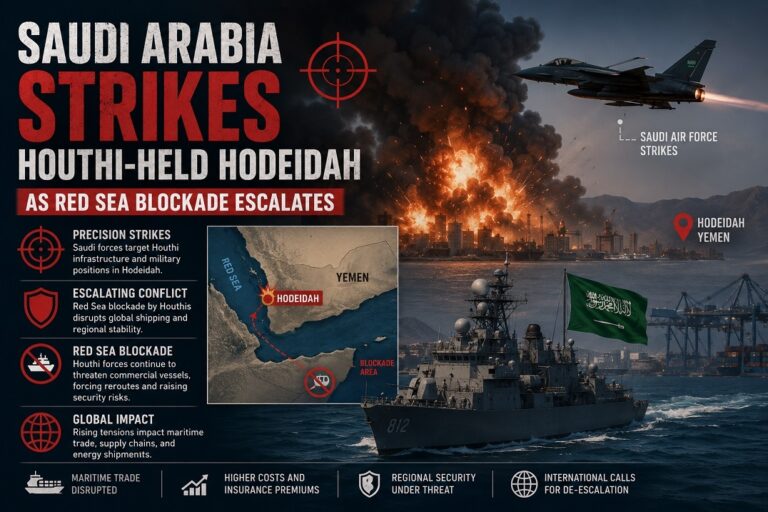
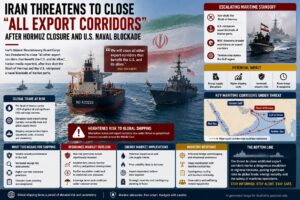
After a period of relative calm in the Red Sea since late 2024, Houthi forces have resumed targeted attacks on commercial vessels in the first week of July 2026. The attacks are assessed to be linked to the 12-day US–Iran conflict that concluded with a fragile interim agreement in mid-June 2026 — Houthi leadership appears to be using maritime strikes to demonstrate operational capability and regional solidarity in the aftermath of Iranian military setbacks.
MV Magic Seas (6 July 2026): Liberian-flagged bulk carrier attacked southwest of Al-Hudaydah, Yemen. The vessel was surrounded and engaged with small arms fire and rocket-propelled grenades (RPGs). No crew casualties reported but the vessel sustained damage.
MV Eternity C (7 July 2026): A near-identical attack on a second Liberian-flagged vessel occurred just 24 hours later. The vessel sustained severe structural damage and sank on 9 July 2026. Crew members were rescued by responding naval assets.
Most major shipping lines continue to maintain their Red Sea avoidance policies, routing all vessels via the Cape of Good Hope. This adds approximately 7–14 days of transit time on typical Europe–Asia routes and 8,000–10,000 additional nautical miles per round voyage, with corresponding increases in bunker consumption and charter hire costs.
Strait of Hormuz — Partial Recovery
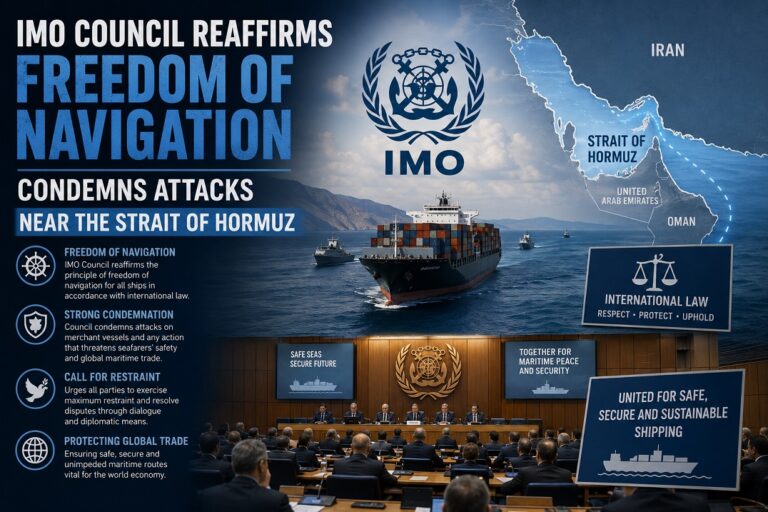
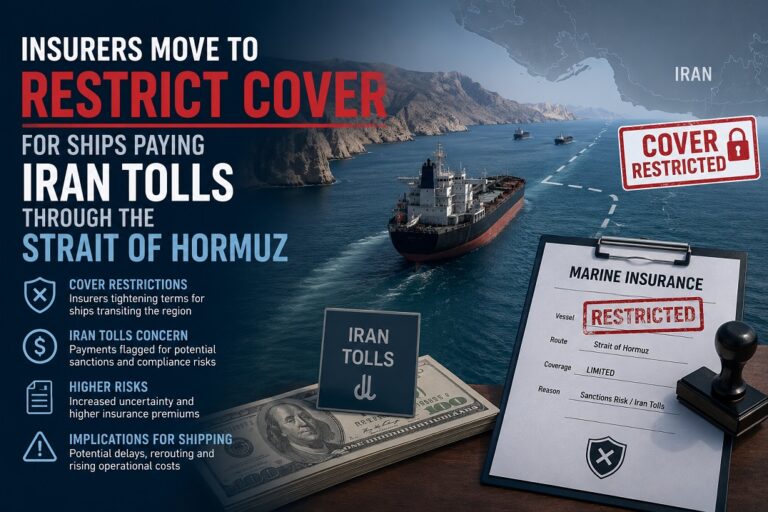
Following the US–Iran interim agreement in mid-June 2026, Hormuz transit conditions have partially normalised. Shipping traffic has recovered but remains well below pre-war levels. Technical negotiations on permanent transit arrangements remain unresolved. War risk insurance premiums for Hormuz transits remain elevated at approximately 0.25–0.45% of vessel value per voyage.
Safe Routing Recommendations — DRS
- All Regulas fleet vessels must route via Cape of Good Hope for any voyage that would otherwise transit the Red Sea or Gulf of Aden.
- Vessels transiting the western Arabian Sea must maintain heightened bridge and deck watch with CCTV surveillance active at all times.
- SSAS must be tested and confirmed operational before entering any high-risk area. Report test to Fleet Director.
- War risk insurance covers must be reviewed and confirmed current for all vessels operating in the Indian Ocean western sector.
- Masters are to report all sightings of suspicious craft, drones, or unusual wake patterns via UKMTO and immediately to Fleet Director.
Case Study: Structural Failure of Bulk Carrier MV Luni at Bandar Abbas Port — July 2026
For the attention of: Masters, Chief Officers, Marine Superintendents, and Technical Managers
Incident Overview
On 14 July 2026, the bulk carrier MV Luni (owned by Lora Shipping, Mersin, Turkey) broke in two amidships while alongside berth at Bandar Abbas Port, Iran. The vessel subsequently partially sank at its berth. The incident occurred without prior dramatic warning events, with the hull fracture propagating rapidly once initiated. Fortunately, the crew — recognising signs of progressive structural distress in the hours before the catastrophic failure — had mustered at muster stations and were evacuated safely before the vessel parted.
Root Cause Analysis
Preliminary investigation, based on survivor testimony and available loading records, points to a compounding series of failures. First, the vessel’s cargo loading sequence did not comply with the approved loading manual, resulting in hogging stress that significantly exceeded permissible limits at the midship section. Second, a port side frame and transverse web frame in the midship region had been subject to a deferred Class repair identified at the previous annual survey. The repair had been postponed pending “next dry-dock.” Third, the combination of an overloaded condition, structural fatigue, and a likely pre-existing crack in the corroded web frame created the critical failure point.
Human Factors
The Chief Officer had expressed verbal concern about the loading sequence to the Master on the afternoon before the failure. The concern was noted but not formally recorded, and cargo operations continued. The Port Agent had communicated charterers’ urgency regarding departure time — creating implicit pressure to accelerate loading. This represents a textbook pressure-driven deviation from safe practice: the combination of commercial urgency, inadequate formal escalation procedures, and a deferred Class item created conditions ripe for catastrophe.
Corrective Actions
- Loading plans must receive written Master’s approval before commencement. No cargo operation shall begin without a fully completed, signed, and counter-signed loading instrument verification.
- Any deferred Class structural item must be formally documented, risk-assessed, and approved by the Technical Superintendent in writing. Verbal acknowledgement is insufficient.
- Chief Officers must have a formal Non-Conformity (NC) reporting mechanism that allows safety concerns to be escalated to Technical Superintendent independently of the Master when necessary.
- Loading stress calculations must be reviewed at each stage of loading, not only at departure condition.
- Red Sea threat is back: Houthi attacks resumed 6–7 July 2026. MV Eternity C sank. Cape of Good Hope routing remains mandatory for all Regulas vessels. Masters must confirm SSAS operational.
- Tanker market correcting from peaks but fundamentally strong: VLCC TD3C TCE at ~$286,500/day — down from wartime highs but 44% above 12-month average. Maintain voyage-by-voyage discipline; avoid locking T/C at current spot premium.
- Capesize surging in Week 28: BCI hit 4,655 with Capesize C5TC earnings at $38,711/day. Iron ore and coal flows driving strong demand. BDI at ~1,980 points.
- Bunker prices easing — Singapore VLSFO at $645/MT: Seize short-window procurement opportunity at Singapore/Colombo. Avoid speculative overlift at Fujairah (premium: $146/MT).
- CII mid-year checkpoint is NOW: With 2026’s 11% reduction factor in force, any vessel projected at D/E rating must initiate SEEMP corrective action this month. Contact Fleet Director and Flag State immediately.
- Stop Work Authority is an absolute duty: The MV Luni case study this week proves that structural concerns must be formally escalated in writing — not verbal. Masters: if in doubt, stop. No exception.
“A vessel under stress gives warning before it breaks. Listen to the ship — she always speaks before she fails.”
— W. McFee, maritime writer. A reminder that our calling demands constant vigilance, professional pride, and an unwavering commitment to safety above all else.