US Port Security Leaders Convene to Counter Irregular Warfare Threats to Maritime Trade
July 2026 | Port Security & Regulatory Desk
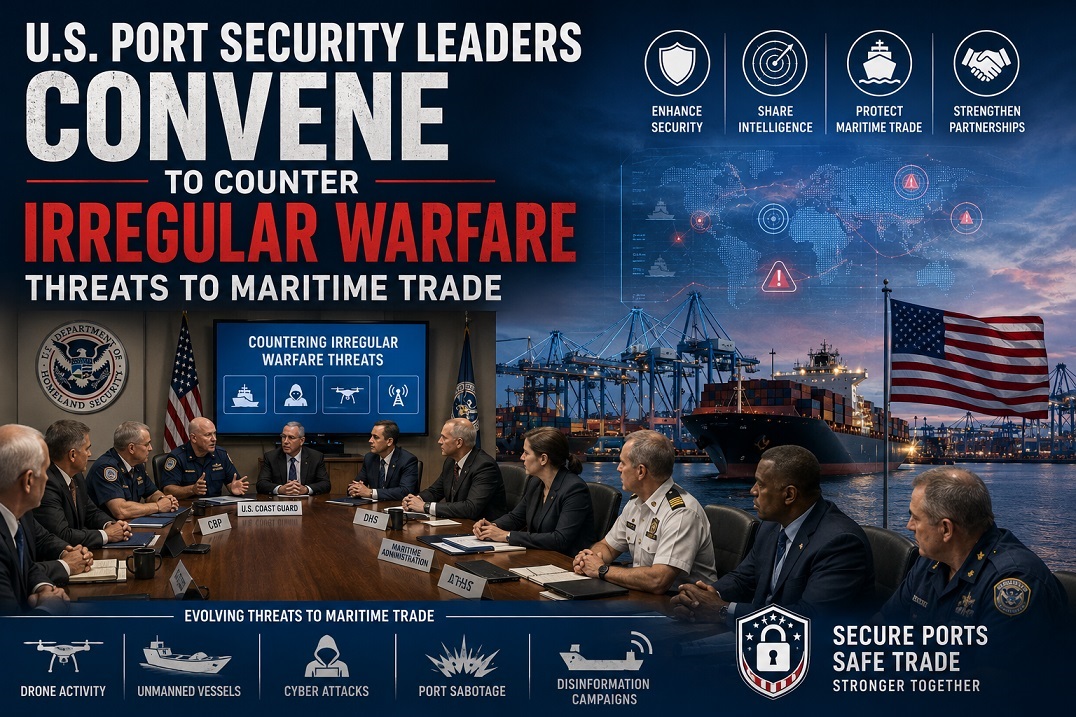
National security officials and maritime industry leaders gathered at Port Miami to discuss strategies for countering irregular warfare threats aimed at U.S. ports and shipping. Hosted by the Irregular Warfare Center, the workshop focused on closing strategic gaps and building stronger public-private coordination against threats that fall outside conventional military or piracy categories, including port sabotage, cyberattacks, and foreign exploitation of commercial logistics networks.
Why Irregular Warfare Is a Port Security Issue
Traditional maritime security planning has tended to focus on piracy, armed robbery, and state-on-state naval conflict. This workshop reflects a shift in emphasis toward a different category of threat, one where adversaries use deniable, below-the-threshold tactics against critical infrastructure rather than open confrontation. For ports, inland waterways, and logistics networks, that includes:
- Physical sabotage of port infrastructure and equipment
- Cyberattacks targeting port operational technology and logistics systems
- Foreign exploitation of commercial supply chains for intelligence or disruption purposes
- Vulnerabilities that span the handoff points between ports, inland waterways, and broader logistics networks
What the Workshop Aimed to Achieve
The stated goal was to identify critical strategic gaps and build a cross-functional network connecting public agencies and private port and shipping operators. This kind of public-private coordination matters because most U.S. port infrastructure and cargo-handling operations are privately operated, meaning that national security agencies cannot address these threats through military or regulatory action alone, they need active cooperation from terminal operators, carriers, and logistics providers.
Relevance Beyond U.S. Ports
While the workshop was U.S.-focused, the categories of threat it addressed, cyberattacks, sabotage, and exploitation of logistics networks, are not geographically confined. Port and terminal operators elsewhere are grappling with similar concerns, particularly as global shipping has become more digitally integrated and as geopolitical tensions in the Gulf, Red Sea, and elsewhere increase the incentive for state and non-state actors to target maritime infrastructure indirectly rather than through open conflict.
Considerations for Fleet and Terminal Operators
- Review cybersecurity posture for any operational technology systems connected to port or terminal operations
- Assess physical security protocols at berths, cargo yards, and equipment storage areas for sabotage vulnerabilities
- Establish clear reporting channels to national or regional maritime security authorities for suspicious activity
- Treat supply chain and logistics network security as a distinct risk category from traditional piracy or war-risk planning
The Bottom Line
The Port Miami workshop signals a broader recognition that maritime security now extends well beyond open-water threats like piracy and armed conflict. Sabotage, cyberattacks, and covert exploitation of logistics networks represent a category of risk that requires close, ongoing cooperation between government agencies and private industry. For port and fleet operators anywhere, this is a useful reminder to fold cyber and infrastructure security into the same risk management framework used for physical and geopolitical threats, rather than treating them as separate concerns.
This article is based on publicly reported outcomes of the Irregular Warfare Center’s Port Miami workshop. Details on specific threat assessments and recommendations were not made public.