Bulk Carrier Collision Near Qeshm Island Leaves One Vessel Severely Damaged; All 23 Sailors Rescued
July 2026 | Maritime Safety & Operations Desk
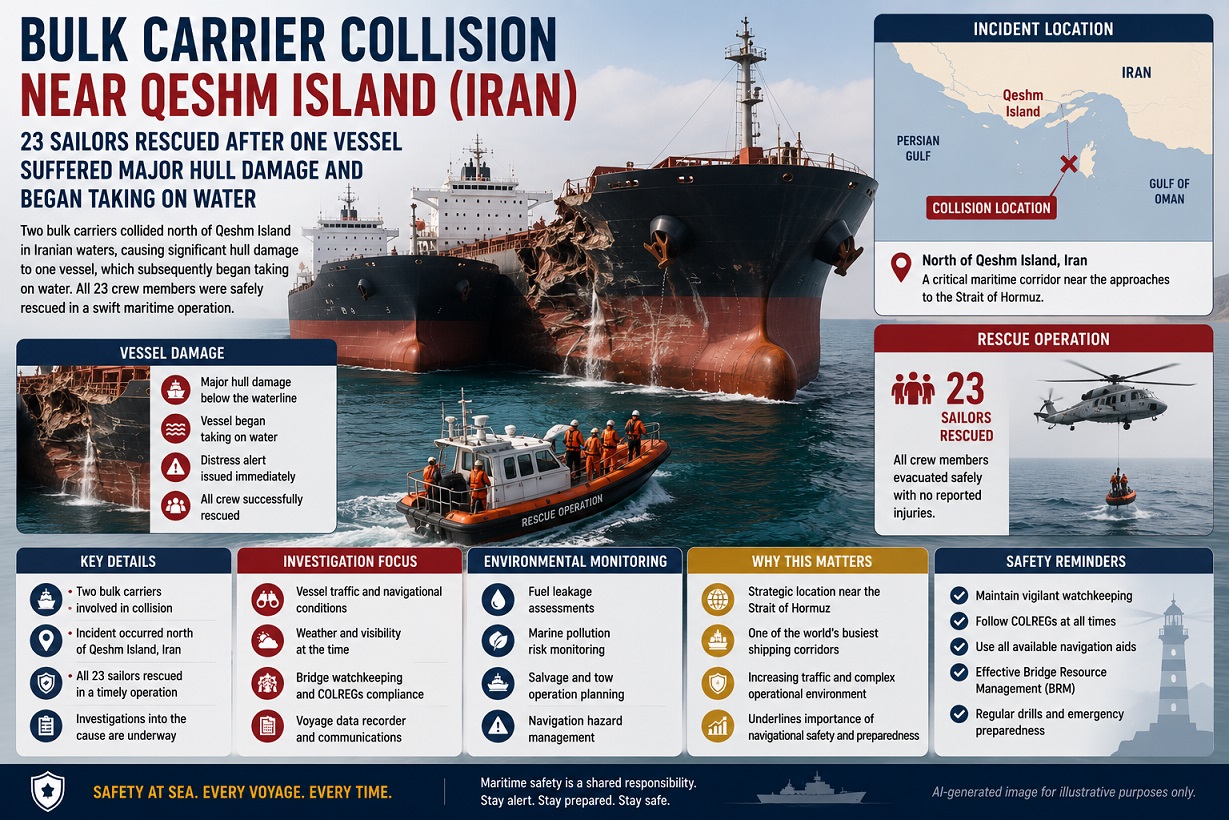
A maritime collision involving two bulk carriers north of Qeshm Island, Iran, has renewed concerns over navigational safety in one of the Gulf’s busiest commercial shipping corridors. The incident resulted in significant hull damage to one of the vessels, which subsequently began taking on water, prompting an emergency rescue operation that successfully saved all 23 crew members onboard.
The collision highlights the operational challenges facing merchant vessels transiting congested waterways in the Gulf, where increasing commercial traffic, heightened security conditions, and demanding navigational environments continue to test maritime safety protocols.
Major Hull Damage Triggers Emergency Response
According to maritime incident reports, the collision occurred north of Qeshm Island—a strategically important location situated near the approaches to the Strait of Hormuz.
Initial assessments indicate:
- Two bulk carriers were involved in the collision.
- One vessel suffered major hull damage below the waterline.
- The damaged vessel subsequently began taking on water.
- Emergency distress communications were transmitted immediately.
- All 23 sailors onboard the affected vessel were successfully rescued.
Authorities have confirmed that there were no reported fatalities or serious injuries among the rescued crew members.
Rapid Rescue Operation Prevents Loss of Life
Maritime rescue teams responded swiftly following the distress alert, evacuating all personnel from the damaged vessel before conditions deteriorated further.
The rescue operation reportedly included:
- Emergency crew evacuation procedures.
- Maritime search and rescue coordination.
- Vessel damage assessments.
- Continuous monitoring of the affected ship’s stability.
- Navigational safety advisories for nearby commercial traffic.
The successful evacuation underscores the importance of emergency preparedness and crew training in responding to maritime incidents within high-density shipping lanes.
Qeshm Island: A Strategic Maritime Corridor
Located near the Strait of Hormuz, Qeshm Island occupies one of the world’s most strategically important maritime regions.
The surrounding waters accommodate:
- Bulk carriers
- Crude oil tankers
- LNG carriers
- Container vessels
- Offshore support vessels
- Regional coastal shipping
Thousands of commercial vessels transit nearby sea lanes annually, making navigational safety a critical operational priority.
The area’s strategic significance has grown further amid recent geopolitical developments affecting Gulf shipping routes and regional maritime security.
Investigations Underway
Maritime authorities have launched investigations into the circumstances surrounding the collision.
Investigators are expected to examine:
- Vessel traffic conditions at the time of the incident.
- Weather and visibility factors.
- Bridge watchkeeping procedures.
- Compliance with the International Regulations for Preventing Collisions at Sea (COLREGs).
- Voyage data recorder information.
- Communications exchanged between both vessels.
At this stage, authorities have not announced the primary cause of the collision.
Environmental Concerns Being Assessed
Given the extent of the reported hull damage, authorities are also assessing potential environmental implications.
Monitoring efforts include:
- Fuel leakage assessments.
- Hull integrity evaluations.
- Marine pollution risks.
- Salvage operation requirements.
- Navigation hazard management.
Depending on the vessel’s condition, salvage specialists may be required to stabilize or tow the damaged ship to a safe anchorage for further inspection and repairs.
Maritime Safety Challenges Continue to Grow
The incident comes at a time when commercial shipping in Gulf waters is already operating under heightened operational conditions resulting from:
- Increased tanker traffic returning to the Strait of Hormuz.
- Elevated maritime security advisories.
- Rising insurance and operational costs.
- Congested commercial shipping lanes.
- Enhanced reporting requirements for vessels transiting regional waters.
Maritime analysts note that alongside geopolitical risks, navigational safety remains a significant operational challenge for global shipping.
Industry Calls for Enhanced Navigational Vigilance
Following the collision, maritime safety experts are reminding operators to reinforce:
- Bridge Resource Management (BRM) procedures.
- Collision avoidance practices.
- Enhanced watchkeeping standards.
- Emergency response preparedness.
- Voyage planning and traffic monitoring protocols.
Regular bridge-team training and adherence to internationally recognized navigational standards continue to play a critical role in preventing incidents within congested waterways.
The Bottom Line
The successful rescue of all 23 sailors following the bulk carrier collision near Qeshm Island is a testament to effective emergency response procedures and maritime coordination. However, the incident serves as another reminder that even routine commercial voyages through strategically important waterways carry significant operational risks.
As investigations continue, the collision highlights the importance of maintaining the highest standards of navigational safety in the Gulf region, where growing vessel traffic, complex operating environments, and evolving geopolitical conditions demand constant vigilance from the global maritime community.