U.S. Strikes Targets in Southern Iran, Triggering Fresh Security Alerts for Gulf Shipping
May 2026 | Maritime Security & Geopolitics Desk
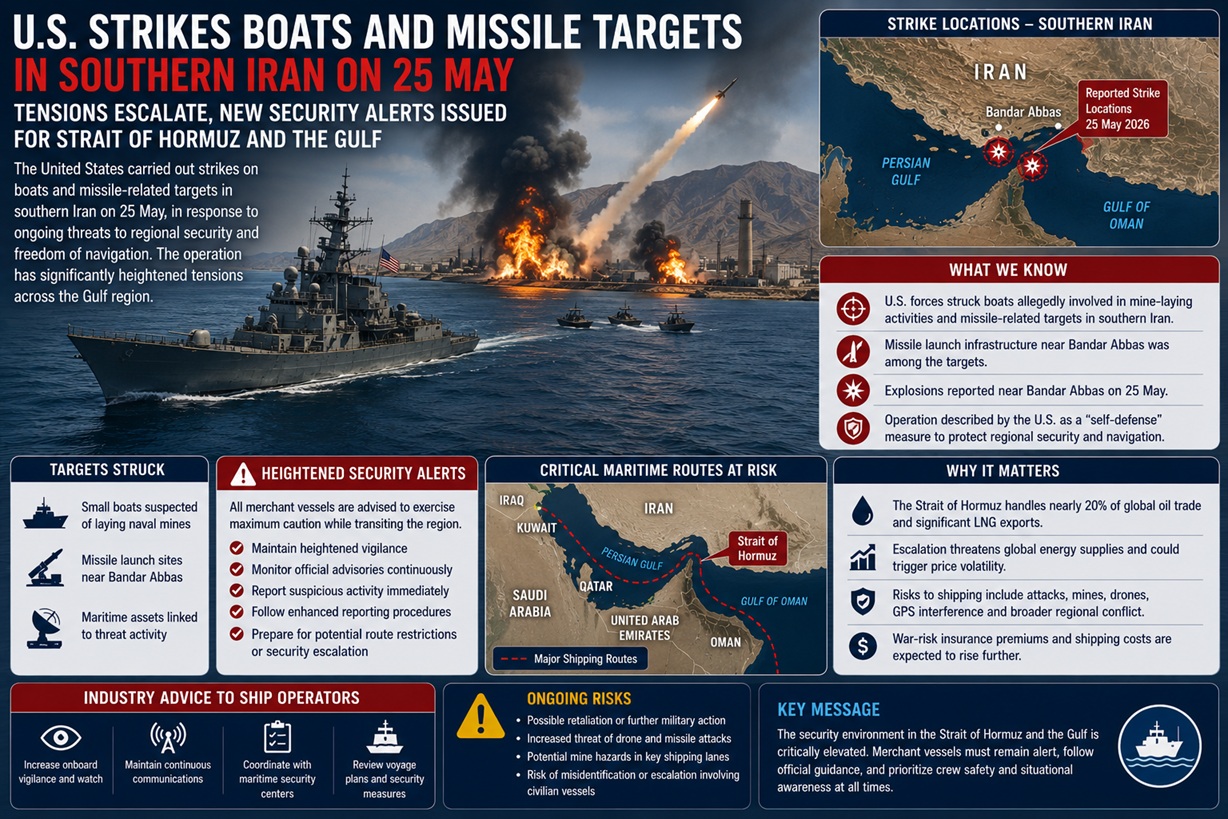
Regional tensions escalated sharply on May 25 after the United States carried out strikes on boats and missile-related targets in southern Iran, prompting renewed maritime-security alerts for merchant vessels operating in the Strait of Hormuz and wider Gulf region.
According to U.S. Central Command (CENTCOM), the operation targeted vessels allegedly involved in mine-laying activity as well as missile-launch infrastructure considered a threat to U.S. forces and regional maritime security.
Strikes Focused on Maritime and Missile Threats
Initial reports indicate the strikes were concentrated around southern Iranian coastal areas near key Gulf shipping corridors.
Targets reportedly included:
- Small boats suspected of laying naval mines
- Missile-launch sites near Bandar Abbas
- Maritime assets linked to regional threat activity
U.S. officials described the operation as a “self-defense” action intended to protect military personnel and commercial navigation routes amid growing instability in the Gulf.
Explosions were reported near Bandar Abbas, one of Iran’s most strategically important naval and shipping hubs.
Merchant Shipping Placed on Heightened Alert
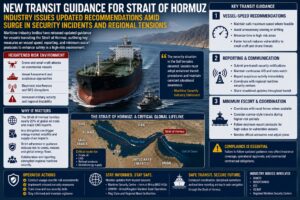
The incident immediately triggered renewed advisories for commercial shipping transiting:
- The Strait of Hormuz
- Gulf of Oman
- Persian Gulf approaches
Maritime-security agencies are warning vessel operators to:
- Maintain maximum vigilance
- Monitor naval advisories continuously
- Follow enhanced reporting procedures
- Prepare for possible route restrictions or security escalation
Industry observers say the strikes have significantly increased concerns over:
- Retaliatory maritime action
- Drone and missile threats to shipping
- Mine-related navigational risks
- Further disruption to commercial tanker traffic
Hormuz Once Again at the Center of Global Risk
The Strait of Hormuz remains one of the world’s most strategically critical maritime chokepoints, carrying:
- Nearly 20% of global oil trade
- Major LNG exports from Gulf producers
- Essential crude flows to Asia and Europe
Any escalation involving the waterway can rapidly impact:
- Global energy prices
- Tanker freight rates
- Insurance premiums
- Supply-chain confidence
Shipping analysts warn that even limited military incidents near Hormuz create disproportionate consequences for maritime trade and energy markets.
War-Risk Premiums Expected to Rise Further
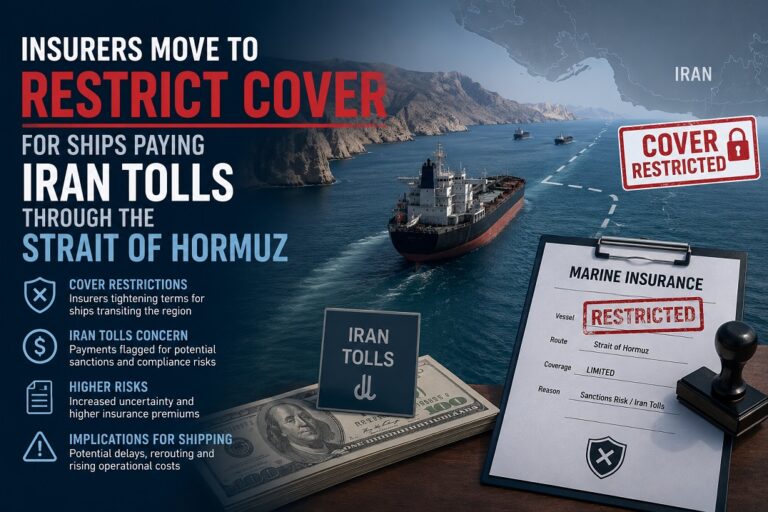
Insurance markets are already reacting to the latest escalation.
Underwriters are expected to:
- Increase Gulf war-risk premiums further
- Tighten voyage approval requirements
- Demand stricter compliance with security guidance
- Reassess exposure for vessels linked to Gulf trade routes
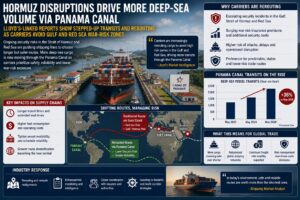
Some charterers and shipowners are also reportedly reviewing:
- Transit timing
- Crew-risk exposure
- Alternative routing options
- Naval escort coordination
Regional Security Situation Becoming Increasingly Volatile
The May 25 strikes add to a growing pattern of instability in Gulf waters, including:
- Vessel attacks and interceptions
- Drone and projectile incidents
- GPS and communications interference
- Naval confrontations and escort operations
The overlap between geopolitical conflict and commercial navigation is forcing shipping operators to function in what many analysts now describe as a “persistent high-threat maritime environment.”
Diplomatic Tensions Likely to Intensify
The strikes also risk complicating ongoing regional diplomacy and ceasefire discussions involving the U.S., Iran, and Gulf states.
Iranian officials condemned the operation, while security experts warned that:
- Additional maritime incidents could follow
- Commercial vessels may face increased scrutiny or interference
- Regional naval deployments are likely to expand further
The possibility of accidental escalation involving civilian shipping remains a major concern for maritime authorities.
The Bottom Line
The U.S. strikes on boats and missile-related targets in southern Iran mark another major escalation in the increasingly volatile Gulf security environment.
For the maritime industry, the message is immediate and clear:
merchant shipping through the Strait of Hormuz is once again operating under elevated geopolitical and military risk, where security threats can rapidly reshape global trade and energy flows.