Hormuz Disruptions Drive Deep-Sea Cargo Toward Panama Canal as Carriers Reroute Around Gulf Risks
May 2026 | Global Shipping & Supply Chain Desk
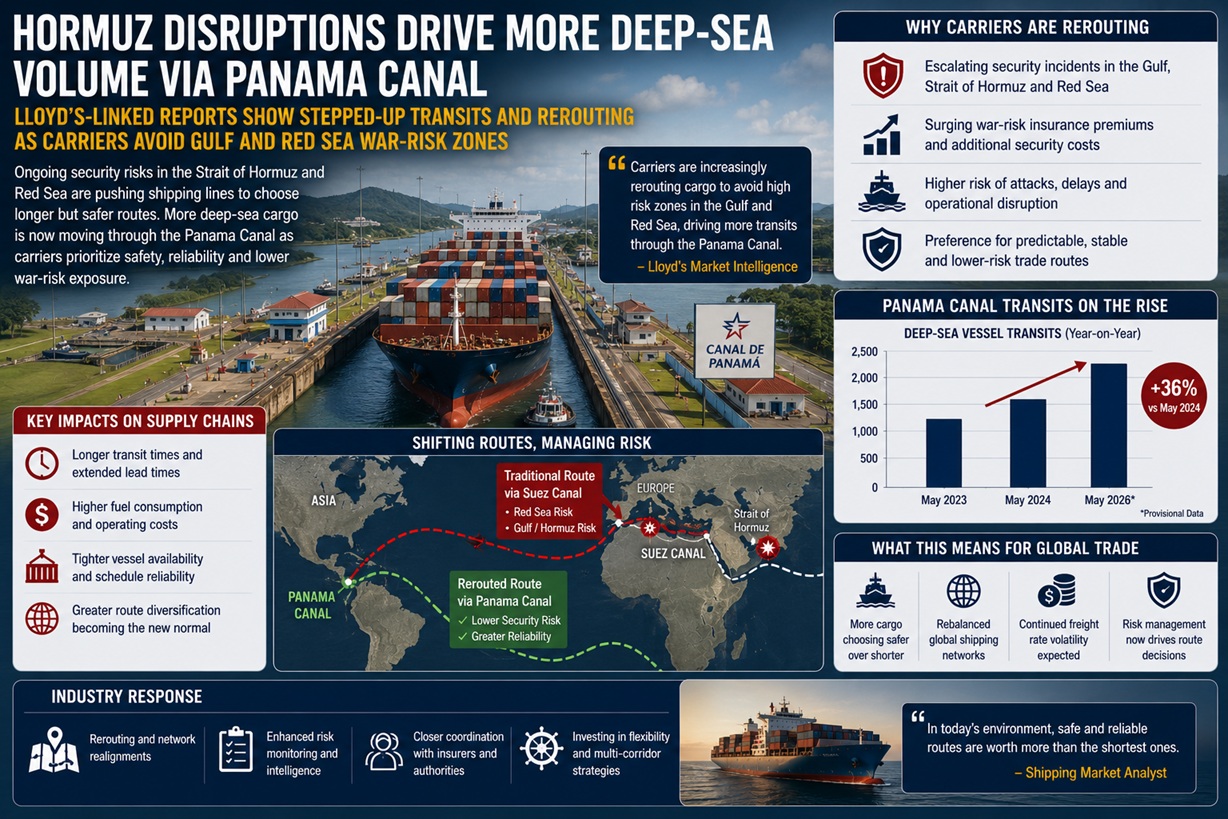
Ongoing security disruptions linked to the Strait of Hormuz and wider Gulf instability are increasingly reshaping global shipping patterns, with a growing volume of deep-sea cargo now being rerouted through the Panama Canal as carriers seek to avoid high-risk zones in the Gulf and Red Sea.
According to Lloyd’s-linked market intelligence and shipping-industry reports, transit volumes through alternative long-haul routes have risen sharply in recent weeks as operators adapt to mounting geopolitical and maritime-security threats across traditional Asia-Europe and Gulf-linked corridors.
Global Shipping Routes Under Pressure
The continued escalation of:
- Gulf security incidents
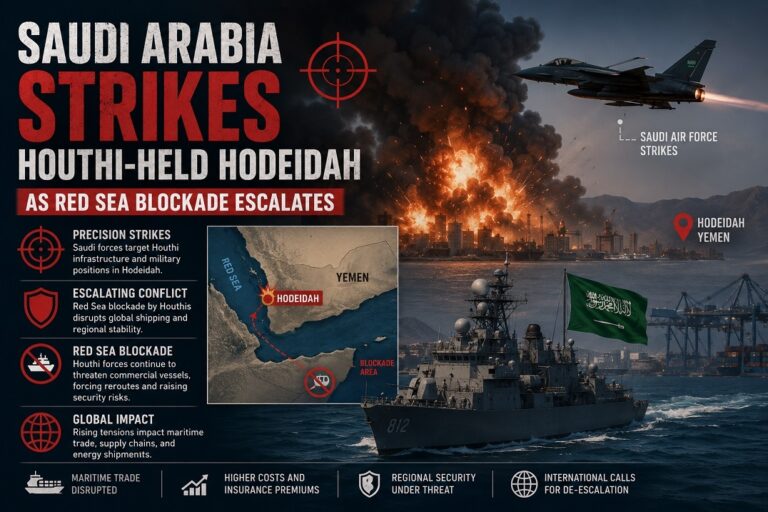
- Red Sea attacks and disruptions
- War-risk insurance surcharges
- Military activity near key chokepoints
…has forced shipping lines to reconsider route economics and operational exposure.
Carriers are increasingly avoiding:
- Strait of Hormuz-adjacent routes
- Southern Red Sea transits
- High-risk Gulf approaches
Instead, some operators are redirecting cargo through:
- The Panama Canal
- Cape of Good Hope alternatives
- Longer Pacific-linked trade corridors
Panama Canal Seeing Increased Strategic Relevance
The Panama Canal is emerging as a critical alternative artery for deep-sea cargo movement as carriers prioritize:
- Predictability
- Lower security exposure
- Reduced war-risk liabilities
Shipping analysts say stepped-up Panama Canal transits reflect:
- Structural changes in global route planning
- Growing preference for politically stable maritime corridors
- Increased flexibility in east-west cargo deployment strategies
The shift is particularly noticeable among:
- Container carriers
- Energy-linked cargo movements
- Certain dry-bulk and project cargo operators
War-Risk Costs Reshaping Commercial Decisions
One of the biggest drivers behind the rerouting trend is the rapid rise in:
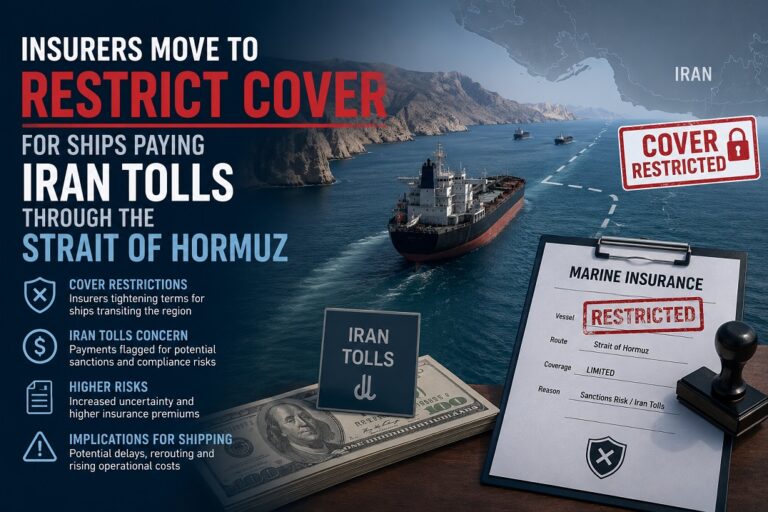
- Gulf war-risk insurance premiums
- Additional security compliance costs
- Crew-risk exposure concerns
Operators transiting the Gulf and Red Sea are facing:
- Higher insurance deductibles
- Expanded reporting requirements
- Additional onboard security measures
- Longer waiting and coordination procedures
For some carriers, longer alternative routes are becoming commercially preferable despite increased voyage duration and fuel consumption.
Container Shipping Networks Being Reconfigured
Global liner operators are increasingly redesigning network strategies around risk management rather than purely transit efficiency.
Industry reports indicate:
- Some Asia-Europe cargoes are being redistributed across trans-Pacific links
- Canal usage patterns are changing to accommodate rerouted flows
- Vessel deployment flexibility has become a major competitive advantage
Shipping companies are also attempting to:
- Reduce schedule disruption exposure
- Stabilize cargo reliability
- Limit operational uncertainty tied to conflict zones
Impact on Freight Markets and Supply Chains
The rerouting trend is contributing to:
- Longer transit times on certain trade lanes
- Rising bunker and operational costs
- Congestion pressure at alternative hubs and canals
- Increased freight-rate volatility
Logistics providers warn that prolonged instability in Gulf and Red Sea corridors could:
- Further tighten vessel availability
- Extend inventory lead times
- Increase supply-chain costs globally
Energy and Commodity Trade Also Affected
Beyond container shipping, the disruption is influencing:
- Crude oil transportation planning
- LNG routing strategies
- Agricultural commodity movements
- Industrial raw material flows
While the Strait of Hormuz remains operational, many operators are now treating Gulf transits as:
“high-risk strategic voyages rather than routine commercial passages.”
Industry Preparing for Long-Term Route Realignment
Shipping analysts increasingly believe the current rerouting behavior may not be temporary.
The maritime industry is beginning to adapt to:
- Persistent geopolitical fragmentation
- Elevated maritime-security risk
- Multi-corridor supply-chain planning
- Greater dependence on route diversification
This shift could permanently alter:
- Canal utilization patterns
- Fleet deployment models
- Global logistics architecture
The Bottom Line
The continued disruption linked to the Strait of Hormuz and broader Gulf tensions is accelerating a major reshaping of global shipping flows.
As carriers increasingly reroute cargo through the Panama Canal to avoid war-risk zones in the Gulf and Red Sea, the maritime industry is entering a new era where geopolitical stability is becoming just as important as distance and cost in determining global trade routes.