Japan-Linked Oil Tanker Crosses Strait of Hormuz Amid Heightened Gulf Tensions
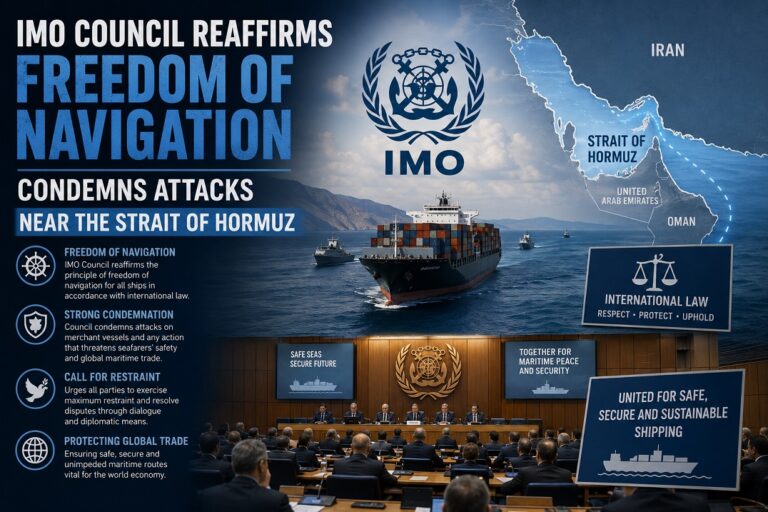
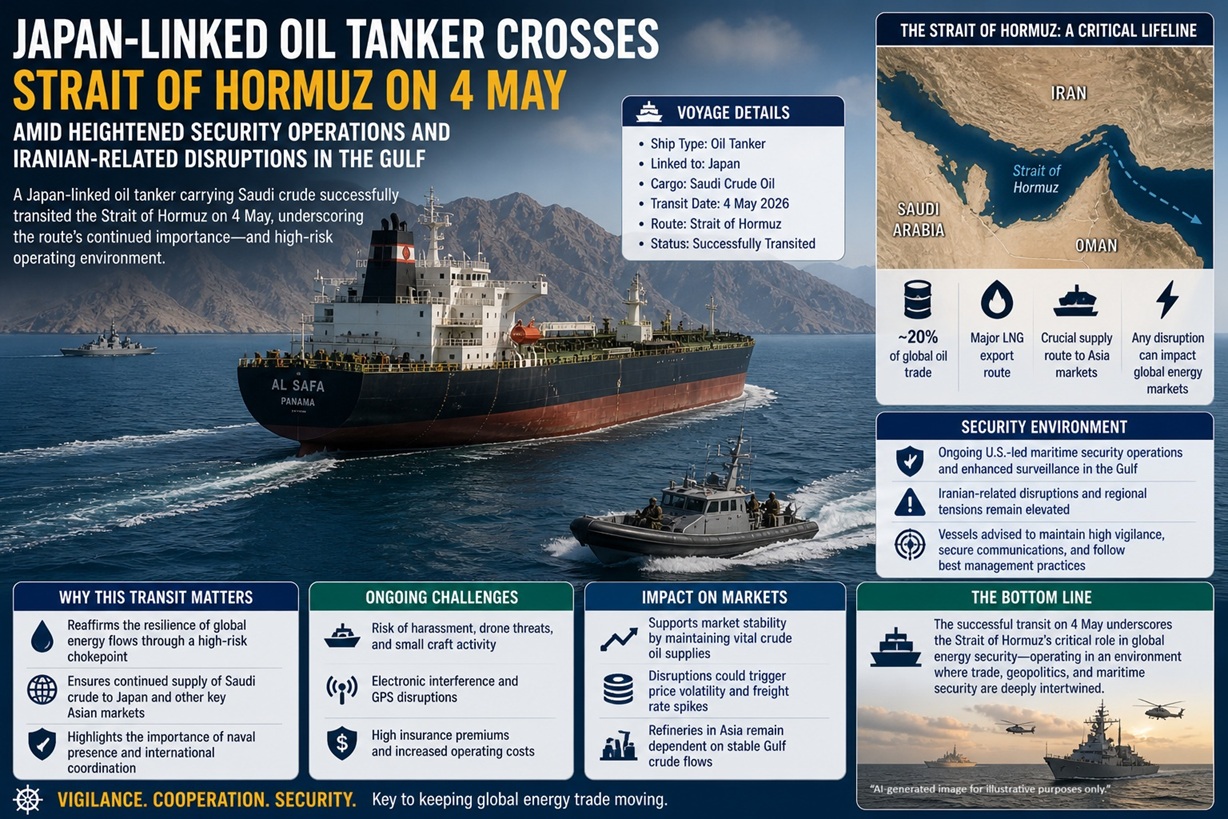
A Japan-linked oil tanker carrying Saudi crude oil successfully transited the Strait of Hormuz on May 4, signaling the continued resilience of one of the world’s most strategically vital energy corridors despite escalating regional tensions and persistent security threats.
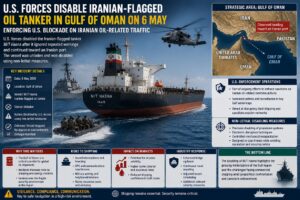
The voyage took place against the backdrop of ongoing U.S.-led maritime security operations and continued disruptions linked to Iranian regional activity, reinforcing the fragile balance between global energy supply continuity and geopolitical instability in the Gulf.
Strategic Transit Through a Volatile Chokepoint
The tanker’s successful passage is being closely monitored by energy markets and shipping stakeholders, as the Strait of Hormuz remains the primary export gateway for Gulf crude supplies heading to Asia.
Roughly:
- 20% of global oil trade
- Significant volumes of LNG exports
- Major crude flows to Japan, India, South Korea, and China
…pass through the narrow maritime corridor each day.
The vessel’s transit demonstrates that despite heightened tensions, commercial shipping activity continues under extensive monitoring and elevated security protocols.
Security Operations Intensify in the Gulf
The transit comes amid:
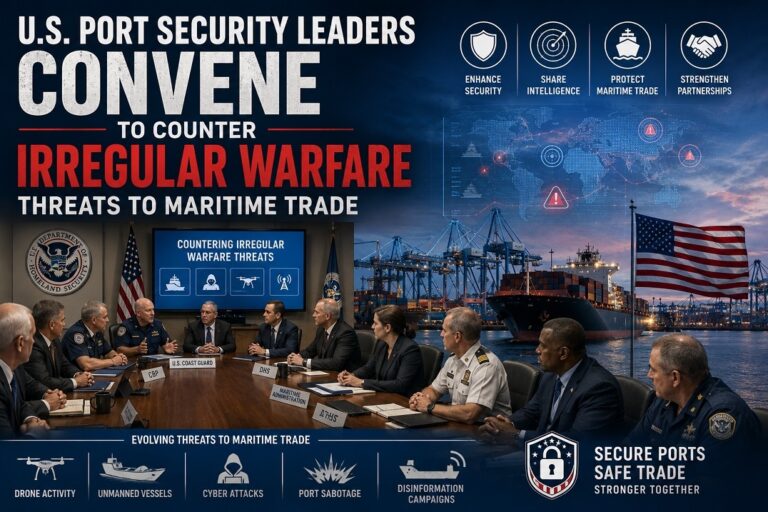
- Expanded U.S.-led naval patrols
- Enhanced maritime surveillance
- Increased coordination among allied naval forces operating in the Gulf region
Security measures have intensified following months of:
- Vessel harassment incidents
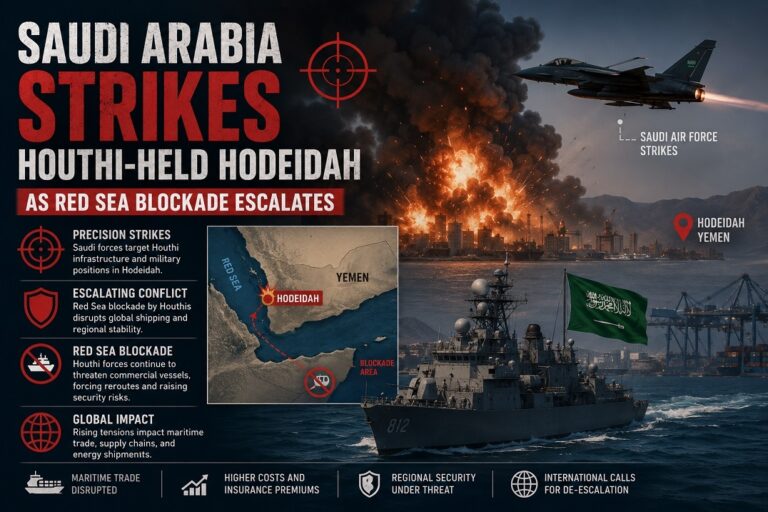
- Disruptions linked to regional conflict dynamics
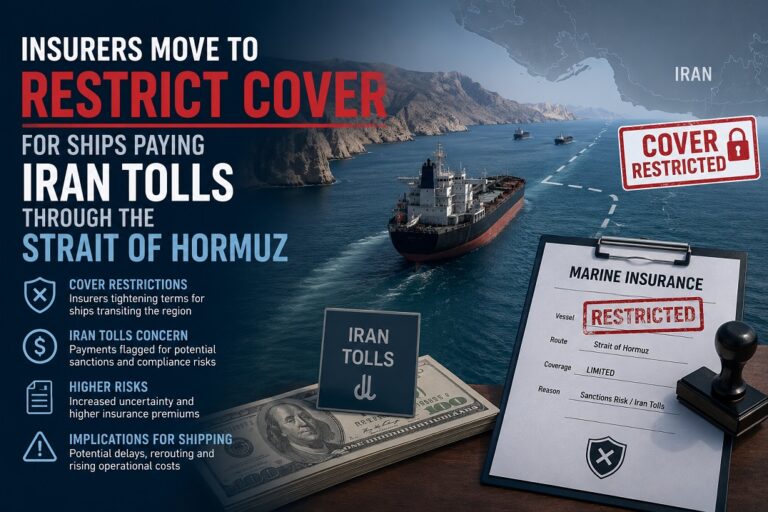
- Increased insurance and war-risk premiums for Gulf transits
Maritime security agencies continue advising vessels to maintain heightened vigilance and strict communication procedures while navigating the area.
Saudi Crude Flows Remain Critical for Asia
The tanker’s cargo of Saudi crude highlights the ongoing dependence of Asian economies on Gulf energy exports.
For Japan specifically:
- Gulf producers remain key energy suppliers
- Stable Hormuz access is critical for energy security
- Shipping disruptions can rapidly impact refining and fuel markets
Industry analysts note that even isolated disruptions in Hormuz can:
- Trigger oil price volatility
- Tighten tanker availability
- Increase freight and insurance costs
- Disrupt refinery scheduling across Asia
A High-Risk but Functioning Trade Corridor
While the successful transit offers reassurance to markets, shipping companies remain cautious.
The current operating environment is characterized by:
- Elevated geopolitical risk
- Frequent military activity
- Electronic interference and signal disruptions
- Potential asymmetric maritime threats involving small craft and drones
Shipowners transiting the Gulf are increasingly relying on:
- Naval coordination channels
- Real-time intelligence sharing
- Additional onboard security measures
- Flexible voyage routing strategies
Insurance and Freight Markets Stay on Edge
War-risk insurance premiums for Gulf transits remain significantly above normal levels, particularly for tankers linked to strategic energy cargoes.
Charter markets continue to reflect:
- Higher operational risk costs
- Increased security expenditure
- Potential delay contingencies
Despite these pressures, the uninterrupted movement of crude through Hormuz remains essential to maintaining stability in global energy markets.
The Bigger Picture
The successful Hormuz transit by the Japan-linked tanker underscores two parallel realities shaping maritime trade in 2026:
- The Strait of Hormuz remains operational and indispensable to global energy flows
- Every transit now carries elevated geopolitical and security risk
As tensions persist across the Gulf region, commercial shipping continues to operate in an environment where strategic trade, military deterrence, and geopolitical uncertainty intersect daily.
The Bottom Line
The passage of a Japan-linked Saudi crude tanker through the Strait of Hormuz highlights the continued resilience and vulnerability of the world’s most important energy shipping lane.
While trade flows remain active, the Gulf has become a high-risk maritime environment where security operations and commercial navigation now move hand in hand.