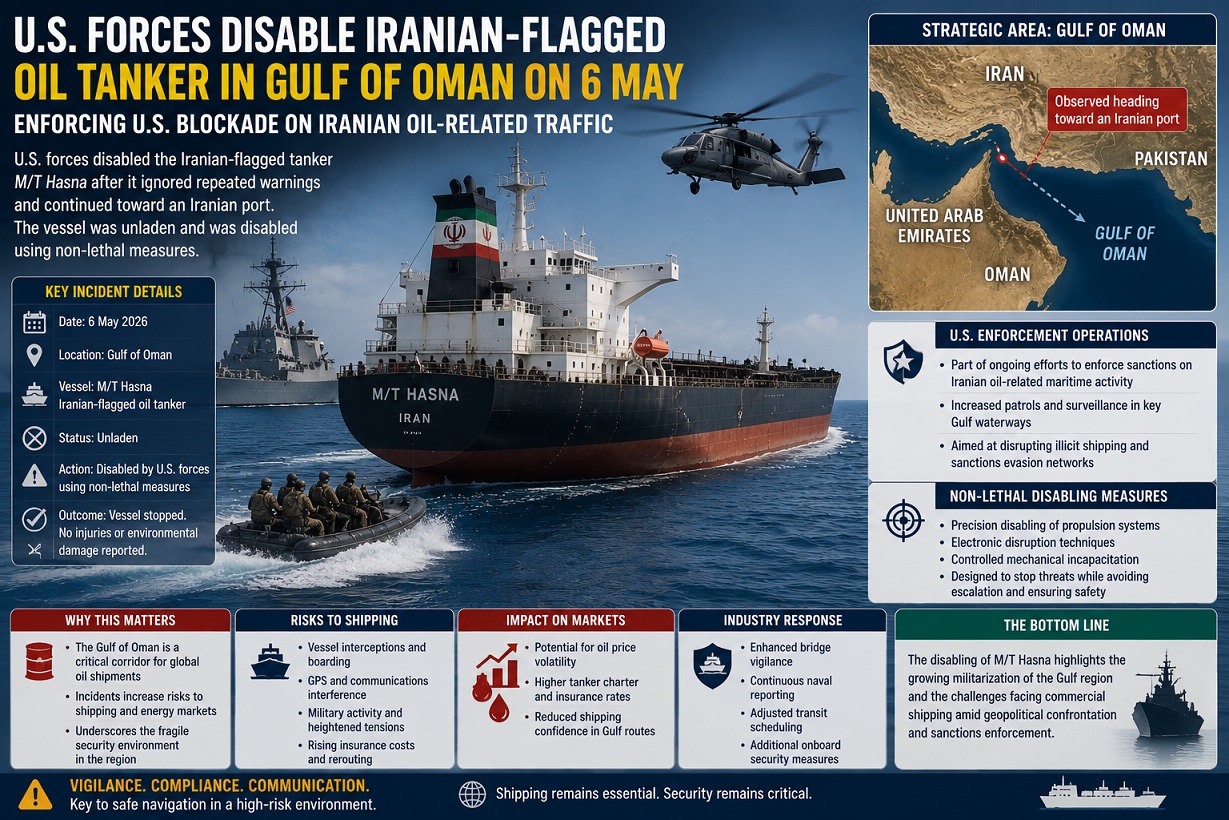
U.S. Forces Disable Iranian-Flagged Tanker in Gulf of Oman Amid Escalating Maritime Tensions
U.S. naval forces reportedly disabled the Iranian-flagged oil tanker M/T Hasna in the Gulf of Oman on May 6 after the vessel allegedly ignored repeated warnings while proceeding toward an Iranian port, according to regional maritime security sources.
The tanker, described as unladen at the time of the incident, was disabled using what officials characterized as non-lethal enforcement measures, in line with ongoing U.S. efforts to enforce restrictions on Iranian oil-related maritime activity.
Incident Highlights Growing Gulf Tensions
The encounter occurred in the strategically vital Gulf of Oman, a major transit corridor linking the Arabian Sea with the Strait of Hormuz.
According to preliminary reports:
- The M/T Hasna continued its course despite multiple radio warnings
- U.S. forces tracked and intercepted the vessel during transit
- Non-lethal action was used to disable propulsion and halt movement
- No casualties or environmental damage were immediately reported
The vessel was reportedly heading toward an Iranian port at the time of interception.
Part of Wider Maritime Enforcement Operations
The action forms part of broader U.S.-led maritime enforcement efforts targeting:
- Iranian oil logistics networks
- Sanctions evasion routes
- Suspected illicit shipping operations linked to regional tensions
Over recent months, naval patrols in the Gulf region have intensified amid:
- Escalating geopolitical confrontation
- Disruptions to commercial shipping
- Heightened security concerns around energy infrastructure and sea lanes
The U.S. and allied maritime forces have increased surveillance, inspections, and interdiction capabilities across key Gulf chokepoints.
Non-Lethal Measures Reflect Controlled Escalation
Security analysts note that the reported use of non-lethal disabling tactics suggests an attempt to:
- Avoid direct military escalation
- Maintain navigational safety
- Demonstrate enforcement capability without triggering broader conflict
Such measures may include:
- Precision disabling of propulsion systems
- Electronic disruption techniques
- Controlled mechanical incapacitation operations
The approach reflects the increasingly complex balance between maritime enforcement and regional stability.
Strategic Importance of the Gulf of Oman
The Gulf of Oman has become a critical operational zone due to its proximity to:
- The Strait of Hormuz
- Major oil export routes
- Iranian territorial waters
- International naval deployment corridors
Even incidents involving unladen vessels can have significant implications for:
- Energy market confidence
- Shipping insurance costs
- Tanker routing decisions
- Regional security calculations
Shipping Industry Watching Closely
Commercial shipping operators continue to monitor Gulf developments with growing concern.
Current risks in the region include:
- Vessel interception and boarding incidents
- GPS and communications interference
- Increased military activity
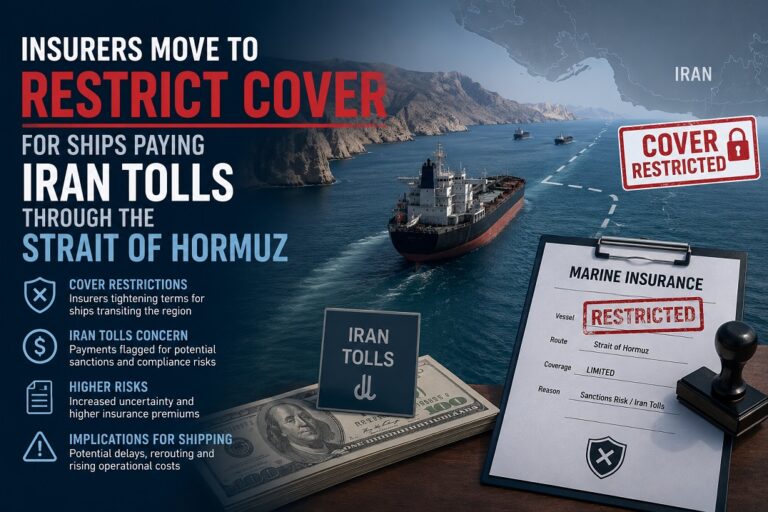
- Elevated war-risk insurance premiums
Many shipowners have adopted stricter operational protocols, including:
- Enhanced bridge vigilance
- Continuous naval reporting procedures
- Adjusted transit scheduling
- Additional onboard security arrangements
Potential Diplomatic and Market Repercussions
The disabling of an Iranian-flagged tanker could further strain already fragile regional dynamics.
Market analysts warn that continued maritime confrontations may:
- Increase oil price volatility
- Raise tanker charter and insurance rates
- Disrupt shipping confidence in Gulf routes
- Intensify geopolitical friction between Washington and Tehran
Although no cargo spill or casualties were reported, the incident reinforces the increasingly militarized environment surrounding Gulf shipping operations.
The Bottom Line
The disabling of M/T Hasna by U.S. forces marks another significant escalation in the evolving maritime security landscape of the Gulf region.
While the operation reportedly avoided casualties and environmental damage, it underscores a broader reality:
commercial navigation in the Gulf of Oman and Strait of Hormuz is now deeply intertwined with geopolitical confrontation, sanctions enforcement, and strategic military presence.