Shipping Industry Issues New Strait of Hormuz Transit Guidance Amid Escalating Gulf Security Risks
May 2026 | Maritime Security & Operations Desk
Major maritime-industry organizations and security coordination bodies have issued updated transit guidance for vessels operating through the Strait of Hormuz, responding to the recent surge in maritime-security incidents and rising geopolitical tension across the Gulf region.
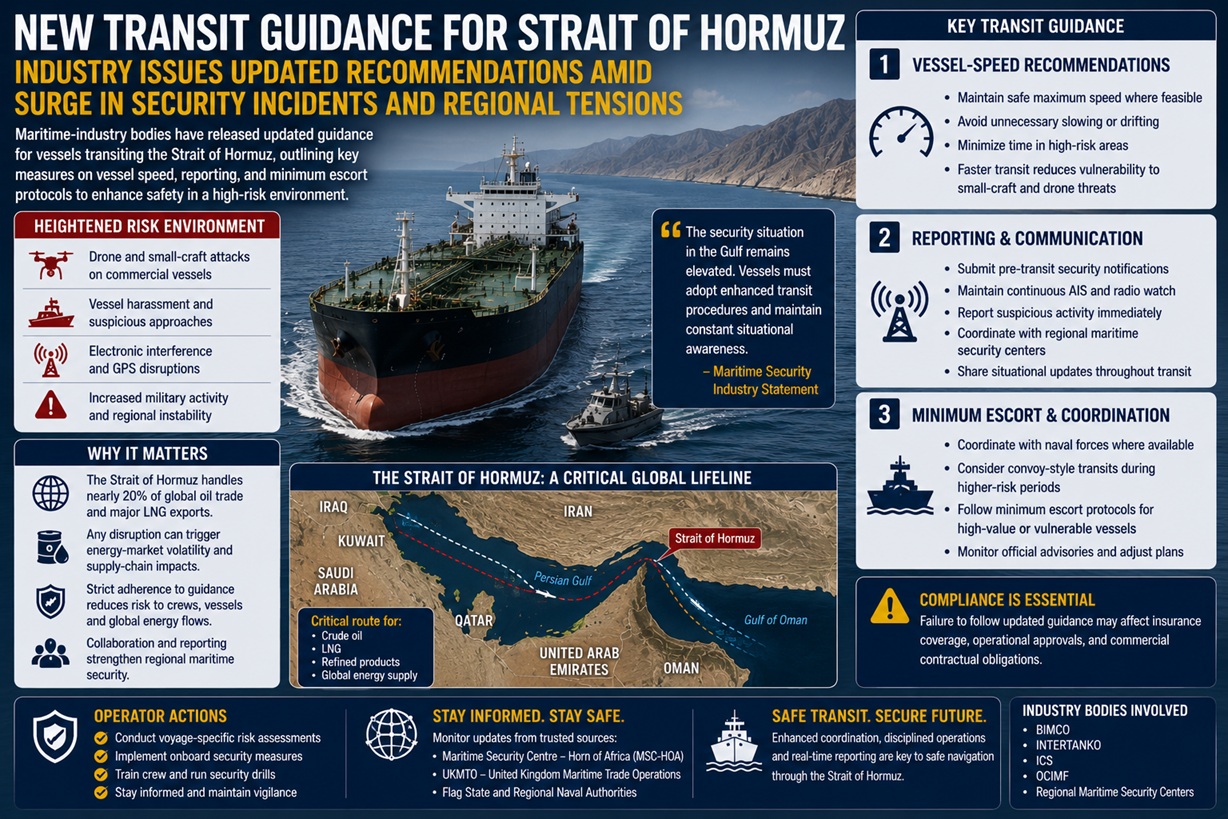
The revised recommendations focus on enhanced operational discipline, including vessel-speed management, mandatory reporting procedures, and minimum escort coordination protocols aimed at reducing exposure to attacks and navigational threats in one of the world’s most sensitive shipping corridors.
New Guidance Reflects Growing Threat Environment
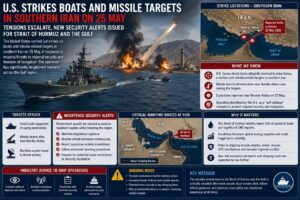
The updated advisories come after weeks of:
- Drone and small-craft attack incidents
- Vessel harassment reports
- Electronic interference and GPS disruptions
- Escalating military activity near critical shipping lanes
Industry bodies warn that the Gulf operating environment has entered a period of “sustained elevated risk,” requiring commercial vessels to adopt stricter transit procedures and real-time security coordination.
Key Recommendations for Vessel Operators
The latest guidance includes several operational measures designed to improve vessel survivability and situational awareness during Hormuz transits.
1. Higher and Consistent Transit Speeds
Operators are being advised to:
- Maintain safe maximum operational speeds where feasible
- Avoid unnecessary slowing or drifting in exposed areas
- Minimize time spent in high-risk zones
Security experts note that slower-moving vessels remain more vulnerable to:
- Small-craft approaches
- Boarding attempts
- Drone targeting and tracking
2. Enhanced Reporting and Communication Protocols
Vessels transiting the Gulf are now encouraged—or in some cases required—to:
- Submit pre-transit security notifications
- Maintain continuous AIS and communication monitoring
- Report suspicious activity immediately to regional maritime-security centers
- Coordinate movements with naval authorities where available
The guidance emphasizes the importance of:
- Real-time intelligence sharing
- Early warning systems
- Rapid response coordination during incidents
3. Minimum Escort and Naval Coordination Measures
Several maritime-security organizations are also recommending:
- Closer coordination with naval patrol assets
- Use of convoy-style transit groupings in higher-risk periods
- Minimum escort protocols for high-value or vulnerable vessels
Operators transporting:
- Crude oil
- LNG cargoes
- Strategic commodities
…are being encouraged to reassess voyage security planning before entering Gulf waters.
War-Risk Environment Driving Operational Changes
The updated transit guidance reflects broader concern within the shipping industry over:
- Rising war-risk insurance costs
- Increased charter-party security clauses
- Potential liabilities linked to inadequate voyage planning
Insurers and flag administrations are reportedly placing greater emphasis on:
- Demonstrable compliance with security advisories
- Crew preparedness and emergency drills
- Voyage-specific risk assessments
Failure to follow updated guidance could affect:
- Insurance coverage conditions
- Operational approvals
- Commercial chartering arrangements
Hormuz Remains Critical Despite Elevated Risk
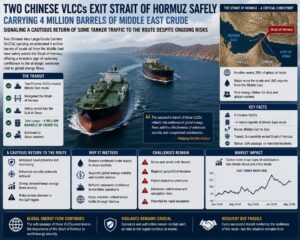
The Strait of Hormuz continues to handle:
- Nearly 20% of global oil shipments
- Major LNG exports from the Gulf
- Essential energy flows to Asia and global markets
Despite ongoing tensions, shipping traffic remains active due to the strategic importance of the route and the limited availability of alternative export pathways.
However, maritime analysts warn that:
commercial navigation through Hormuz is increasingly operating under quasi-security conditions rather than routine peacetime trade conditions.
Shipping Companies Adapting to a ‘New Normal’
Operators are increasingly integrating security planning directly into voyage operations, including:
- Dedicated risk-monitoring teams
- Expanded bridge surveillance procedures
- Dynamic route-risk analysis
- Enhanced crew-security training
The evolving threat environment is also accelerating investment in:
- Anti-drone detection systems
- Electronic navigation resilience
- Real-time maritime intelligence platforms
Global Markets Watching Closely
Energy traders and commodity markets continue to monitor Gulf developments closely, as any major disruption in Hormuz could:
- Trigger oil-price volatility
- Increase tanker freight rates
- Tighten LNG supply chains
- Impact industrial and refining operations worldwide
The shipping industry’s latest guidance reflects mounting recognition that Gulf security risks are no longer temporary disruptions—but a persistent operational challenge.
The Bottom Line
The release of updated Strait of Hormuz transit guidance marks a significant shift in how the maritime industry is responding to escalating regional instability.
As vessel operators adopt stricter speed, reporting, and escort procedures, commercial shipping in the Gulf is entering a new era of heightened security management—where operational safety and geopolitical risk are now inseparably linked.