Cargo Vessel Impounded in Sweden Over Alleged Grain Trade From Occupied Territories
May 2026 | Maritime Trade & Compliance Desk
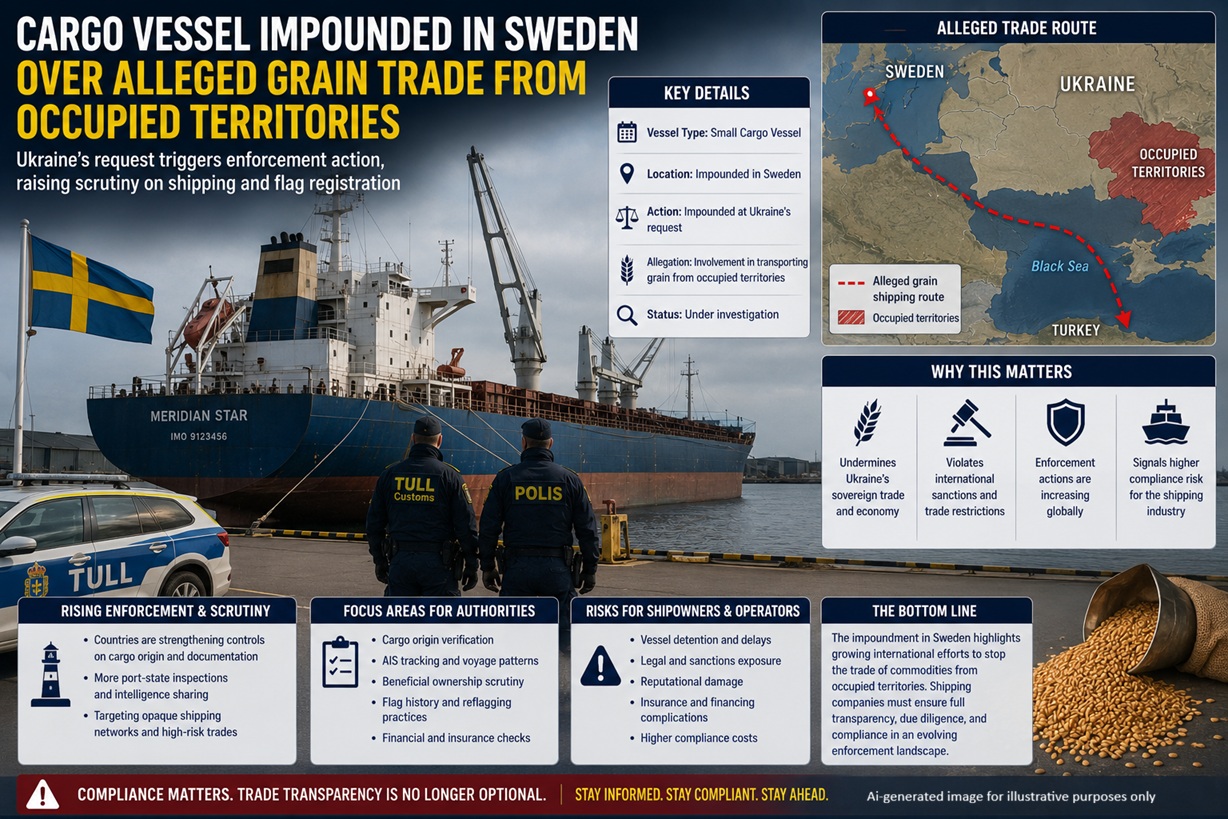
A small cargo vessel has been impounded in Sweden following a request from Ukrainian authorities over allegations that the ship was involved in transporting grain originating from occupied territories, in a move that is intensifying scrutiny on maritime trade enforcement, vessel ownership structures, and flag-registration oversight.
The case marks another escalation in efforts to curb the movement of commodities linked to disputed or sanctioned regions amid the ongoing conflict surrounding Ukraine.
Swedish Authorities Act on Ukrainian Request
According to maritime and legal sources, Swedish authorities detained the vessel while it was operating in regional waters after receiving information tied to:
- Suspected transport of grain from occupied Ukrainian territories
- Potential violations of international trade restrictions
- Questions surrounding cargo origin documentation and routing history
The vessel is now reportedly under investigation while authorities review shipping records, cargo documentation, ownership details, and prior port calls.
Focus on Grain Trade From Occupied Areas
Ukraine has repeatedly accused certain shipping networks of facilitating the movement of agricultural products from occupied regions through opaque trading channels and complex logistics arrangements.
The allegations often involve:
- Re-exporting grain through intermediary ports
- Use of smaller cargo vessels with limited visibility
- Manipulation of cargo origin records
- Frequent changes in vessel ownership or flag registration
The latest impoundment underscores growing international efforts to monitor and disrupt such supply chains.
Rising Scrutiny on Flag Registration and Vessel Ownership
The incident has also renewed focus on the role of:
- Open registries and flag-of-convenience systems
- Shell-company ownership structures
- Rapid vessel reflagging practices
Maritime compliance experts warn that some operators may exploit fragmented regulatory frameworks to obscure trading activity linked to sanctioned or politically sensitive cargoes.
Authorities are increasingly examining:
- AIS transmission patterns
- Port call inconsistencies
- Beneficial ownership records
- Cargo traceability documentation
Enforcement Pressure Increasing Across European Waters
The detention in Sweden reflects a broader shift toward more aggressive maritime enforcement measures across Europe.
Governments and maritime regulators are strengthening:
- Cargo origin verification procedures
- Customs intelligence cooperation
- Port-state inspections
- Financial and sanctions compliance checks
The shipping industry is now facing heightened expectations regarding:
- Supply chain transparency
- Due diligence obligations
- Documentation accuracy
- Compliance with geopolitical trade restrictions
Commercial Shipping Sector Faces Higher Compliance Risk
For shipowners and charterers, the case highlights growing legal and operational exposure associated with commodity trading in politically contested regions.
Potential consequences include:
- Vessel detention and operational delays
- Insurance and financing complications
- Reputational damage
- Sanctions-related legal action
Smaller cargo operators may face particular scrutiny due to the flexible trading patterns often associated with regional bulk commodity transport.
Geopolitical Implications Extend Beyond Shipping
The issue of grain exports from occupied territories has become both an economic and geopolitical flashpoint.
Ukraine has consistently argued that unauthorized exports undermine:
- Sovereign trade rights
- Agricultural revenue streams
- International sanctions and enforcement mechanisms
At the same time, global grain markets remain sensitive to disruptions in Black Sea trade flows, making maritime enforcement actions politically and commercially significant.
The Bottom Line
The impoundment of the cargo vessel in Sweden signals a new phase of intensified maritime enforcement linked to the Ukraine conflict.
As authorities tighten oversight on commodity movements from disputed regions, the global shipping industry is facing increasing pressure to ensure transparency in cargo sourcing, ownership structures, and flag registration practices.
For maritime operators, the case serves as a clear warning:
compliance risks in geopolitical trade zones are becoming as critical as operational risks at sea.