Korean-Operated Cargo Vessel Hit in Strait of Hormuz, Raising Fresh Maritime Security Concerns
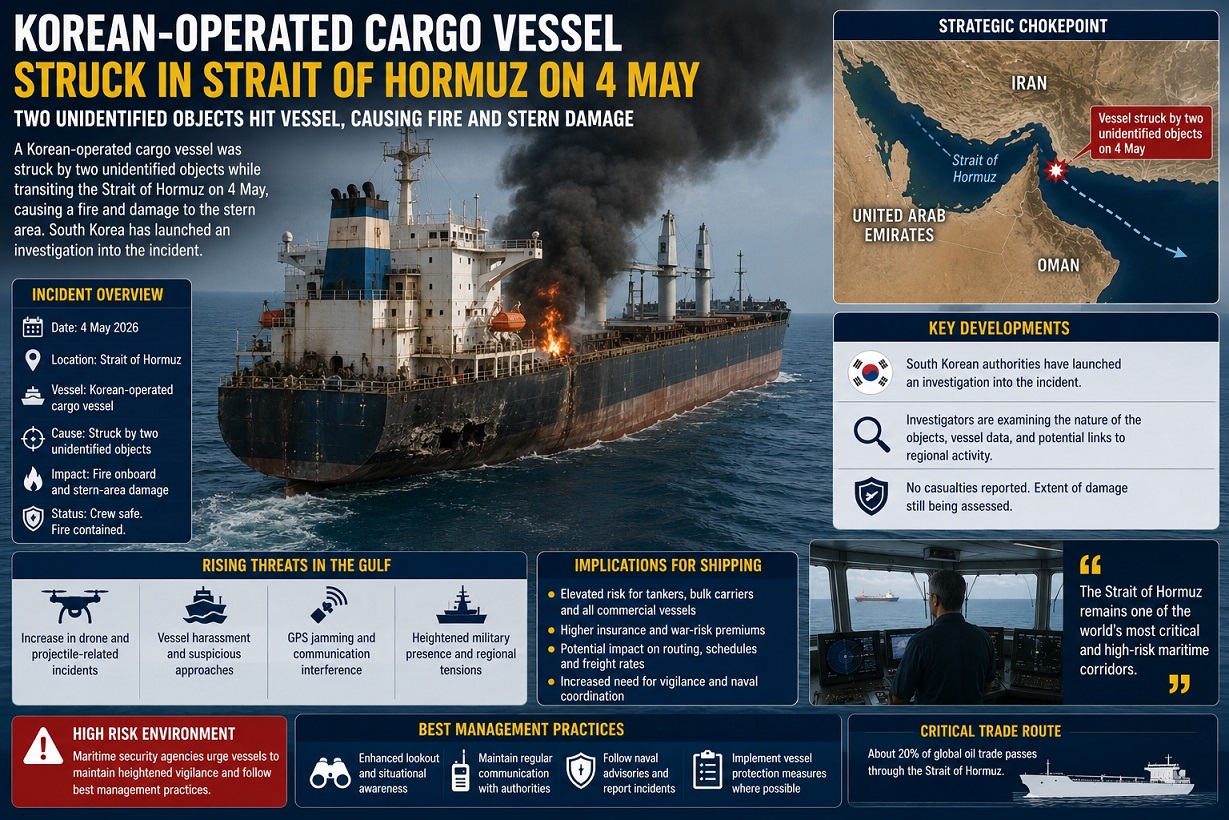
A Korean-operated cargo vessel transiting the Strait of Hormuz was struck by two unidentified objects on May 4, triggering a fire and causing damage to the vessel’s stern section, according to preliminary maritime security reports.
South Korean authorities have launched an investigation into the incident, which further intensifies concerns over the deteriorating security environment facing commercial shipping in the Gulf region.
Incident Occurred in One of the World’s Most Sensitive Shipping Corridors
The attack reportedly occurred while the vessel was navigating through the Strait of Hormuz, a critical maritime chokepoint connecting the Gulf to global energy and trade routes.
Initial reports indicate:
- Two unidentified projectiles or objects struck the vessel
- A fire broke out near the stern area following impact
- Damage was sustained to the aft section of the ship
- Crew members were able to contain the fire and maintain vessel stability
No confirmed casualties have been reported at this stage, though investigations into the extent of structural and operational damage are ongoing.
South Korea Launches Investigation
South Korean maritime and security authorities are now examining:
- The nature of the objects involved
- Possible links to regional military activity
- Vessel tracking and communications data
- Potential security failures or external interference
The incident comes as Seoul continues to closely monitor risks to Korean-linked shipping in Gulf waters, particularly given South Korea’s heavy reliance on Middle Eastern energy imports and maritime trade routes.
Rising Threat Environment in the Gulf
The strike adds to a growing list of maritime security incidents affecting vessels operating near:
- The Strait of Hormuz
- The Gulf of Oman
- Northern Arabian Sea routes
Recent months have seen:
- Vessel interceptions and harassment
- Drone and projectile-related threats
- GPS and communication disruptions
- Increased military and naval deployments across the region
Industry analysts warn that the Gulf is evolving into an increasingly unpredictable operating environment where commercial shipping faces both conventional and asymmetric threats.
Impact on Tankers and Bulk Carrier Operations
Although the affected ship was a cargo vessel, the implications extend across the broader commercial fleet, particularly:
- Oil tankers
- LNG carriers
- Bulk carriers
- Container vessels transiting Gulf routes
Shipping companies are likely to reassess:
- Transit risk exposure
- Crew safety protocols
- Naval coordination procedures
- Insurance and war-risk coverage requirements
The incident may also contribute to further increases in:
- Gulf transit premiums
- Freight volatility
- Security-related operating costs
Questions Over Nature of the Attack
At present, the exact nature of the objects that struck the vessel remains unclear.
Security experts note possibilities ranging from:
- Drone or loitering munition impacts
- Explosive projectiles
- Maritime sabotage devices
- Accidental military spillover activity
The absence of immediate attribution reflects the increasingly complex threat landscape in Gulf waters, where multiple state and non-state actors operate in close proximity.
Global Shipping Community on Alert
Maritime security agencies are expected to issue updated advisories urging vessels to:
- Maintain heightened vigilance
- Report suspicious aerial or maritime activity immediately
- Coordinate closely with naval authorities
- Follow best management practices for high-risk areas
Shipowners and operators continue to balance the commercial necessity of Hormuz transits against the growing operational dangers in the region.
The Bottom Line
The attack on the Korean-operated cargo vessel underscores the mounting risks confronting commercial shipping in the Strait of Hormuz.
As geopolitical tensions, military activity, and maritime insecurity converge, even routine transits through the Gulf are increasingly exposed to sudden and potentially dangerous escalation—reinforcing the Strait’s status as both an indispensable trade artery and one of the world’s highest-risk shipping environments.