Ukraine War Reshapes Energy Shipping as Reduced Russian Fuel Exports Boost Shadow Fleet Crude Trade
July 2026 | Energy Markets & Maritime Intelligence Desk
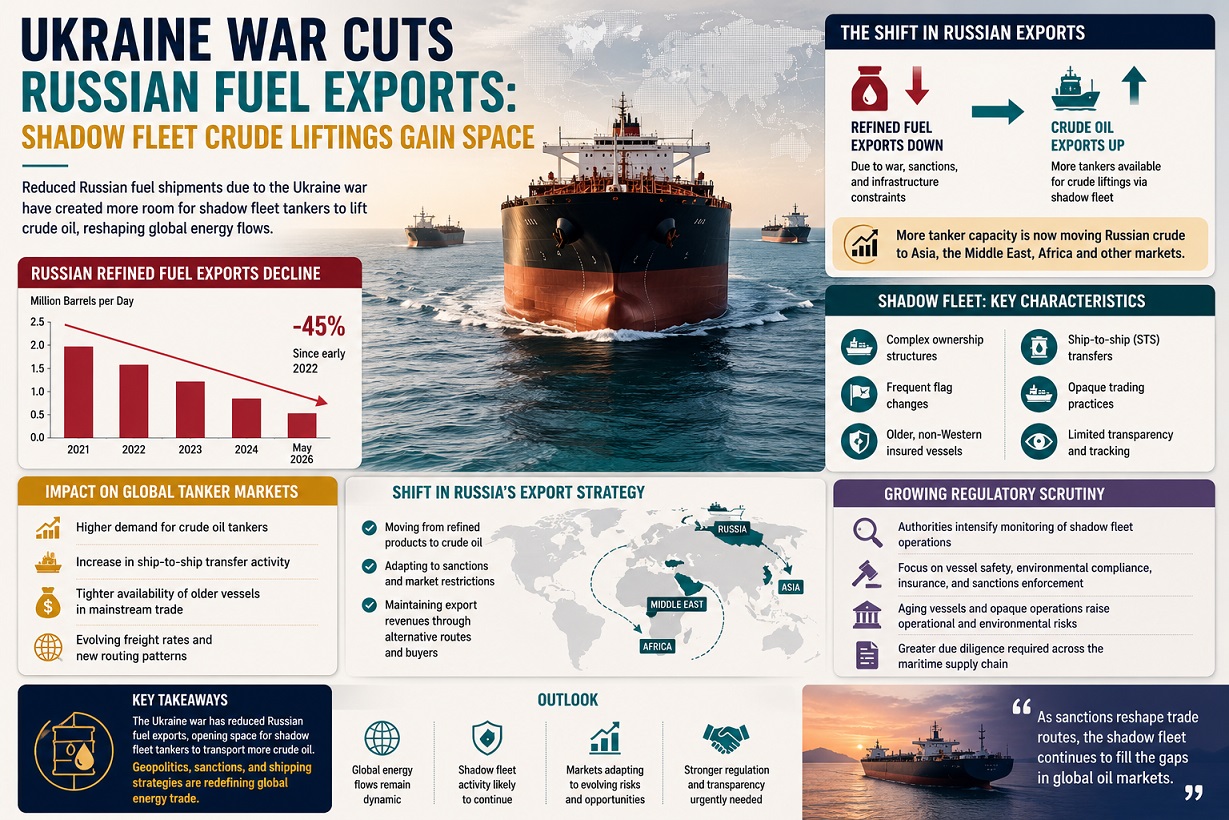
The ongoing conflict in Ukraine continues to reshape global energy trade, with a decline in Russian refined fuel exports creating new opportunities for crude oil shipments transported by the so-called “shadow fleet.” Industry analysts say the shift reflects Russia’s evolving export strategy as sanctions, market dynamics, and logistical challenges continue to alter traditional energy supply chains.
The changing trade pattern highlights how geopolitical conflict is influencing not only the volume of Russian exports but also the methods and routes used to move energy cargoes to international markets.
Fuel Exports Decline Amid Wartime Pressures
Russian shipments of refined petroleum products—including diesel, fuel oil, and gasoline—have declined in recent months due to a combination of:
- Ongoing military conflict
- International sanctions
- Infrastructure disruptions
- Refinery maintenance and operational constraints
- Changing export market demand
The reduction in refined fuel exports has freed additional tanker capacity that is increasingly being redirected toward crude oil transportation.
Shadow Fleet Expands Crude Oil Operations
Maritime analysts report that the reduction in fuel cargoes has enabled greater utilization of tankers associated with the so-called shadow fleet.
These vessels are generally characterized by:
- Complex ownership structures
- Frequent flag changes
- Older tanker tonnage
- Ship-to-ship (STS) cargo transfer operations
- Trading patterns focused on sanctioned or restricted cargoes
The additional tanker availability has reportedly increased crude lifting capacity from Russian export terminals, helping maintain export volumes despite continuing international restrictions.
Changing Export Strategy
Rather than relying primarily on refined product exports, Russia’s energy trade is increasingly emphasizing crude oil shipments to markets across:
- Asia
- The Middle East
- Africa
- Other non-traditional trading partners
This strategic shift allows exporters to:
- Maximize available tanker capacity
- Adapt to evolving sanctions regimes
- Respond to changing global demand patterns
Market observers note that crude exports remain a critical source of revenue despite the increasingly complex trading environment.
Impact on Global Tanker Markets
The redistribution of tanker capacity is influencing global shipping markets in several ways:
- Increased demand for crude oil tankers
- Reduced availability of older vessels in some regions
- Continued growth in ship-to-ship transfer activity
- Greater complexity in vessel tracking and cargo verification
Freight markets are also adjusting as operators balance commercial opportunities against regulatory compliance and insurance considerations.
Growing Regulatory Scrutiny
Authorities and maritime regulators continue to monitor shadow fleet operations closely, particularly with regard to:
- Vessel safety standards
- Environmental compliance
- Flag-state oversight
- Insurance coverage
- Sanctions compliance
Industry stakeholders have expressed concern that aging vessels operating outside conventional commercial frameworks may increase operational and environmental risks.
Global Energy Supply Chains Continue to Adapt
Despite ongoing geopolitical uncertainty, global energy markets have demonstrated significant resilience.
Importing nations have increasingly diversified supply sources while shipping companies continue to adapt through:
- Flexible fleet deployment
- Alternative trading routes
- Enhanced cargo monitoring
- Dynamic voyage planning
These adjustments have helped maintain the flow of energy commodities despite continued disruptions.
Implications for Maritime Security
The evolving export landscape also presents new challenges for maritime authorities, including:
- Increased monitoring of high-risk tanker operations
- Greater demand for vessel tracking and transparency
- Expanded compliance and sanctions enforcement
- Enhanced due diligence across global shipping networks
Analysts believe that geopolitical developments will continue to shape tanker deployment patterns and energy logistics for the foreseeable future.
The Bottom Line
The decline in Russian refined fuel exports has accelerated a shift toward greater crude oil transportation, creating additional opportunities for shadow fleet operations. As the Ukraine conflict continues to reshape global energy markets, the maritime industry is adapting to a new trading environment where sanctions, geopolitics, and shipping logistics are increasingly interconnected.
For shipowners, charterers, insurers, and regulators, the evolving balance between commercial necessity and compliance will remain a defining challenge in the global energy shipping sector.