Indian Navy Secures MV Golden Arsenal After Piracy Attempt in Gulf of Aden
July 2026 | Maritime Security & Naval Operations Desk
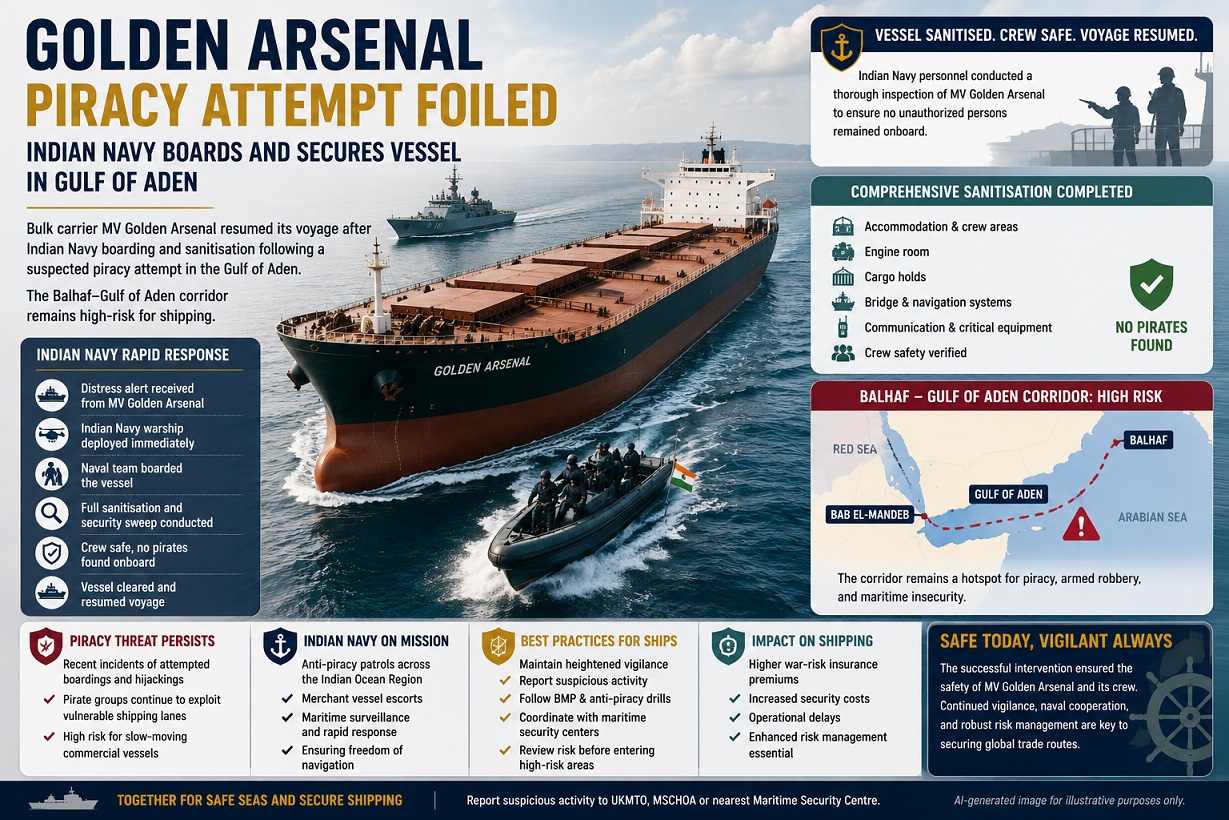
The bulk carrier MV Golden Arsenal has safely resumed its voyage after undergoing a comprehensive boarding and sanitisation operation by the Indian Navy, following a suspected piracy attempt in the Gulf of Aden. The incident serves as another reminder that the Balhaf–Gulf of Aden shipping corridor remains one of the world’s highest-risk maritime transit routes despite sustained international naval patrols.
The swift response by Indian naval forces ensured the safety of the vessel and crew, highlighting the critical role of multinational maritime security operations in protecting commercial shipping through the western Indian Ocean.
Piracy Attempt Prompted Immediate Naval Response
According to maritime security reports, the vessel reported a suspected piracy incident while transiting the Gulf of Aden, prompting an immediate response from the Indian Navy.
Following the distress alert:
- An Indian Navy warship was dispatched to intercept the vessel.
- Naval personnel boarded MV Golden Arsenal.
- A full security sweep (sanitisation) of the vessel was conducted.
- The crew was confirmed safe.
- No pirates were found onboard following the inspection.
After the operation concluded, authorities cleared the vessel to continue its scheduled voyage.
Indian Navy Conducts Comprehensive Vessel Sanitisation
The boarding operation involved specialist naval teams conducting systematic inspections throughout the vessel.
The sanitisation process included:
- Inspection of accommodation blocks
- Engine room clearance
- Cargo hold security checks
- Bridge and navigation equipment inspection
- Verification of crew safety
- Confirmation that no unauthorized persons remained onboard
Such procedures are designed to ensure vessels are secure before being released back into commercial service.
Balhaf–Gulf of Aden Corridor Remains High Risk
The incident occurred along the Balhaf–Gulf of Aden corridor, a critical shipping route linking:
- The Arabian Sea
- Gulf of Aden
- Bab el-Mandeb Strait
- Red Sea
- Suez Canal
The corridor carries substantial volumes of:
- Container cargo
- Dry bulk commodities
- Oil and petroleum products
- LNG shipments
- Humanitarian cargo
Security agencies continue to classify the region as a high-threat area due to ongoing risks from piracy, armed robbery, and regional instability.
Renewed Piracy Concerns Across the Western Indian Ocean
The attempted attack follows several recent maritime security incidents, including:
- Attempted boardings by suspicious skiffs
- Hijackings of commercial vessels
- Increased piracy alerts
- Small-craft approaches to merchant ships
Maritime intelligence indicates that pirate groups continue to exploit vulnerable shipping lanes, particularly targeting slower-moving vessels with limited onboard security.
Industry analysts warn that piracy remains an active operational threat despite years of international counter-piracy efforts.
Indian Navy Strengthens Maritime Security Presence
The successful response underscores the Indian Navy’s expanding role in safeguarding international shipping across the Indian Ocean Region.
Recent operations have included:
- Anti-piracy patrols
- Merchant vessel escorts
- Maritime surveillance missions
- Search and rescue operations
- Protection of critical sea lines of communication (SLOCs)
The Navy continues to work closely with international maritime coalitions and regional security partners to ensure freedom of navigation in high-risk waters.
Merchant Ships Urged to Maintain Vigilance
Maritime security organizations continue to advise vessels transiting the Gulf of Aden to:
- Maintain heightened bridge watchkeeping
- Report suspicious activity immediately
- Follow Best Management Practices (BMP)
- Coordinate with regional maritime security centers
- Conduct regular anti-piracy drills
- Review citadel and emergency response procedures
Shipowners are also encouraged to maintain robust voyage risk assessments before entering designated high-risk areas.
Insurance and Shipping Markets Remain Alert
The continued threat of piracy is contributing to:
- Elevated war-risk insurance premiums
- Higher kidnap-and-ransom coverage costs
- Increased onboard security expenditure
- Operational delays for some voyages
While naval patrols have reduced the number of successful hijackings compared with previous years, insurers continue to view the western Indian Ocean as a region requiring enhanced risk management.
The Bottom Line
The successful intervention by the Indian Navy and the safe resumption of MV Golden Arsenal‘s voyage demonstrate the effectiveness of rapid maritime security coordination in responding to piracy threats.
However, the incident also reinforces that the Balhaf–Gulf of Aden corridor remains one of the world’s most challenging maritime security environments, where commercial vessels must continue operating with heightened vigilance, strong naval cooperation, and comprehensive risk management to ensure the safety of crews and global trade.