Somali Piracy Resurges as Hijackings Return to Indian Ocean Shipping Lanes
May 2026 | Maritime Security Desk
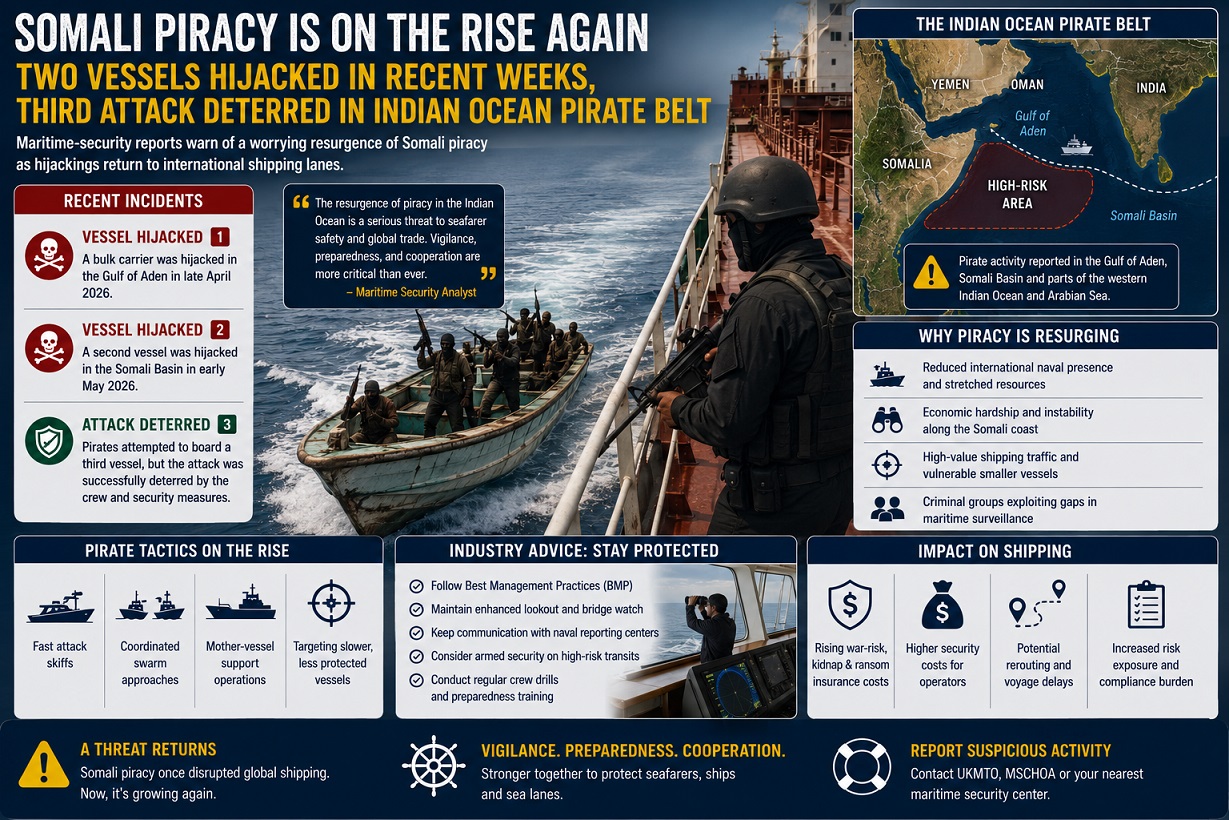
Maritime security agencies are warning of a renewed rise in Somali piracy after two commercial vessels were reportedly hijacked in recent weeks and a third attempted attack was successfully thwarted in the Indian Ocean pirate belt.
The incidents are reviving concerns that one of the world’s most dangerous maritime threats largely contained over the past decade, may be re-emerging amid shifting regional security dynamics and reduced naval deterrence.
Piracy Threat Returns to Key Shipping Corridors
According to regional maritime-security reports, pirate activity has intensified across waters stretching from:
- The Gulf of Aden
- The Somali Basin
- Parts of the western Indian Ocean and Arabian Sea
Recent incidents include:
- Two successful vessel hijackings within weeks
- One attempted boarding operation that was deterred through evasive action and onboard security measures
- Increased suspicious approaches involving skiffs and armed groups
Security analysts say the pattern closely resembles the early stages of the piracy escalation seen during the late 2000s.
Growing Concern Over Reduced Deterrence
The resurgence comes at a time when:
- International naval patrol coverage has become more stretched
- Global military attention has shifted toward other geopolitical hotspots
- Commercial shipping routes are already under pressure from Gulf and Red Sea instability
Experts warn that criminal groups may be exploiting:
- Reduced maritime surveillance gaps
- High-value shipping traffic
- Vulnerable smaller vessels operating with limited security protection
Shipping Industry on High Alert
Shipowners and operators transiting the Indian Ocean pirate belt are being advised to:
- Increase onboard vigilance
- Implement Best Management Practices (BMP)
- Maintain enhanced bridge watchkeeping
- Coordinate closely with regional naval reporting centers
Many operators are also reconsidering:
- Armed security deployments
- Route planning strategies
- Crew emergency drills
- Insurance and risk exposure assessments
Piracy Tactics Becoming More Sophisticated
Maritime intelligence sources indicate that pirate groups are adapting their methods, including:
- Use of fast attack skiffs
- Coordinated swarm approaches
- Mother-vessel support operations
- Exploitation of isolated shipping routes
Analysts note that current attacks appear focused not only on ransom potential but also on opportunistic targeting of vulnerable regional trade vessels.
Smaller and Slower Vessels Face Highest Risk
Security experts warn that:
- Fishing vessels
- Wooden cargo dhows
- Coastal traders
- Low-freeboard bulk carriers
…remain especially exposed to boarding attempts due to slower speeds and limited defensive capability.
Recent attacks suggest pirate groups are targeting vessels perceived as:
- Under-protected
- Operating outside heavily monitored corridors
- Carrying valuable cargoes or fuel supplies
Economic and Operational Impact Growing
The renewed piracy threat is already influencing maritime markets through:
- Rising war-risk and kidnap-and-ransom insurance premiums
- Increased security costs for operators
- Potential rerouting decisions
- Additional voyage delays and compliance measures
The threat also complicates an already fragile shipping environment shaped by:
- Gulf tensions
- Red Sea disruptions
- Global supply-chain instability
Naval Forces and Regional Authorities Respond
International maritime security organizations and naval coalitions are expected to increase:
- Patrol activity in high-risk zones
- Intelligence-sharing operations
- Escort and rapid-response readiness
- Coordination with merchant shipping traffic
However, security experts caution that preventing a broader piracy resurgence will require sustained multinational commitment.
The Bigger Picture: A Familiar Threat Returns
The reappearance of successful hijackings is raising concern that the industry may once again face a prolonged cycle of piracy risk similar to the crisis period that disrupted global shipping more than a decade ago.
At its peak, Somali piracy:
- Threatened major trade corridors
- Increased shipping costs globally
- Forced widespread security upgrades across the industry
The latest incidents suggest that underlying drivers, including instability, weak coastal enforcement, and economic hardship remain unresolved.
The Bottom Line
The recent hijackings and attempted attacks in the Indian Ocean pirate belt signal a troubling resurgence of Somali piracy at a time when global shipping is already facing unprecedented geopolitical pressure.
For the maritime industry, the warning is increasingly clear:
piracy is no longer a historical threat, it is once again becoming an active operational risk across some of the world’s most vital sea lanes.