Three Indian Sailors Killed After U.S. Strike on MT Settebello, Triggering Diplomatic Fallout
June 2026 | Maritime Security & Geopolitics Desk
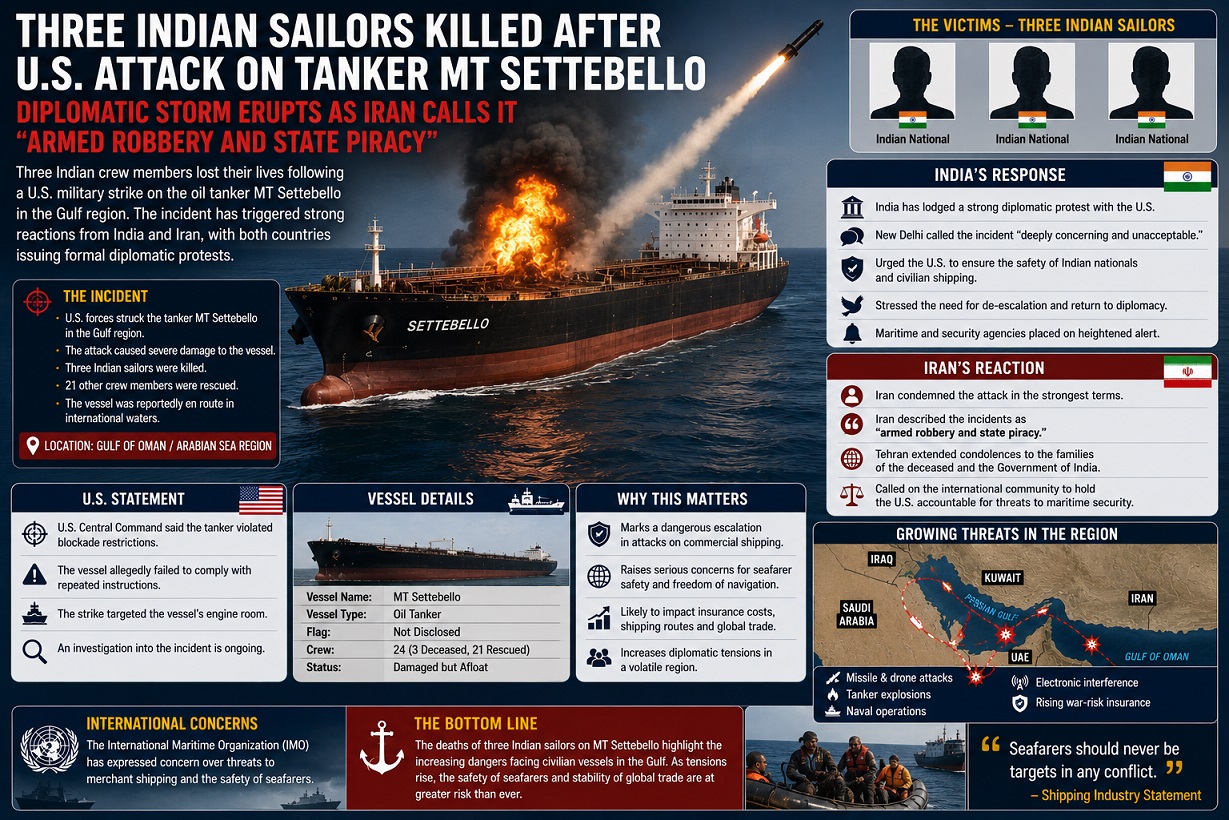
The deaths of three Indian seafarers following a U.S. military strike on the oil tanker MT Settebello have sparked a diplomatic dispute involving India, Iran, and the United States, intensifying concerns over the growing risks faced by civilian shipping crews operating in the Gulf region.
The incident, which occurred amid U.S. enforcement operations targeting vessels suspected of violating its blockade on Iranian oil-related trade, has drawn strong reactions from both New Delhi and Tehran.
Three Indian Crew Members Confirmed Dead
According to Indian authorities, three Indian nationals serving aboard the tanker lost their lives following the attack. Twenty-one other crew members were rescued after the vessel suffered severe damage.
The fatalities represent the first reported deaths involving Indian seafarers since the start of the U.S. maritime blockade operations targeting Iran-linked shipping.
India, one of the world’s largest suppliers of merchant mariners, has expressed deep concern over the safety of its nationals operating in the Gulf and has called for de-escalation and a return to diplomacy.
India Lodges Strong Protest
New Delhi summoned a senior U.S. diplomat to convey its concerns over the attacks on commercial vessels carrying Indian crew members and urged an immediate end to military actions affecting civilian shipping.
Indian officials emphasized that:
- Merchant seafarers must not become casualties of geopolitical confrontation.
- Freedom and safety of navigation remain critical.
- Dialogue and diplomacy are necessary to restore stability in the region.
Authorities have also placed maritime and security agencies on heightened alert to monitor risks to Indian shipping interests.
Iran Condemns Incident as ‘State Piracy’
Iran strongly condemned the attack, with Foreign Ministry spokesperson Esmaeil Baqaei describing the strikes on commercial vessels as evidence of “armed robbery and state piracy.” Tehran extended condolences to the families of the deceased sailors and to the Government of India.
Iran further called on the international community to hold the United States accountable, arguing that such actions threaten freedom of navigation and global maritime security.
Conflicting Accounts Surround the Tanker
The U.S. military stated that the tanker had allegedly violated blockade restrictions and failed to comply with instructions issued by American forces. U.S. Central Command said the strike targeted the vessel’s engine room after repeated warnings.
However, the vessel’s management denied allegations that the ship was carrying Iranian oil or ignored instructions and called for an independent international investigation into the incident.
Growing Risks for Merchant Seafarers
The incident highlights the increasingly dangerous environment facing civilian crews operating in:
- The Gulf of Oman
- Strait of Hormuz
- Persian Gulf
- Northern Arabian Sea
Recent months have seen:
- Missile and drone attacks on merchant vessels
- Tanker explosions and fires
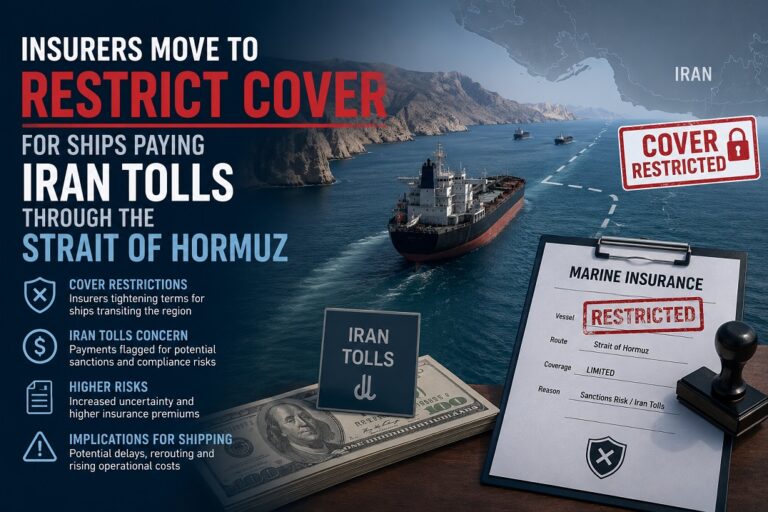
- Rising war-risk insurance costs
- Escalating naval operations
- Increased security advisories for commercial shipping
Maritime organizations have repeatedly warned that seafarers are becoming increasingly exposed to geopolitical tensions beyond their control.
International Shipping Community Concerned
Industry observers warn that attacks involving civilian vessels could:
- Increase war-risk premiums further.
- Disrupt energy and commodity trade flows.
- Trigger rerouting decisions.
- Raise crew welfare concerns.
- Intensify diplomatic friction between major powers.
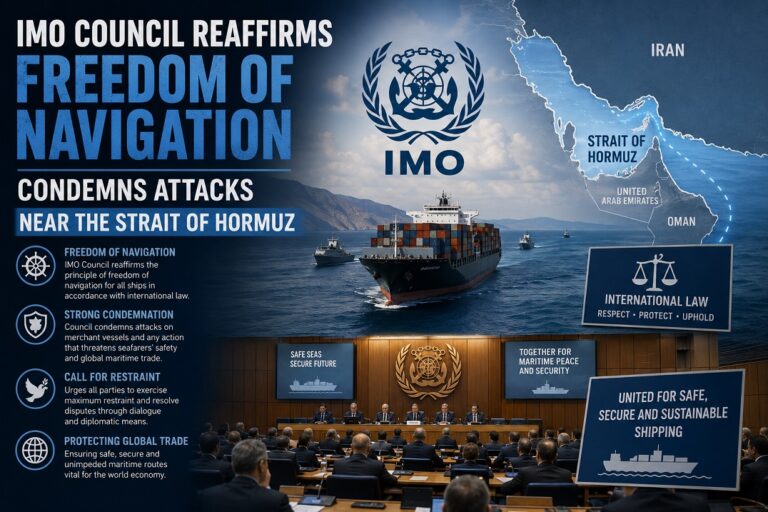
The International Maritime Organization (IMO) has also expressed concern over threats to merchant shipping and the safety of seafarers.
The Bottom Line
The deaths of three Indian sailors aboard MT Settebello have transformed a regional maritime-security issue into a broader diplomatic challenge involving India, Iran, and the United States.
As tensions continue to rise across the Gulf, the tragedy serves as a stark reminder that the world’s merchant seafarers—who form the backbone of global trade—are increasingly finding themselves on the front lines of geopolitical confrontation.