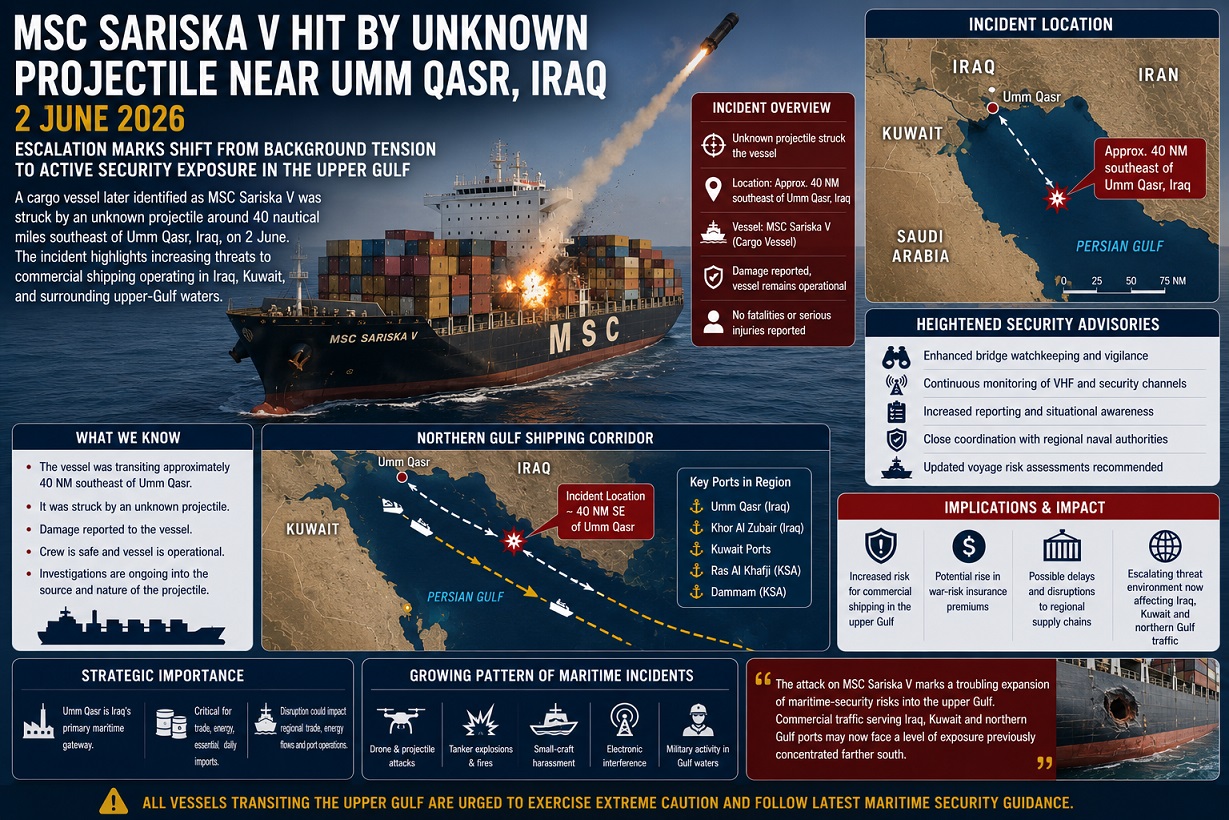
MSC Sariska V Struck by Unknown Projectile Near Iraq, Raising Security Concerns in the Upper Gulf
June 2026 | Maritime Security & Regional Trade Desk
A commercial cargo vessel later identified as MSC Sariska V was struck by an unknown projectile approximately 40 nautical miles southeast of Umm Qasr, Iraq, on 2 June, marking a significant escalation in maritime-security concerns in the northern Gulf.
The incident represents one of the most serious threats to commercial shipping in the upper Gulf in recent years and has heightened concerns for vessels operating near Iraq, Kuwait, and neighboring approaches to the Strait of Hormuz.
Projectile Strike Reported Near Iraqi Waters
According to regional maritime-security reports, the vessel sustained damage after being hit by an unidentified object while transiting waters southeast of Iraq’s principal port.
Initial information indicates:
- The vessel was approximately 40 nautical miles southeast of Umm Qasr.
- An unknown projectile impacted the ship.
- Damage was reported, but the vessel remained operational.
- No fatalities or serious injuries among the crew were immediately reported.
- Authorities are investigating the source and nature of the projectile.
The identity of the party responsible and the exact type of weapon involved remain unknown.
Security Environment Expanding Into the Upper Gulf
For much of the recent Gulf crisis, concerns had largely centered on:
- The Strait of Hormuz
- Gulf of Oman
- Southern Iranian waters
- Red Sea shipping routes
However, the attack on MSC Sariska V suggests that the threat environment may now be extending northward into the upper Gulf, affecting shipping lanes serving:
- Iraq
- Kuwait
- Northern Saudi Arabia
- Offshore energy installations
Security analysts say the incident marks a shift from underlying regional tensions to direct exposure for commercial traffic operating near Iraqi waters.
Strategic Importance of Umm Qasr and Northern Gulf Trade
Umm Qasr is Iraq’s principal maritime gateway and handles:
- Containerized cargo
- Grain imports
- Construction materials
- Energy-related shipments
The surrounding waters are also used extensively by vessels calling at:
- Kuwaiti ports
- Iraqi offshore terminals
- Northern Gulf anchorage areas
Any deterioration in security could disrupt:
- Regional supply chains
- Port operations
- Insurance arrangements
- Vessel scheduling
Maritime Security Advisories Intensified
Following the incident, maritime authorities and security organizations are expected to recommend:
- Enhanced bridge watchkeeping
- Continuous monitoring of VHF and security channels
- Increased reporting requirements
- Close coordination with regional naval authorities
- Updated voyage risk assessments
Shipowners operating in the upper Gulf are likely to reassess:
- Transit routes
- Crew safety procedures
- Security measures onboard
- Emergency-response readiness
Insurance and Freight Markets Watching Closely
The attack may have implications beyond immediate vessel safety.
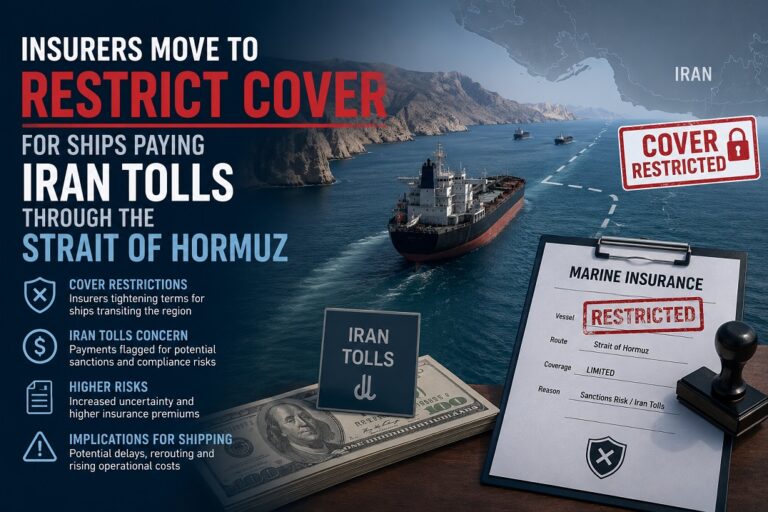
Marine insurers are expected to review:
- War-risk exposure in Iraqi and Kuwaiti waters
- Premium levels for northern Gulf voyages
- Security compliance requirements
- Coverage conditions for vessels calling at upper Gulf ports
Freight markets could also be affected if operators begin treating northern Gulf voyages with the same caution currently applied to Hormuz and Red Sea transits.
Growing Pattern of Maritime Incidents
The strike on MSC Sariska V comes amid a series of incidents affecting commercial shipping across the region, including:
- Tanker explosions near Oman
- Drone and projectile attacks on vessels
- Small-craft harassment
- Electronic interference and GPS disruptions
- Escalating military operations in Gulf waters
The cumulative effect is creating an increasingly unpredictable operating environment for merchant shipping.
The Bottom Line
The projectile strike on MSC Sariska V near Umm Qasr marks a troubling expansion of maritime-security risks into the upper Gulf.
As investigations continue, shipowners, insurers, and regional authorities are likely to treat the incident as a warning that commercial traffic serving Iraq, Kuwait, and northern Gulf ports may now face a level of exposure previously concentrated farther south.
For the maritime industry, the event underscores a growing reality:
security risks in the Gulf are no longer confined to the Strait of Hormuz—they are spreading across the wider region, increasing uncertainty for one of the world’s most strategically important trade corridors.