June 2026 | Maritime Safety, Weather & Navigation Desk
The global maritime industry is simultaneously confronting two significant operational challenges, a growing risk of super typhoon-related disruptions affecting China’s busiest ports and continued International Maritime Organization (IMO) efforts to enhance navigation safety off Yemen’s coast. Together, these developments underscore the increasing importance of weather resilience and maritime safety coordination in safeguarding international trade.
With China serving as one of the world’s largest maritime logistics hubs and the Gulf of Aden remaining a strategically important shipping corridor, both developments are attracting close attention from shipowners, charterers, insurers, and maritime authorities worldwide.
Super Typhoon Threatens Operations at China’s Major Ports
Meteorological agencies are closely monitoring super typhoon activity that could potentially disrupt operations across some of China’s busiest commercial ports.
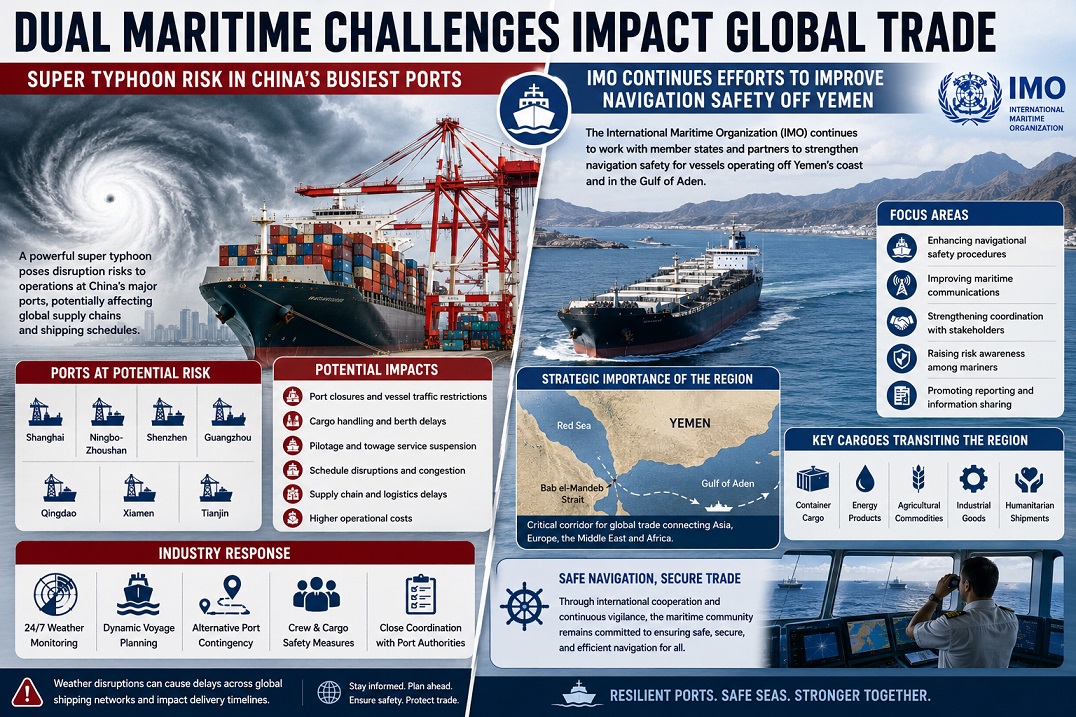
Ports facing potential operational impacts include:
- Shanghai
- Ningbo-Zhoushan
- Shenzhen
- Guangzhou
- Qingdao
- Xiamen
- Tianjin
These facilities collectively handle substantial volumes of:
- Containerized cargo
- Crude oil imports
- LNG shipments
- Bulk commodities
- Automotive exports
- Industrial manufacturing components
Even temporary weather-related disruptions can significantly affect global supply chains given China’s central role in international maritime commerce.
Potential Supply Chain Implications
Super typhoons frequently present operational challenges for port authorities and shipping companies alike.
Potential impacts include:
- Temporary port closures
- Suspension of pilotage services
- Vessel traffic restrictions
- Cargo handling delays
- Berthing schedule disruptions
- Inland logistics congestion
For global shipping networks, delays at major Chinese ports can have cascading effects across:
- Asia-Europe trade routes
- Trans-Pacific services
- Energy supply chains
- Manufacturing exports
- Commodity transportation markets
Industry analysts note that weather-related disruptions have become increasingly significant factors influencing voyage planning and schedule reliability.
Shipping Companies Activate Contingency Measures
Carriers operating within East Asian waters are expected to implement enhanced weather-response protocols, including:
- Dynamic voyage planning
- Adjusted sailing schedules
- Alternative port contingency arrangements
- Enhanced weather monitoring
- Crew safety measures
- Cargo protection procedures
Port authorities routinely coordinate closely with meteorological agencies to implement phased operational restrictions designed to minimize both safety risks and commercial disruption.
IMO Continues Navigation Safety Efforts Off Yemen
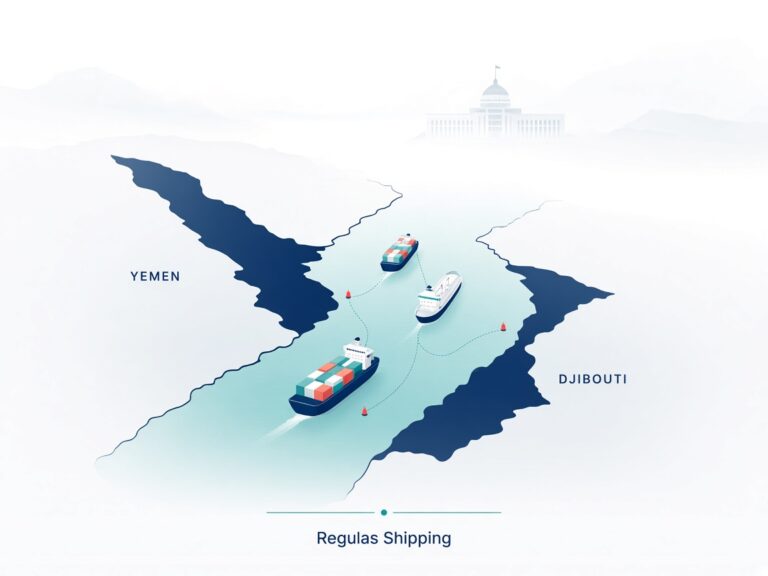
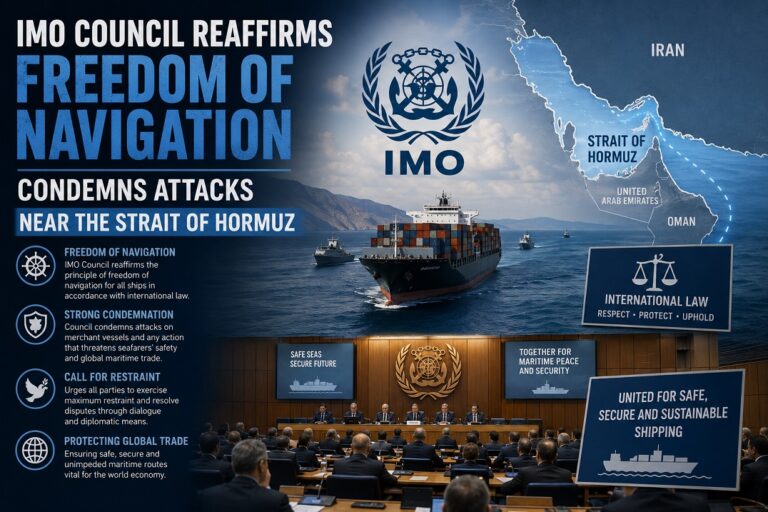
While weather-related challenges dominate developments in East Asia, the International Maritime Organization continues working with member states and maritime stakeholders to strengthen navigation safety measures in waters off Yemen.
The region remains strategically important due to its proximity to:
- The Bab el-Mandeb Strait
- The Gulf of Aden
- The Red Sea shipping corridor
- Major East-West trade routes
Commercial vessels transiting the area continue to navigate complex operational environments influenced by regional security considerations and heavy maritime traffic.
Enhancing Maritime Navigation Safety
IMO’s ongoing efforts are focused on improving:
- Navigational safety procedures
- Maritime communications
- Vessel reporting mechanisms
- Risk awareness among commercial operators
- Coordination between maritime stakeholders
- Safety guidance for vessels operating in affected areas
These initiatives form part of broader international efforts to promote safe and efficient maritime navigation through strategically important waterways.
Critical Trade Corridor for Global Shipping
The waters off Yemen support substantial volumes of international commerce connecting:
- Asia
- Europe
- The Middle East
- Africa
Major cargoes transiting the region include:
- Containerized freight
- Energy products
- Agricultural commodities
- Industrial goods
- Humanitarian shipments
Maintaining navigational safety remains essential to preserving uninterrupted global trade flows and ensuring the safety of merchant seafarers operating throughout the region.
Weather and Security Risks Shape Maritime Operations
The simultaneous developments in China and the Gulf of Aden highlight the increasingly complex risk landscape confronting modern shipping.
Today’s maritime operators must simultaneously manage:
- Extreme weather events
- Navigational hazards
- Geopolitical developments
- Port congestion risks
- Supply-chain disruptions
- Regulatory requirements
- Crew welfare considerations
Industry experts note that successful voyage planning increasingly depends upon integrating meteorological intelligence, operational resilience, and maritime safety guidance into daily decision-making processes.
Global Supply Chains Face Growing Complexity
Recent years have demonstrated how rapidly localized disruptions can produce global consequences.
Whether resulting from:
- Severe weather events,
- Port operational constraints,
- Maritime security developments, or
- Navigation safety concerns,
international shipping networks are becoming increasingly interconnected and sensitive to regional developments.
Shipping companies are responding through greater investments in:
- Real-time intelligence platforms
- Risk management systems
- Supply-chain resilience strategies
- Enhanced operational flexibility
- Advanced weather-routing technologies
The Bottom Line
The threat of super typhoon disruptions across China’s busiest ports and the IMO’s continued efforts to enhance navigation safety off Yemen reflect two very different but equally important maritime challenges facing global trade.
While severe weather tests the resilience of international logistics networks, ongoing navigation safety initiatives reinforce the importance of international cooperation in protecting strategic shipping routes. Together, they highlight an evolving maritime landscape where operational preparedness, adaptability, and proactive risk management are becoming indispensable elements of modern shipping.
As global commerce continues to rely on increasingly complex maritime networks, safeguarding both port operations and navigational safety remains critical to ensuring the uninterrupted movement of goods across the world’s oceans.