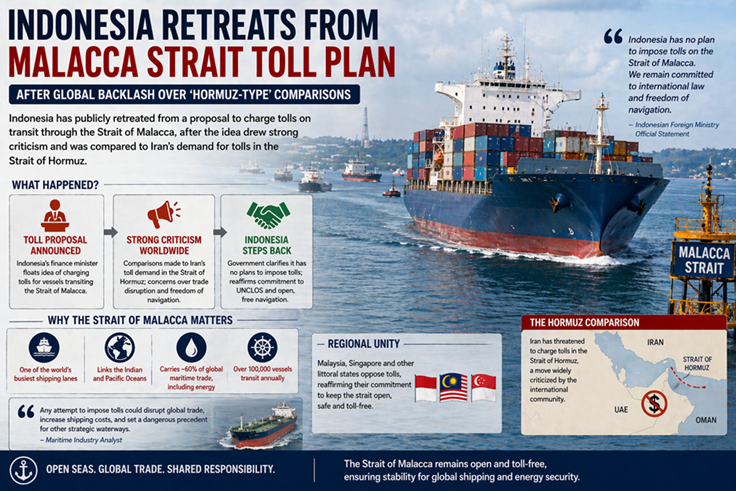
Indonesia Backs Down on Malacca Strait Toll Proposal After Global Pushback
Jakarta | Maritime & Geopolitics Desk
Indonesia has stepped back from a controversial proposal to impose transit tolls on vessels passing through the strategically vital Strait of Malacca, following strong international criticism and concerns over global trade disruption.
Proposal Sparks Immediate Backlash
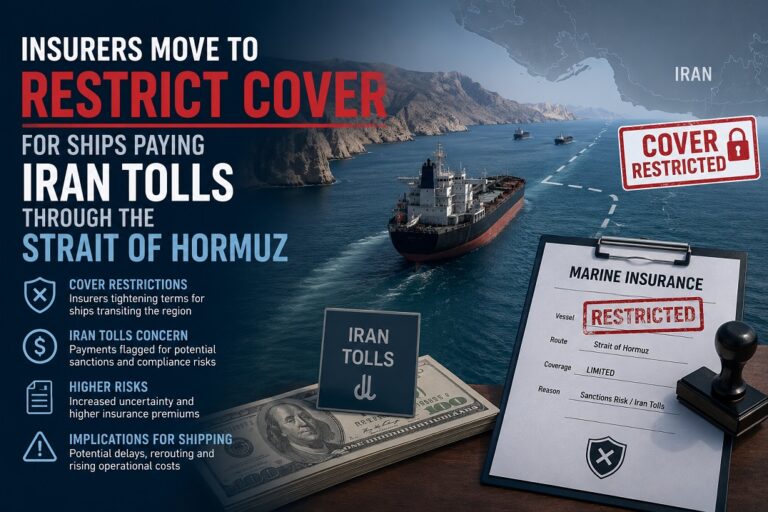
The idea, initially floated by Indonesia’s finance minister, suggested monetizing one of the world’s busiest shipping lanes by charging vessels for passage—drawing direct comparisons to Iran’s controversial move to impose tolls in the Strait of Hormuz.
The proposal quickly triggered alarm among regional partners and global shipping stakeholders, who warned that such a move could undermine long-standing principles of freedom of navigation and disrupt international trade flows.
Rapid Reversal by Indonesian Authorities
Within days, Indonesian officials clarified that the country has no plans to impose tolls, reaffirming its commitment to international maritime law, particularly the United Nations Convention on the Law of the Sea (UNCLOS), which guarantees transit rights through key international straits.
The government emphasized that Indonesia, as an archipelagic nation heavily dependent on trade, supports keeping major shipping routes open, neutral, and free of charges.
Strategic Importance of the Malacca Strait
The Strait of Malacca is one of the most critical maritime chokepoints in the world, linking the Indian and Pacific Oceans and carrying a substantial share of global trade and energy shipments.
According to recent data, more than 100,000 vessels transit the strait annually, underscoring its role as a lifeline for global commerce and energy security.
Any disruption—or perceived attempt to control access—can have immediate ripple effects across shipping markets, oil prices, and supply chains.
Regional Unity Against Tolls
Indonesia’s neighbors, including Malaysia and Singapore, were quick to signal opposition to the toll concept. Regional officials reiterated a shared understanding to maintain free and open navigation in the strait, with decisions taken collectively rather than unilaterally.
Experts noted that implementing tolls would require agreement from all littoral states—an unlikely scenario given the economic and geopolitical risks involved.
Global Concerns and Hormuz Comparison
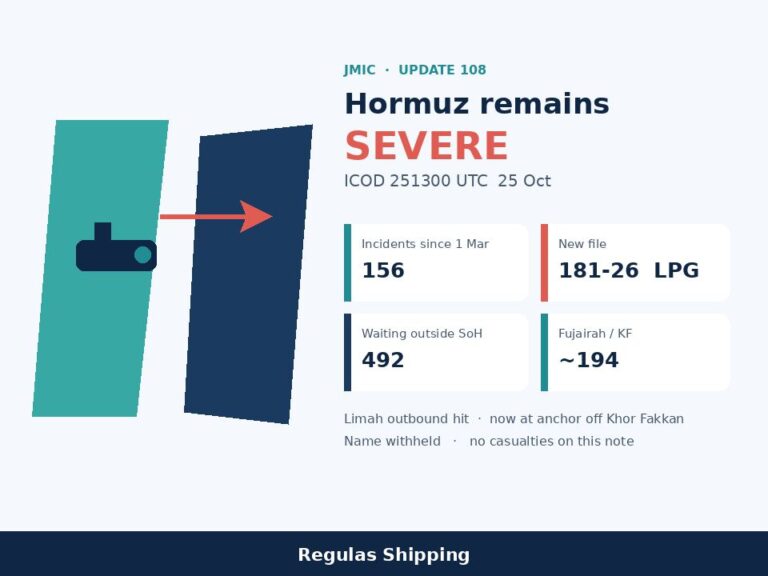
The comparison to Iran’s approach in the Strait of Hormuz amplified concerns, particularly at a time when maritime chokepoints are increasingly viewed through a geopolitical lens.
Analysts warned that introducing tolls in Malacca could set a precedent for other strategic waterways, potentially leading to the “weaponization” of global trade routes.
Industry Reaction
Shipping companies, insurers, and energy traders welcomed Indonesia’s clarification, viewing it as a stabilizing signal for global maritime markets. The brief uncertainty, however, highlighted how sensitive global trade remains to policy shifts in key chokepoints.
What It Means Going Forward
While the proposal has been shelved, analysts suggest the episode reflects a broader trend: coastal nations are increasingly aware of the economic value of the strategic waterways they control.
For now, the Malacca Strait remains open and toll-free—but the debate has reignited discussions on governance, security, and economic rights over the world’s most critical maritime corridors.
Conclusion:
Indonesia’s swift retreat underscores the importance of maintaining confidence in global shipping routes. In an era of rising geopolitical tensions, even the suggestion of restrictions in a vital artery like the Malacca Strait is enough to send shockwaves through the global maritime industry.