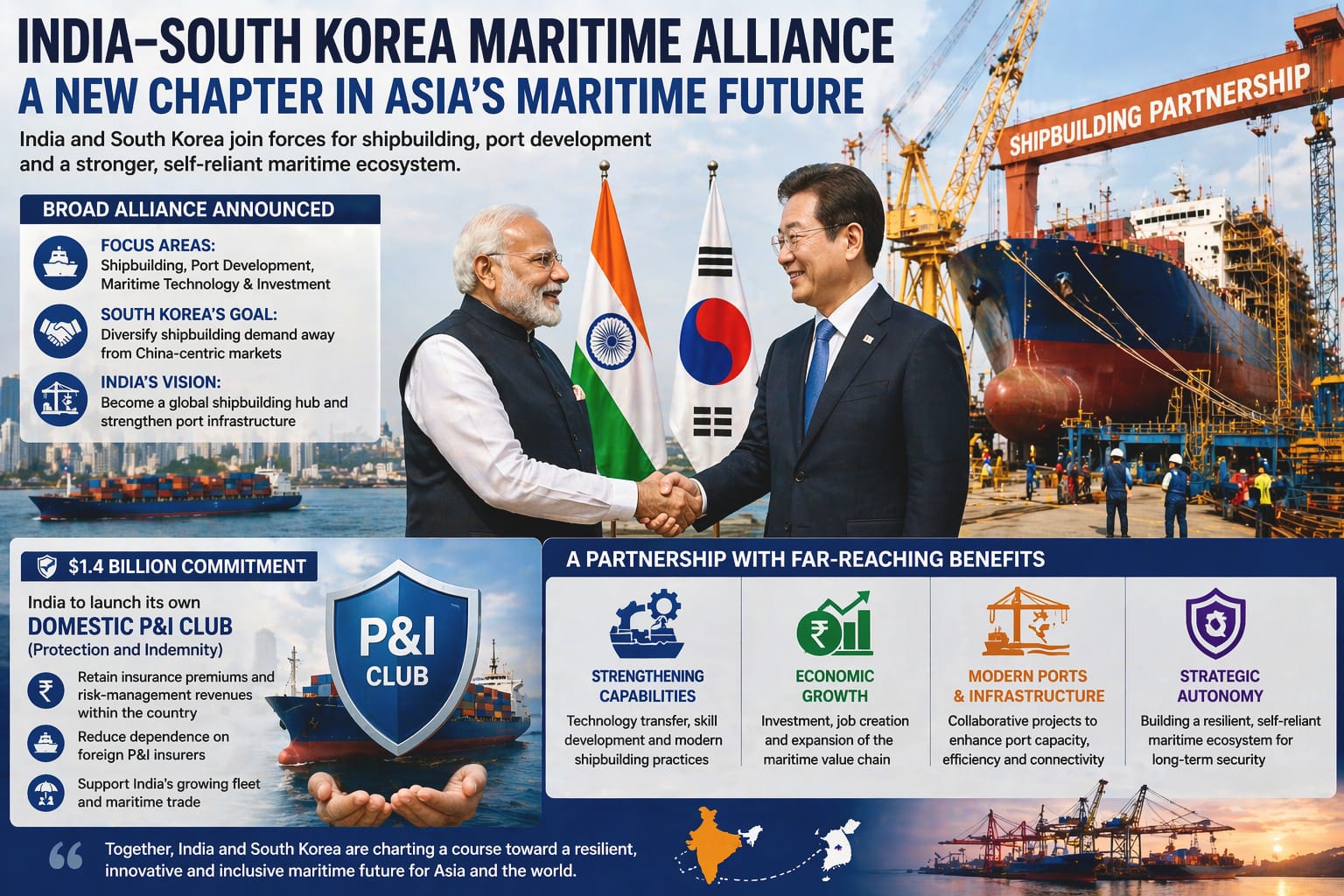
India–South Korea Maritime Alliance Signals Strategic Shift in Global Shipbuilding
A new maritime partnership between India and South Korea is reshaping the balance of power in global shipbuilding and port development, as both nations move to reduce dependence on China-centric supply chains and strengthen regional cooperation across Asia.
Strategic Alliance Takes Shape
India and South Korea have announced a broad-based collaboration focused on shipbuilding, port infrastructure, and maritime technology. The move comes at a time when global shipping dynamics are undergoing significant shifts, with countries seeking to diversify manufacturing bases and secure resilient maritime supply chains.
For South Korea—home to some of the world’s largest shipbuilders—the partnership offers an opportunity to expand its market reach beyond traditional strongholds. For India, the alliance aligns with its long-term ambition to emerge as a major global shipbuilding hub.
Boost to India’s Shipbuilding Ambitions
India has been steadily working to revitalize its maritime sector under national initiatives such as port modernization and “Make in India.” The collaboration with South Korea is expected to bring advanced shipbuilding expertise, technology transfer, and investment into Indian shipyards.
Industry analysts suggest that this partnership could significantly enhance India’s capacity to construct commercial vessels, offshore assets, and potentially specialized ships, positioning the country as a competitive alternative to established East Asian shipbuilding giants.
$1.4 Billion Push for Domestic Marine Insurance
In a parallel move, India has committed approximately $1.4 billion to establish its own domestic Protection and Indemnity (P&I) club. This initiative aims to reduce reliance on foreign insurers and retain marine insurance premiums within the country.
Currently, a large portion of maritime risk coverage for Indian vessels is handled by international P&I clubs. By developing a domestic framework, India seeks to strengthen financial sovereignty in shipping while supporting its growing fleet and maritime trade.
Economic and Strategic Implications
The dual push—industrial collaboration with South Korea and the creation of a domestic P&I ecosystem—signals a broader strategic intent:
- Reducing external dependencies in both shipbuilding and maritime insurance
- Enhancing regional cooperation within Asia’s maritime economy
- Strengthening national capabilities across the shipping value chain
- Capturing higher economic value from maritime operations
South Korea, meanwhile, stands to benefit from new project pipelines in Indian ports and shipyards, while also mitigating risks associated with over-reliance on a single dominant market.
A New Maritime Axis in Asia
This partnership reflects a growing trend of intra-Asian collaboration, where countries are leveraging complementary strengths to build resilient and competitive maritime ecosystems. With India’s expanding trade footprint and South Korea’s technological expertise, the alliance could become a cornerstone of future maritime development in the region.
Looking Ahead
If executed effectively, the India–South Korea cooperation could redefine supply chains, boost shipbuilding competitiveness, and reshape insurance dynamics in global shipping. Combined with India’s domestic policy push, the initiative underscores a clear message: Asia is not just participating in maritime trade—it is actively redesigning its future.