Panama Flags Safety Concerns as Surge in Ship Detentions Raises Global Maritime Alarm
By Maritime Desk | April 21, 2026
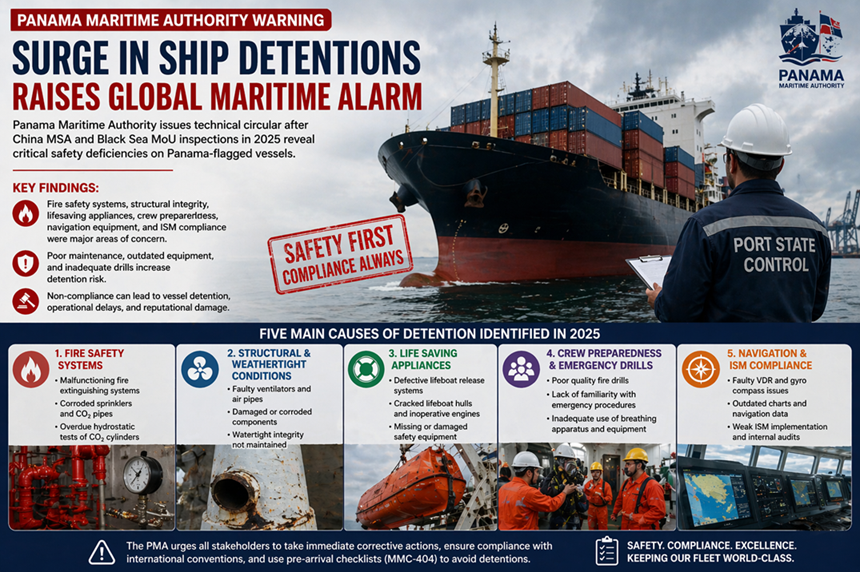
In a significant development for global shipping, the Panama Maritime Authority (PMA) has issued a critical technical circular highlighting a sharp rise in detainable deficiencies found on Panama-flagged vessels during Port State Control (PSC) inspections in 2025. The findings, covering inspections by both China Maritime Safety Administration (MSA) and the Black Sea Memorandum of Understanding (MoU), reveal systemic gaps in vessel maintenance, crew preparedness, and regulatory compliance.
Widespread Safety Deficiencies Identified
The circular outlines five major categories of deficiencies contributing to vessel detentions, with fire safety systems emerging as one of the most alarming concerns. Inspectors reported malfunctioning water mist systems, corroded sprinklers, and critically overdue hydrostatic testing of CO₂ cylinders—some dating back over two decades.
Additionally, structural integrity issues such as damaged air pipes, faulty ventilators, and compromised watertight systems were found across multiple vessels, raising concerns about seaworthiness under adverse conditions.
Lifesaving Equipment and Crew Readiness Under Scrutiny
Equally concerning were deficiencies related to lifesaving appliances. PSC inspections uncovered defective lifeboat release systems, cracked hulls, inoperative engines, and missing safety equipment. In several cases, lifeboats were deemed unfit for emergency use due to poor maintenance or improper storage.
Crew preparedness also came under intense criticism. Fire drills conducted onboard were described as “poor in quality,” with crews lacking basic familiarity with emergency procedures, breathing apparatus, and coordination protocols.
Navigation and Compliance Failures
Navigation safety was another critical area of concern. Inspectors reported malfunctioning Voyage Data Recorders (VDR), inconsistent gyro compass readings, and outdated or missing nautical charts—issues that could significantly impact safe voyage planning and execution.
Further, failures in implementing the International Safety Management (ISM) Code were noted, including lack of effective audits and weak safety management systems onboard.
Regulatory Pressure Mounts
The PMA has emphasized strict adherence to international conventions such as SOLAS and ISM Code, urging shipowners, operators, and masters to take immediate corrective actions. The authority also highlighted the importance of pre-arrival preparedness using Merchant Marine Circulars MMC-404 and MMC-384 to avoid detentions and operational disruptions.
According to the circular, failure to address these deficiencies could lead to severe consequences, including vessel detention, operational restrictions, and reputational damage to the Panama registry.
Industry Impact and Way Forward
With Panama operating one of the world’s largest ship registries, the findings have far-reaching implications for global maritime safety standards. The circular serves as a wake-up call for the shipping industry to strengthen onboard maintenance regimes, enhance crew training, and ensure continuous compliance with international regulations.
The PMA has urged all stakeholders to proactively review the identified deficiencies and implement corrective measures before entering high-risk PSC jurisdictions, particularly in China and the Black Sea region.
Conclusion:
As maritime trade continues to underpin global commerce, the spotlight on safety compliance is intensifying. The latest PMA circular underscores a clear message: operational excellence and regulatory adherence are no longer optional—they are essential for survival in an increasingly scrutinized shipping environment.