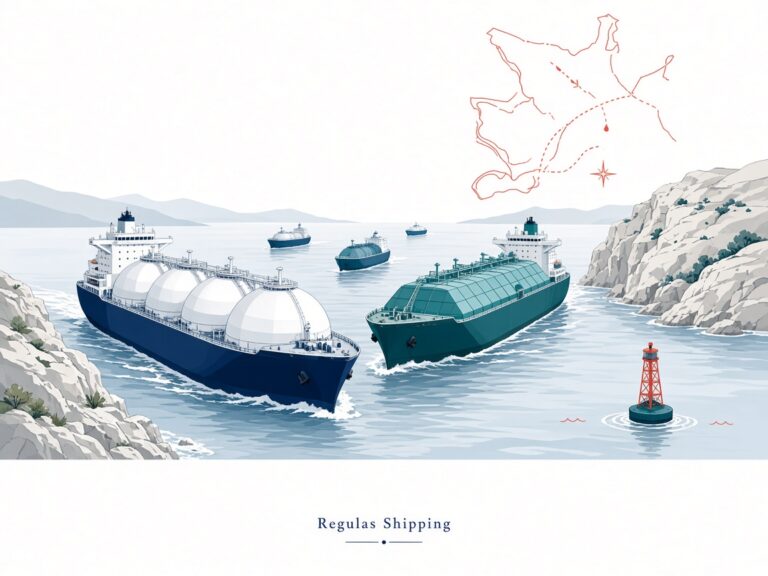
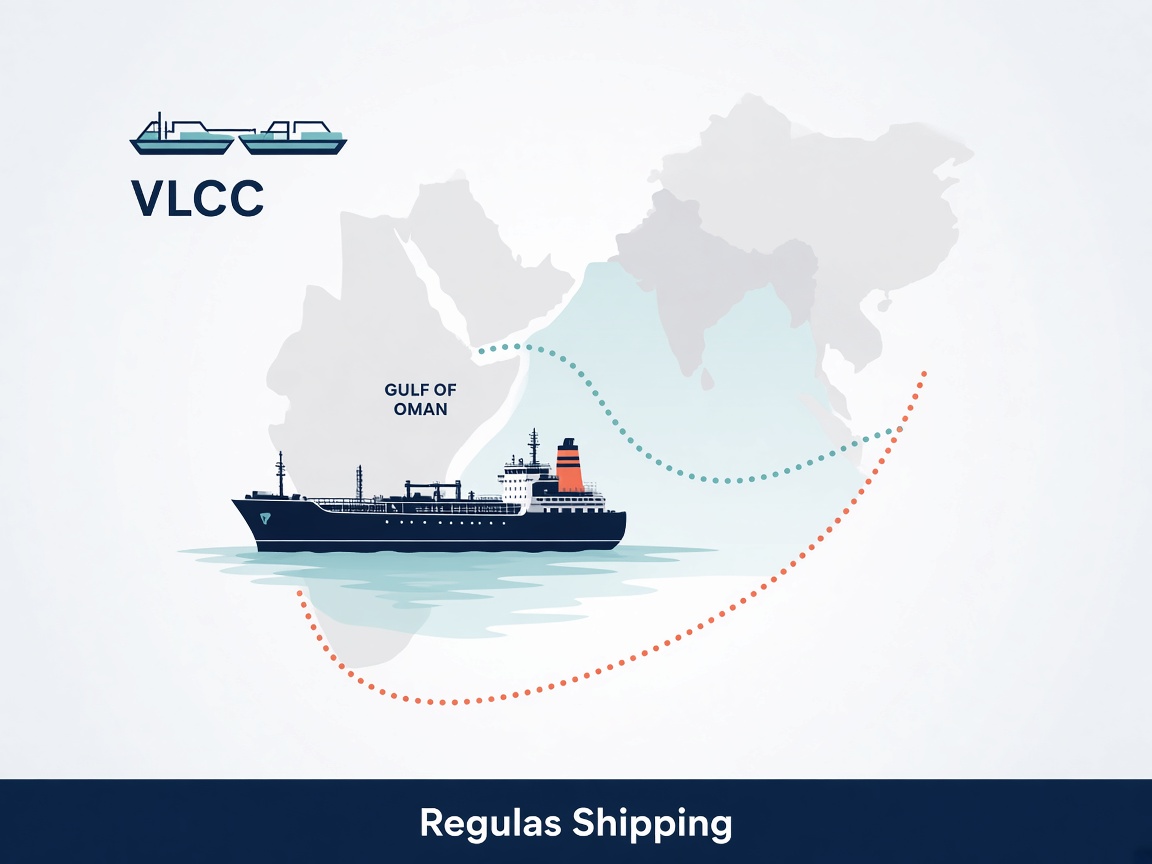
Very large crude carriers are being priced as if the physical fleet and the tradable fleet were different markets, because they now are. Industry reporting on 10 September 2026 put earnings on the benchmark Middle East-to-China VLCC run at a record of nearly $800,000 a day. Charterers looking at the US Gulf-to-Asia haul were offered a record lump-sum in the region of $29.5 million, close to $15 per barrel before war-risk extra and delay. The Baltic Exchange’s newer Gulf of Oman-to-east Asia assessment, built for the shuttle pattern that has replaced many conventional Hormuz loaders, was quoted near $386,000 a day this week, about 85 percent above its inception level. Kpler’s freight desk said VLCC daily earnings look likely to stay above $100,000 into next year, against a historic band that rarely cleared $45,000. None of those figures is a confirmed net profit on a named hull. They are the price of attracting a ship that is insured, crewed, vetted and willing to work a disrupted oil map.
The Baltic Exchange’s Middle East Gulf–China TD3C time-charter equivalent had already printed $759,969 a day on 8 September, about 26 percent above its previous peak on 16 March. The Oman–China TD34 assessment set its own record at $358,201 a day. West Africa–China TD15 and US Gulf–China TD22 printed $237,259 and $210,307 a day on the same tape. Reported fixtures in the Gulf of Oman overlay sat in the same band: Tankers International had DHT Taiga fully fixed Gulf of Oman to Myanmar at an estimated $365,031 a day and Sea Emerald on subjects for Gulf of Oman to China near $409,913 a day. The message is not that every VLCC owner is banking three-quarters of a million dollars. It is that the marginal ship able to load inside the Gulf, or to receive a shuttle cargo east of Hormuz, can name a number that would have been dismissed as fantasy in a normal tonne-mile cycle.
Volumes are not supporting the tape in the usual way. Vortexa figures cited in the trade press put Middle East crude exports at about 11.8 million barrels a day in August, some 6.6 million barrels a day, or 36 percent, below the average of the six months before the Hormuz crisis. VLCC export loadings during the war have run about 27 percent below a year earlier. Ballast lists lengthened. Around 40 VLCCs were waiting east of Hormuz by late August, the highest count since the start of 2025. In a textbook market that stack of idle steel would cap freight. It has not, because a ship on the east-of-Hormuz waiting list is not automatically a candidate for a Ras Tanura or Gulf of Oman window. The owner may refuse the strait, the crew may refuse the high-risk area, the war-risk line may be unavailable at a workable additional premium, or the charterer’s vetting desk may not accept the hull. Vortexa’s distinction between ships that are visible and ships that are “commercially willing and operationally able” is now the freight model.
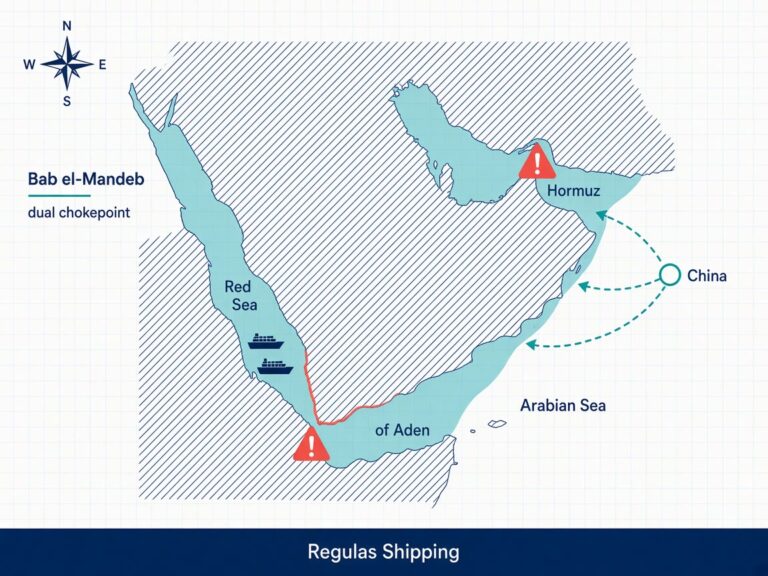
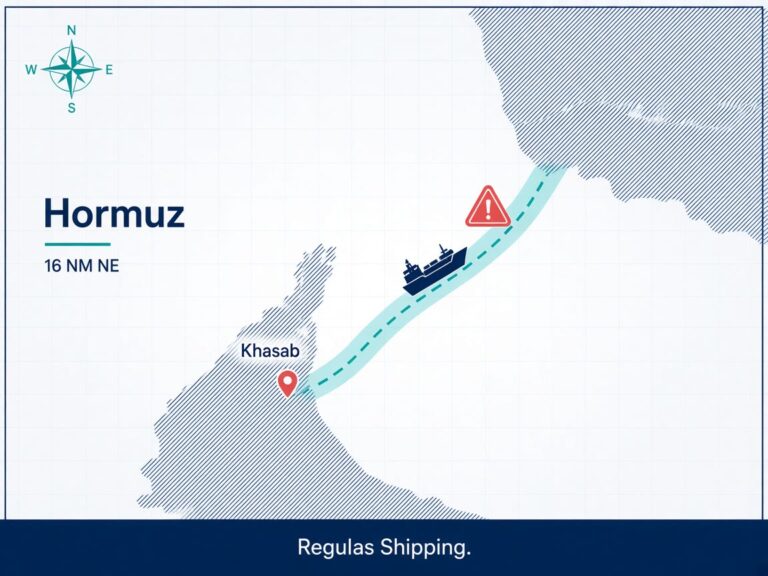
The shuttle-and-STS chain is what keeps a reduced barrel count moving and what consumes the fleet. Vitol’s chief executive said this week that about 10 million barrels a day were still getting out through waiting hulls in the Gulf of Oman. Vortexa has the STS share of that workaround rising from about 603,000 barrels a day in April to 4.6 million barrels a day in August, recently around 80 percent of cross-Hormuz exports. A conventional TD3C voyage uses one VLCC. The workaround can use a shuttle tanker, an ocean-going VLCC, an offshore transfer, weather and security holds, and days of waiting that do not show up as laden tonne-miles. That is why TD34 can print records even when the receiving ship never enters the Gulf, and why UKMTO projectile warnings off Khasab sit on the same commercial pattern: the southern highway and the Fujairah/Oman holding grounds are no longer a cheap parking lot. They are the load port.
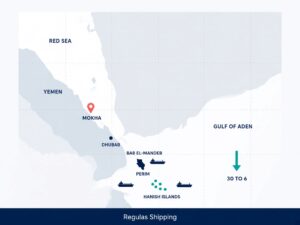
The rest of the map is paying for the same inefficiency. Houthi pressure on remaining Red Sea and Saudi-linked hulls has pushed some Asian-bound Saudi crude to Mediterranean loaders, then through Suez and around the Cape, adding more than three weeks against a Gulf of Aden routing. Atlantic cargoes have to compete with eastern returns: a US Gulf, Brazil or West Africa VLCC to Asia is off the prompt list for months. Equinor’s Alex Grant, speaking at the Asia Pacific Petroleum Conference in Singapore, called the picture “quite a few bottlenecks all at the same time.” Repsol’s Max Tay said product movements now start with the freight market: if the ship does not make sense, the barrel does not move. Indian refining interest at HPCL-Mittal put the constraint on transit and shipping, not on crude in the ground. MOL chairman Takeshi Hashimoto said Asia has to accept higher logistics cost because so many alternative routes replace the Middle East. Kuwait Petroleum and ADNOC have been buying more of their own steel rather than relying on the commercial list. Clarksons Securities, as reported by Lloyd’s List, lifted its 2026 weighted VLCC earnings view from $75,000 to $135,000 a day and 2027 from $60,000 to $117,000, on a base case that disruption lasts through the first half of 2027. Morgan Stanley this week put two-year VLCC leasing 20 to 30 percent higher. Those are still well below this week’s spot prints. The gap is the war-risk premium. It can vanish faster than a newbuilding can arrive. It is also what charterers are paying today.
Operators should read the record as a compliance and voyage-order problem, not as a windfall headline. Time-charter equivalent is a standardised Baltic construct. Actual returns depend on bunkers, additional war-risk premium, waiting, commissions, STS costs and whether the ship is delayed or damaged. A fixture that looks like $15 a barrel before extras can still destroy the voyage if the hull is trapped inside the Gulf, if the shuttle partner does not arrive, or if the crew will not sail. Charter-party language on CONWARTIME, additional premium, deviation, STS liability, waiting at Fujairah or Khasab, and who may order the ship into a UKMTO warning box has to be explicit before the recap, not after the first projectile report. The same is true on the manning side. A VLCC waiting east of Hormuz with a crew that has already refused the strait is not effective supply. It is a hotel with a tanker certificate. Company security officers, operations and chartering need one decision tree: enter the Gulf, wait for a shuttle, load in Oman, or ballast to the Atlantic. Splitting that tree across three desks is how a $800,000 TCE turns into a casualty and a claims file.
What Operators Should Note
- Separate headline TCE from cash and from risk. TD3C near $760,000–$800,000 a day, TD34 above $350,000, and a US Gulf–Asia lump-sum around $29.5 million are Baltic or recap signals, not guaranteed net earnings. Subtract war-risk additional premium, waiting, STS, bunkers and the chance the ship does not complete. Do not brief owners, boards or crews as if the index were a hire rate.
- Price effective supply, not the east-of-Hormuz waiting list. Dozens of VLCCs in the Gulf of Oman are not automatic candidates for a MEG or even an Oman loader. Confirm insurance, crew consent, vetting, sanctions profile and board approval before treating a hull as available. A ship that will not enter is not a substitute in the negotiation.
- Write the shuttle and STS pattern into the voyage order. Industry figures put STS volumes outside Hormuz at about 4.6 million barrels a day in August, around 80 percent of remaining cross-strait exports, with Vitol still citing about 10 million barrels a day moving through the workaround. Name who authorises waiting as a shuttle or receiver, who pays extra days at Fujairah or Khasab, and what happens if UKMTO logs projectiles in that box.
- Re-open CONWARTIME, additional premium and deviation clauses for this week’s map. A Mediterranean or Yanbu loader plus Suez plus Cape can add more than three weeks toward Asia against a Gulf of Aden route. Atlantic long-hauls lock the ship out of the prompt MEG list for months. The recap should say who chooses the loader and who pays if the intended strait or Bab el-Mandeb option dies mid-voyage.
- Do not let chartering, insurance and the CSO run three different threat pictures. The same week that produced record VLCC prints also produced UKMTO Warning 133-26 off Khasab and a seafarer fatality on Hercules Star off Port Rashid. A fixture that assumes the southern highway is the quiet waiting room is already off the security brief.
- Treat NOC fleet buying as a signal that the commercial list is not reliable. Kuwait Petroleum and ADNOC adding steel is a statement about availability, not only about strategy. Charterers who still assume a deep international VLCC pool for MEG and Oman windows should re-run Q4 cover on a thinner, vetting-constrained book.
- Use term cover as a hedge against the war-risk slice, not against the whole market. Clarksons’ lifted 2026–27 averages remain far below this week’s spot. A two-year charter at a historically strong but sub-spot rate can lock cash if Hormuz reopens and the $800,000 print collapses. It will not protect a ship that is already committed to a shuttle hold under fire.
Regulas Shipping will keep lining Baltic VLCC prints and Gulf of Oman shuttle fixtures against UKMTO warnings and the east-of-Hormuz waiting list so operators can treat a record TCE as a scarcity and security signal, not as a hire rate to chase without a written voyage order.