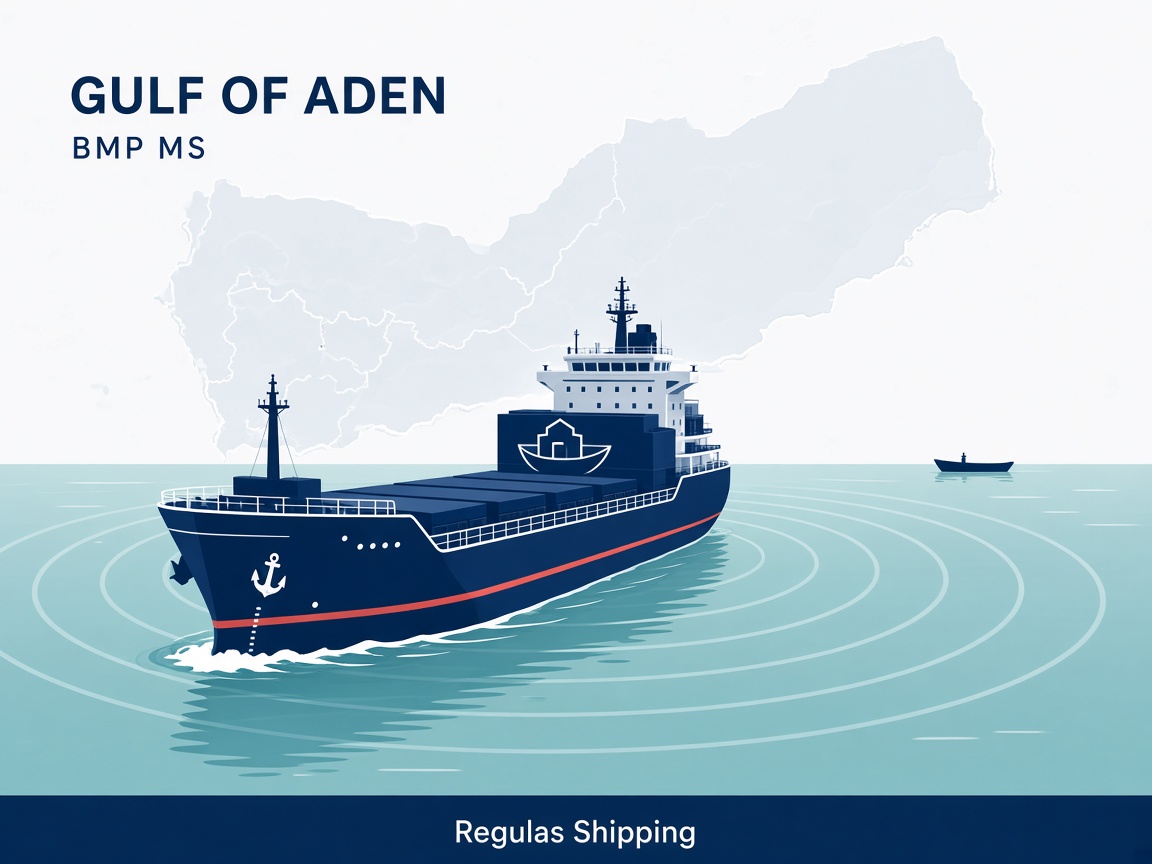
The United Kingdom Maritime Trade Operations centre first logged the case as a company security officer report: an unidentified skiff had approached a cargo ship about 98 nautical miles southwest of Al Mukalla, Yemen, on Thursday, 10 September 2026. The Maritime Security Centre — Indian Ocean later placed the same hull about 38 nautical miles southwest of Balhaf, in the Gulf of Aden, and described a pirate action group boarding. UKMTO subsequently identified the ship as the Greek-owned, Saint Vincent and the Grenadines-flagged bulk carrier Glamor (IMO 9177961), a 1998-built, 24,000-dwt vessel of about 154 metres that has been trading in and out of Djibouti. The crew mustered in the citadel. Unauthorised personnel got on board but did not seize control. They later disembarked. UKMTO said all crew were reported safe and that the ship had resumed normal transit. Assets assigned to the European Union’s Operation Atalanta were investigating.
MSCIO listed the case as the 25th recorded piracy, armed-robbery or approach incident of 2026 in its Indian Ocean accounting. It is the first boarding logged since 20 August, when the tanker Sibu I was reported hijacked east of Yemen while bound for Port Sudan. That gap of three weeks is not a cooling of the threat. MSCIO and Atalanta are still monitoring five merchant ships held in Somali coastal waters: the tanker Honour 25, hijacked on 21 April; the cargo ship Sward, on 26 April; the tanker Eureka, taken off Yemen on 2 May; the tanker Asana, hijacked off Yemen on 17 July; and Sibu I. The cargo ship Lutuf was released on 17 August about 4.5 nautical miles south of Maraya in Somalia’s Eyl district after a contested recovery. Crews from the five remaining hulls are the same hostage file that Somalia asked the UN Security Council to treat as an enforcement problem, not a residual risk.
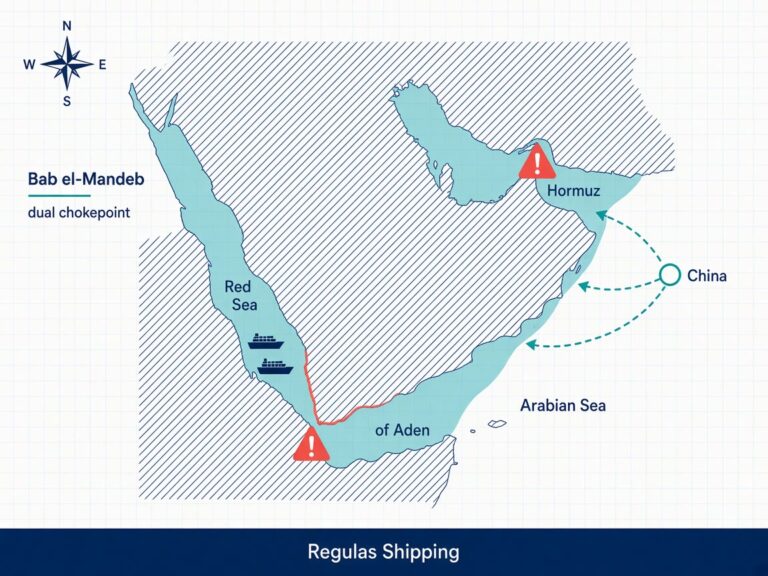
The geography matters as much as the count. Balhaf and Mukalla sit on Yemen’s southern coast, in waters that reporting placed outside Houthi control on the day of the boarding. That is not a safer box. It is the Gulf of Aden lane that remaining Red Sea and Djibouti callers still use, and it is the same theatre in which Houthi forces seized Mokha on 10 September and pushed toward Dhubab and the Hanish Islands. A pirate skiff off Balhaf and a missile or drone envelope at Bab el-Mandeb are different weapons. They land on the same passage plan. Operators who have written the Houthi problem into the voyage order but left Somali piracy as a 2012 footnote will mis-brief the master. MSCIO continues to warn commercial ships to keep heightened vigilance within 150 nautical miles of the Somali coast between Mogadishu and Hafun. Thursday’s boarding shows the Yemeni south coast is inside that working picture, not adjacent to it.
The citadel is what prevented a sixth hostage ship. That is the operational fact, not a public-relations line. Best Management Practices for Maritime Security still rest on early detection of a skiff, hardening, a drilled citadel with independent communications, and a company that can talk to UKMTO, MSCIO and the on-scene naval commander while the crew is locked down. The attackers boarded. Control did not pass. If the citadel had been a store room without power, water or a working satellite set, Glamor would now sit on the same list as Honour 25 and Asana. Flag, P&I and the company security officer should treat a successful citadel as evidence that the Ship Security Plan was tested under boarding, not as permission to thin the watch. Liberian-flagged ships in the Red Sea and Gulf of Aden are already held at ISPS security level 3. Glamor is not a Liberian ship. The threat does not follow the flag. It follows the water.
Reporting lagged the skiff. The first UKMTO line was an approach, attributed to the CSO. The hijack/boarding language came later from MSCIO, with a second position off Balhaf. That sequence is normal and dangerous. A master who waits for a named ship, a confirmed pirate action group or a press identification before calling UKMTO is already late. The instruction for the bridge pack is the same as for a Hormuz projectile: report while the contact is closing, keep AIS and citadel comms honest, and do not wait for vessel names that may never be published. Company offices should have a single officer who owns the next-of-kin clock if the next boarding does not end with a disembarkation. War-risk underwriters will ask whether the ship was in a declared high-risk area, whether lookouts and citadel drills matched the SSP, and whether the voyage order still described the Gulf of Aden as a Houthi-only problem.
The dual-theatre point is now a manning and contract issue as much as a routing one. Seafarers on remaining Aden, Djibouti and Red Sea calls are being asked to steam through pirate skiff water and a missile envelope on the same voyage. High-risk-area pay, rest-hour records after a citadel muster, and a written right to refuse a Gulf of Aden transit belong in the SMS before the next skiff, not in a dispute after a hostage video. Owners who have armed teams on some hulls and none on others need a documented rule for a 24,000-dwt bulker on a Djibouti run, not an assumption that naval assets from Atalanta will be in the box. Atalanta was investigating on Thursday. It did not prevent the boarding. The citadel did.
What Operators Should Note
- Treat the 10 September Glamor case as a boarding that failed, not as a near-miss to file and forget. UKMTO logged an unidentified skiff about 98 nautical miles southwest of Al Mukalla. MSCIO placed a pirate action group about 38 nautical miles southwest of Balhaf. The crew mustered in the citadel, attackers boarded, control did not pass, the skiff party left, and all crew were reported safe. Put that sequence in the bridge pack.
- Keep BMP MS live on the Yemeni south coast, not only inside a Houthi-held box. Balhaf and Mukalla were reported outside Houthi control on the day of the incident. The Gulf of Aden lane to Djibouti is still a pirate-skiff problem. Extra lookouts, skiff detection, citadel readiness and a working independent comms set belong on the pre-arrival checklist for Aden, Mukalla, Balhaf and Djibouti as much as they do for a Bab el-Mandeb transit.
- Do not thin the posture because three weeks passed after Sibu I. MSCIO’s 2026 count is 25 incidents. Five merchant ships remain held in Somali waters: Honour 25, Sward, Eureka, Asana and Sibu I. The 150-nautical-mile Mogadishu–Hafun warning is still current. A quiet interval is not a threat assessment.
- Report to UKMTO while the skiff is closing, then keep MSCIO and Atalanta in the same loop. The first public line was an approach from the CSO. The boarding confirmation came later. Flag, P&I, war-risk and a named company officer who owns next-of-kin should be on the clock from the approach, not from a later “hijacked” headline.
- Write the dual-threat voyage order in one document. Houthi capture of Mokha on 10 September and a pirate boarding off Balhaf the same day are one theatre for a master still using the Gulf of Aden. Routing, hardening, citadel, AIS policy and HRA pay should not sit in separate Houthi and piracy memos that the bridge has to reconcile at night.
- Match ISPS level, manning and contracts to the water, not only to the flag circular. Liberia is already at security level 3 in the Red Sea and Gulf of Aden. Other flags that have not issued the same instruction still owe the crew a level-3 quality of watch, rest-hour accounting after a citadel muster, and a written position on armed teams for smaller bulkers on Djibouti runs.
- Use the citadel test in the next internal audit. Ask whether the space has independent communications, water, sanitation and a drilled muster that still works if attackers are already on the main deck. Thursday’s outcome depended on that room. The next boarding may not wait for Atalanta to close the range.
Regulas Shipping will keep lining UKMTO and MSCIO Gulf of Aden boarding reports against the Somali hostage list and the Houthi envelope so operators can treat a Balhaf or Mukalla approach as a security decision, not as quieter water beside the Red Sea war.