Saudi Arabia’s Ministry of Energy said on Friday, 11 September 2026, that the East-West crude pipeline — Petroline — had been stopped as a precaution after several attacks on Thursday morning in the Riyadh and Medina regions. Injuries were recorded and treated. The Saudi foreign ministry said the drones originated from Iraq. Iraq condemned the strikes, opened an investigation, and on Saturday dismissed the commander responsible for operations in Maysan province after confirming the attacks originated from a location in that governorate. Satellite imagery showed black smoke south of Medina along the pipeline route. The ministry has not published a repair timetable or an export-loss figure.
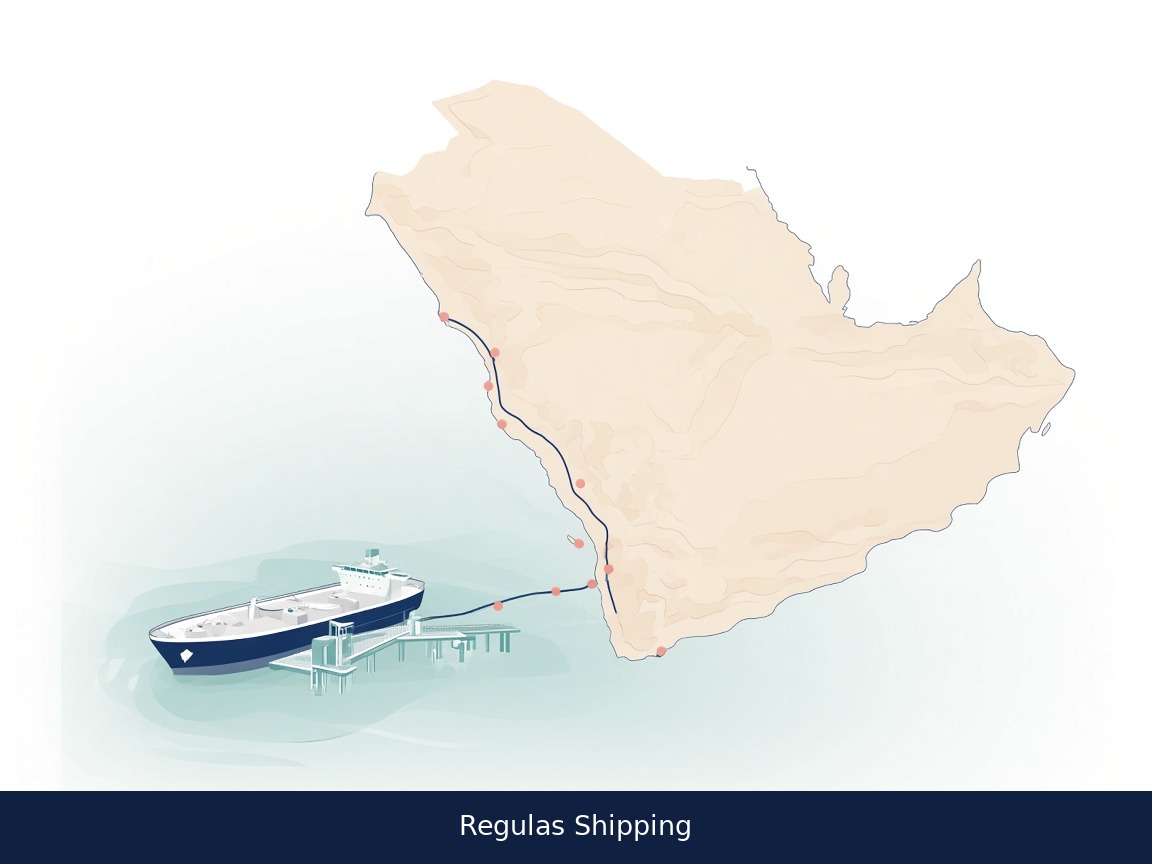
The line is the 1,200-kilometre Hormuz bypass. It links production in the Eastern Province to Yanbu on the Red Sea. Nameplate pumping capacity is about seven million barrels a day. Ship-tracking companies and analysts have put recent throughput at four to five million barrels a day, or 4 to 5 percent of global supply — the volume that has kept Saudi crude moving west after Iran’s blockade of the Strait of Hormuz reduced Gulf tanker traffic to a trickle. Operators who have treated Yanbu as the remaining Saudi load port now face a pipeline that is offline at the same moment the Red Sea exit is tightening.
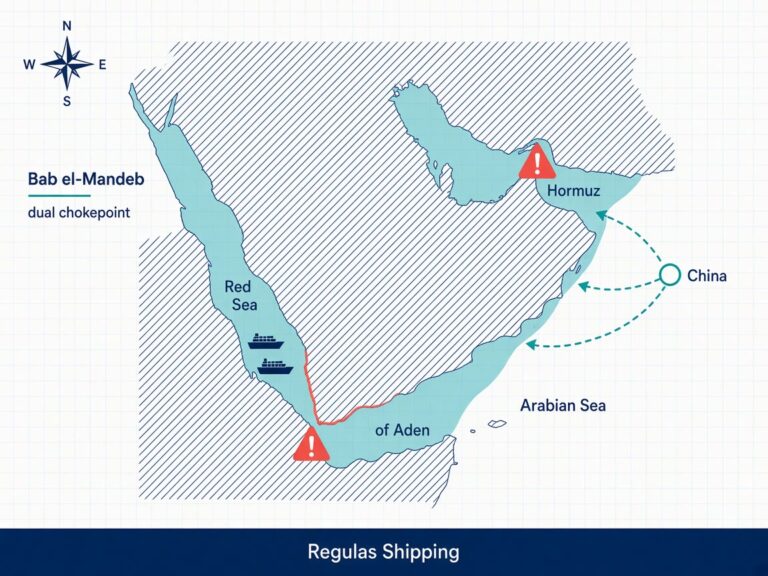
That second squeeze arrived on Friday. Yemeni government officials said Houthi forces completed their takeover of the Yemeni side of Bab el-Mandeb and Mayyun Island (Perim) in the middle of the strait, then seized Greater and Lesser Hanish and the remaining Red Sea coastline. A government military official told AFP that everything that had been under government control on the western coast had fallen. Houthi military spokesman Yahya Saree said navigation through the strait remained “safe” for all shipping except Saudi vessels already under a previously announced ban. The Mokha seizure on 10 September is already on the operator file. Friday’s island and coastline confirmation is the next step: a force that can fire on Saudi tankers now holds the islands in the lane those tankers still need if Yanbu is to load.
The International Energy Agency’s September Oil Market Report, issued on Friday, already described a supply picture that did not need a pipeline stop to look tight. IEA put Saudi crude supply at about 6 million barrels a day in August, down 2.3 million barrels a day on the month and the lowest in more than three decades. The agency cited Houthi-linked attacks on Bab el-Mandeb shipping, the Jazan refinery and shipping near Yanbu, and an Iran-backed militia drone strike on Abqaiq. Saudi Arabia told OPEC it produced 6.238 million barrels a day and “supplied” 7.122 million; the IEA figure tracks the production print more closely. Loadings, including Red Sea and assessed dark-shipping transits, fell 1.1 million barrels a day to 3.5 million. Inventories drew 400,000 barrels a day. IEA cut its 2026 Saudi supply forecast by 885,000 barrels a day to 7.6 million. Brent and WTI both printed above $100 this week, with reporting putting Thursday’s highs near $108 and $103.
The operational implication for tanker and products owners is that the two remaining Saudi workarounds — the East-West line to Yanbu, and a Red Sea exit that still depends on Bab el-Mandeb — are now degraded on the same weekend. A VLCC or Suezmax stemmed for Yanbu cannot treat a pipeline restart as a voyage assumption. Charterers who have substituted Yanbu or SUMED/Suez for Ras Tanura or Juaymah need a written alternative if the line stays down for days rather than hours. War-risk, waiting and cancellation language written for Hormuz does not automatically cover a Red Sea load port whose feed line has been hit from Iraq and whose exit strait is now held, on the Yemeni side, by a force that has banned Saudi ships. Masters still calling Jeddah, Yanbu, Jazan or a northbound SUMED programme should treat a Saudi-linked cargo, a Saudi-owned hull and a non-Saudi hull in the same box as three different risk files, not one “Red Sea” stamp.
Reporting and welfare sit in the same SMS as the routing decision. UKMTO, MSCIO and BMP Maritime Security remain the live reporting chain for Bab el-Mandeb and the Gulf of Aden. A pipeline fire inland is not a UKMTO event; a projectile or boarding on a Yanbu-stemmed tanker is. Company security officers should have a named officer who owns next-of-kin if a Saudi-associated ship is hit while the pipeline story is still the headline. P&I and war-risk will ask whether the voyage order still described Yanbu as the safe Hormuz workaround after Friday’s ministry statement, and whether the master was briefed that Saree’s “safe for all but Saudi” line is a targeting statement, not a transit guarantee.
What Operators Should Note
- Treat the East-West line as offline until the energy ministry says otherwise. Thursday morning attacks in the Riyadh and Medina regions; Friday precautionary stop; injuries confirmed; drones attributed to an origin in Iraq; Iraq dismissed the Maysan operations commander on Saturday. No public repair window. Do not stem a Yanbu cargo on the assumption that Petroline is pumping.
- Separate the Hormuz bypass from the Red Sea exit. The 1,200-kilometre line to Yanbu was the workaround after Hormuz closed. Friday’s Houthi hold on Mayyun, the Hanish islands and the Yemeni Red Sea coast is a second failure mode. A ship that can still reach Yanbu still has to leave through a strait whose Yemeni shore and mid-channel island are now in Houthi hands.
- Read Saree’s “safe except Saudi” line as a targeting rule, not as clearance. Non-Saudi hulls remain in the same water. Association by cargo, owner, last port, AIS history or STS partner can put a ship inside the envelope even if the flag is not Saudi. Update the Ship Security Plan and the voyage order with that distinction.
- Re-price waiting, cancellation and alternative load ports in the charter. Name who pays if Yanbu is closed, if the pipeline is still stopped at notice of readiness, or if the owner refuses a Bab el-Mandeb exit. SUMED/Suez northbound is not automatically available if Red Sea loadings stay constrained.
- Put the IEA August print in the commercial brief, not only the security brief. About 6 million barrels a day of Saudi supply, loadings at 3.5 million, and a 2026 forecast cut by 885,000 barrels a day to 7.6 million. Effective Saudi barrels are already short before any extra days of pipeline downtime.
- Keep UKMTO, MSCIO and BMP Maritime Security live for any remaining Yanbu, Jeddah or northbound Red Sea call. Report while an approach or projectile is happening. A pipeline headline is not a reason to thin the watch on the water.
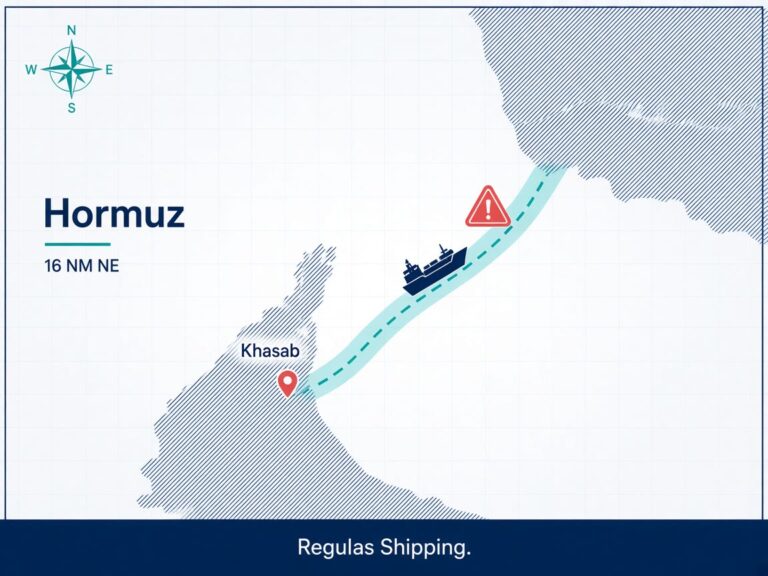
- Write the next-of-kin and war-risk clock before the next Saudi-associated hit. Flag, P&I and a named company officer should know the procedure if the next casualty is a Yanbu-stemmed tanker rather than an unnamed hull off Khasab.
Regulas Shipping will keep lining the East-West pipeline stop, Yanbu stemming and Bab el-Mandeb island control against remaining Red Sea load programmes so operators can treat a Yanbu call as a security and supply decision, not as the quiet way around Hormuz.