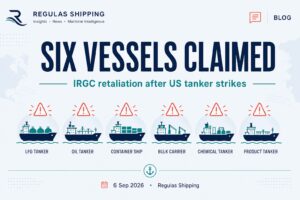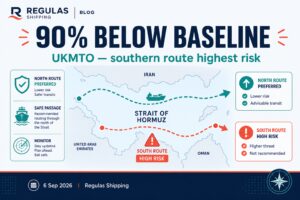
As of 6 September 2026, masters, CSOs and manning teams need a consolidated seafarer-protection posture after one of the conflict’s most dangerous weeks for commercial tankers. Confirmed Filipino seafarer fatalities on Bahri Sidr, twin VLCC projectile strikes near Khasab, PGSA blacklist expansion, and CENTCOM’s disabling or destruction of Iranian tankers Downy, Stark 1 and Kylo have stacked kinetic, administrative and naval-retaliation risks across Hormuz, Jask and Kharg.
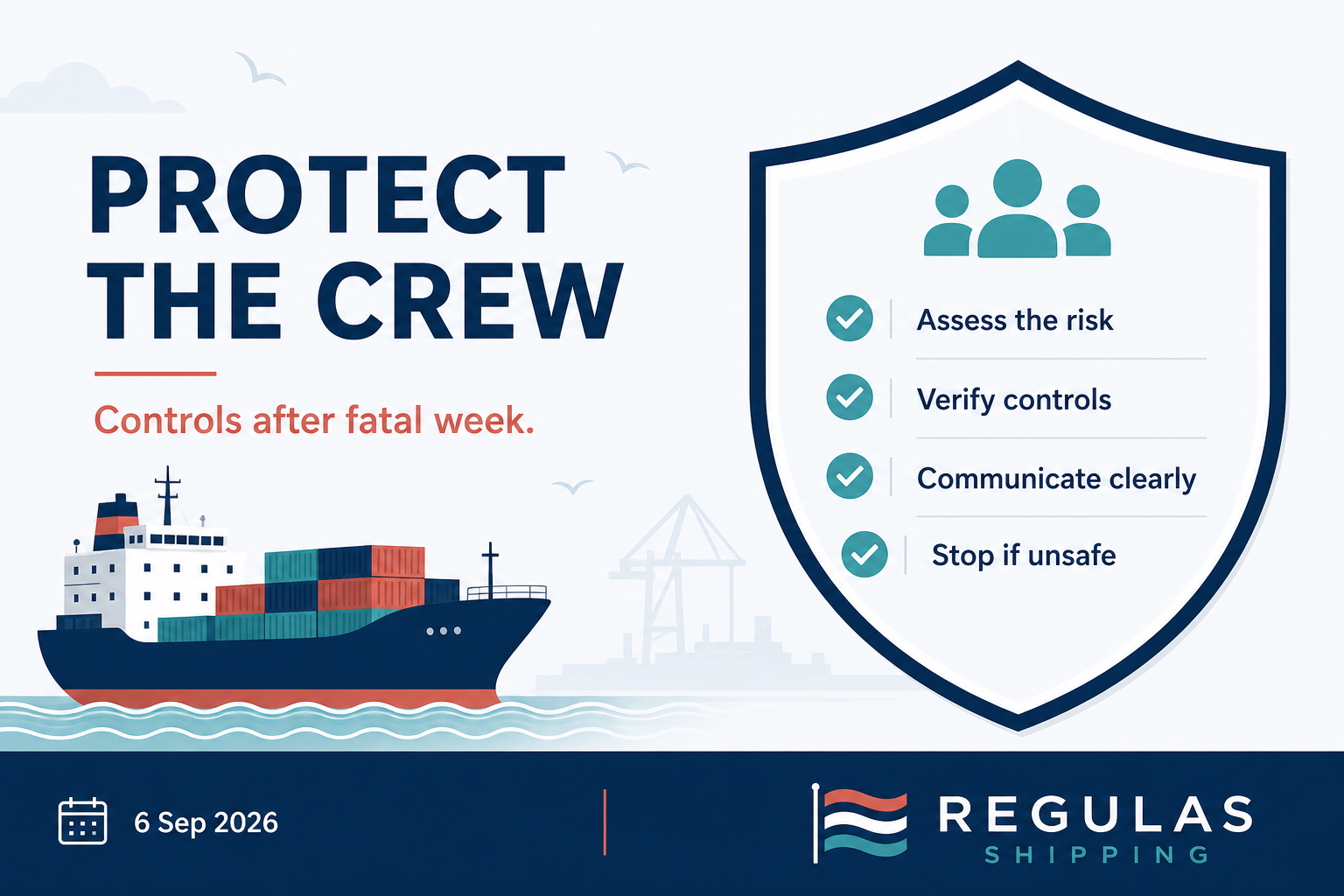
Practical controls should be written, drilled and auditable: voyage-specific threat briefs before every Gulf-related order; explicit master authority to abort; hardened reporting to UKMTO; medical and citadel readiness for multi-projectile hits; family-liaison protocols; and a default preference for diversion when JMIC remains SEVERE. Companies that still authorise high-risk Gulf legs must show why alternative routings were impossible and how crew consent and compensation were handled.
Regulas recommends that owners treat seafarer protection as the primary KPI for September Middle East operations — ahead of schedule integrity and spot freight opportunity — until advisory levels and attack tempo materially improve.
What Operators Should Note
- Issue a single company notice covering Sidr fatalities and 5 September naval tanker strikes.
- Confirm master abort authority in writing for Hormuz/Kharg/Jask exposure.
- Drill multi-hit damage-control and medical scenarios this week.
- Stand up 24/7 family and manning-agency communication lines.
- Audit every residual Gulf voyage against JMIC SEVERE and latest UKMTO warnings.
Regulas Shipping will keep prioritising crew-safety guidance alongside chokepoint intelligence while this high-intensity phase continues.