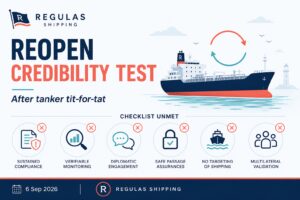
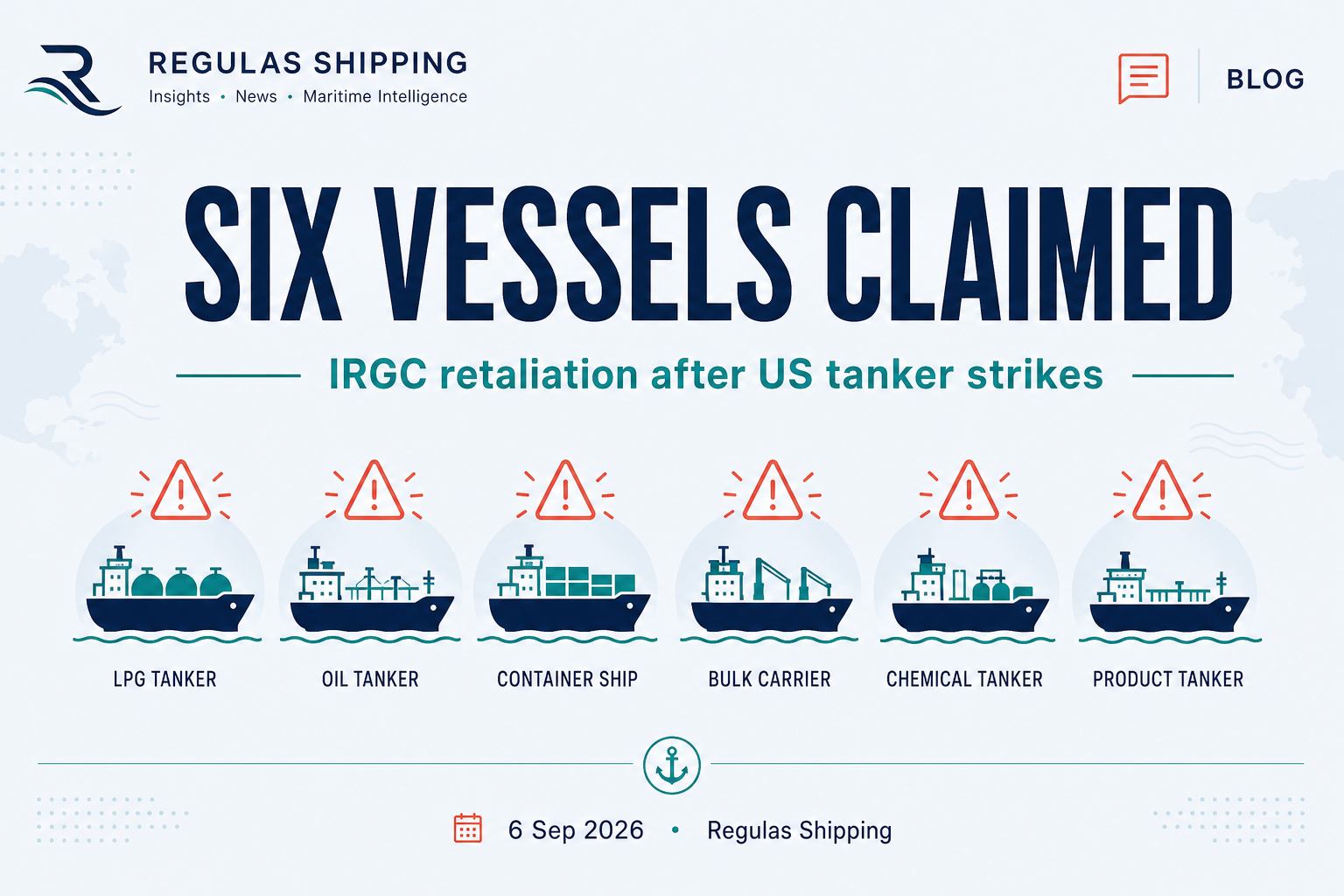
On 6 September 2026, industry and regional reporting framed a sharper escalation cycle around the Strait of Hormuz: after US Central Command said it had permanently disabled Iranian tankers Downy and Stark 1 and destroyed unladen Kylo in response to IRGC ballistic missiles aimed at US warships, Iran’s Revolutionary Guards claimed they had targeted six vessels in retaliation — three oil tankers using what Tehran called an “unauthorised route” through Hormuz, and three other vessels described as US-affiliated elsewhere.
US Defence Secretary Pete Hegseth also warned that Washington would “destroy (and sink)” Iranian oil tankers if Tehran continued firing on US Navy ships. The combination converts the waterway dispute from mine-clearance and corridor diplomacy into an explicit ship-for-ship economic and kinetic contest. For commercial operators, the practical danger is misidentification and route-enforcement: any vessel on a southern/Omani corridor that Iran rejects, or any ship whose AIS/ownership profile looks “US-linked,” may sit closer to targeting thresholds than voyage plans assumed last week.
Independent confirmation of all six claimed Iranian strikes was still uneven in open reporting, but operators cannot wait for perfect attribution before tightening passage controls. The working assumption for CSOs should be that both sides are now willing to hit tankers to shape behaviour in and beyond the TSS — and that Tit-for-tat tempo can compress decision time for masters to minutes.
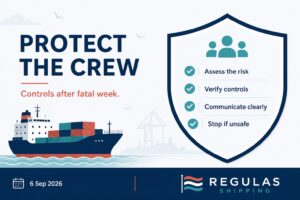
What Operators Should Note
- Treat “unauthorised route” language as an active targeting criterion, not only a political slogan.
- Re-screen beneficial ownership, flag and AIS destination text for any residual Hormuz employment.
- Expect faster naval/IRGC warning-and-strike cycles after the Downy/Stark/Kylo exchange.
- Pre-brief bridge teams on military radio warnings and immediate compliance manoeuvres.
- Raise abort authority and diversion triggers whenever either side announces tanker retaliation.
Regulas Shipping will continue tracking claimed versus confirmed vessel strikes as this ship-for-ship phase develops.