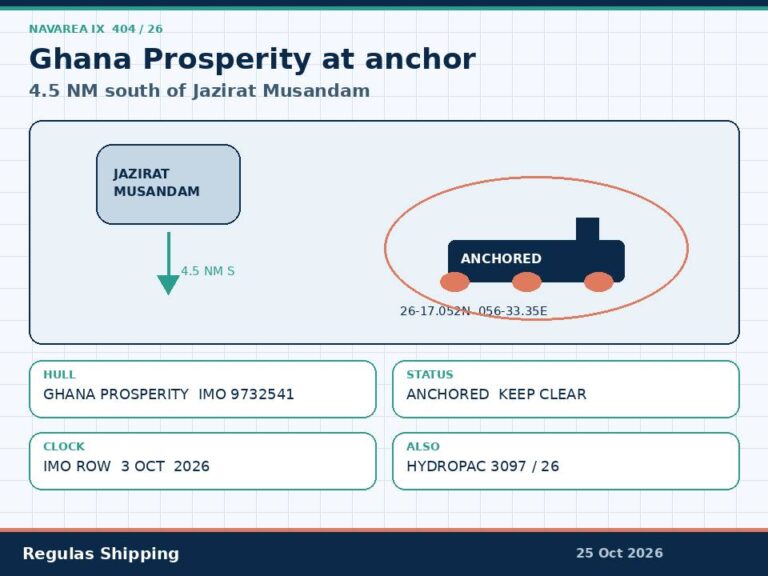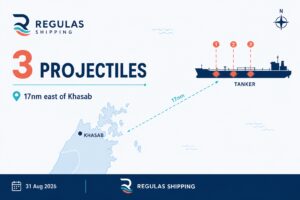
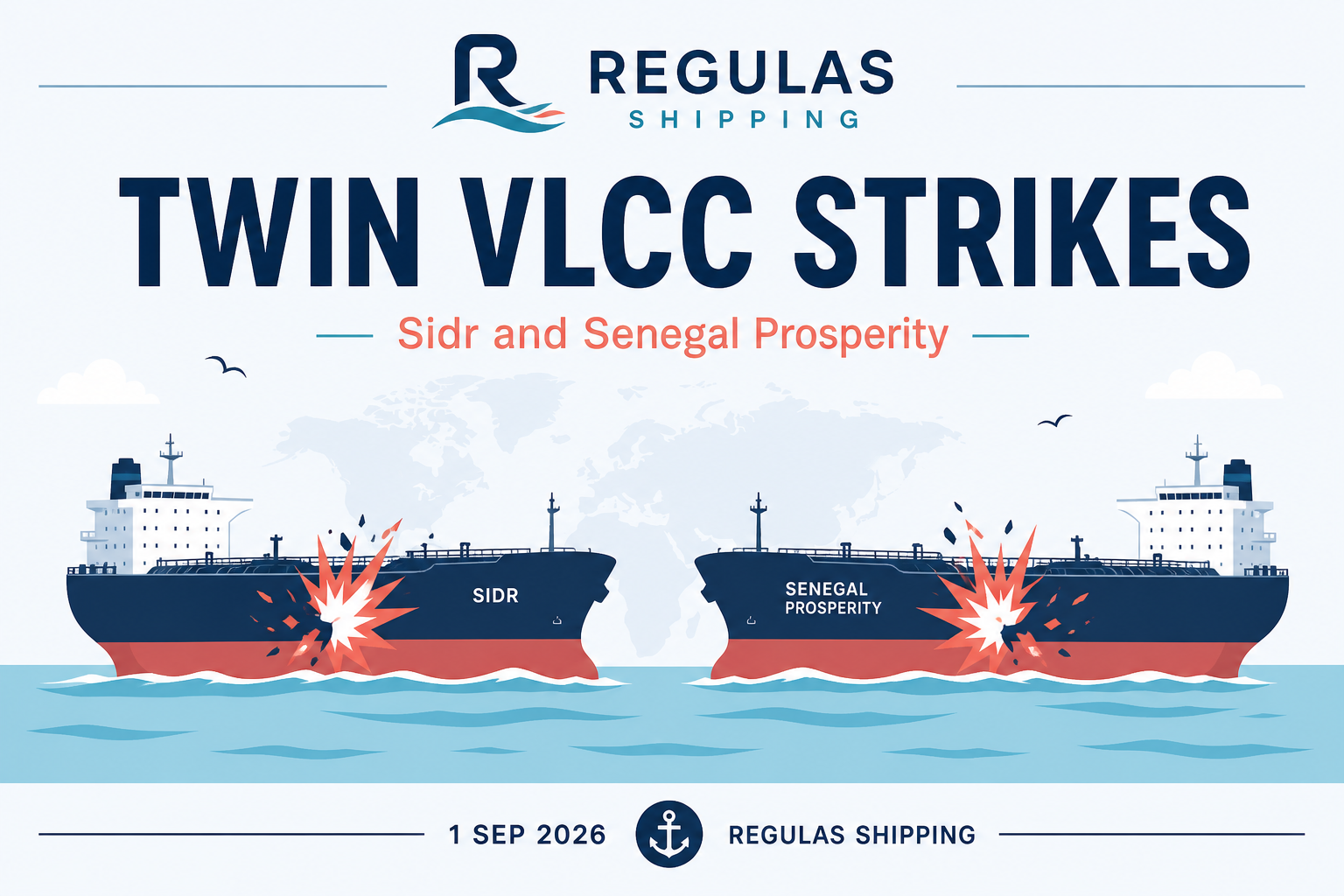
Late on 1 September 2026 (Monday evening), maritime risk firms reported that two very large crude carriers carrying Saudi oil were struck by projectiles within minutes of each other while exiting the Strait of Hormuz near Oman. Athens-based Marisks and other trackers identified Saudi national carrier Bahri‘s VLCC Sidr as hit by unknown projectiles about 16 nm northeast of Khasab, and Liberian-flagged Senegal Prosperity (Sinokor-operated) as hit by three unknown projectiles about 17 nm east of Khasab. Both were described as outbound from the Gulf.
UKMTO reported a related incident in the same area. Initial public notes emphasised investigation and, in some early products, no confirmed casualties or pollution — but the dual-strike pattern against Saudi-linked crude exports immediately lifted oil prices and hardened operator caution. Both ships had periods of dark AIS behaviour before the attacks, illustrating how opacity and risk now travel together in Hormuz logistics.
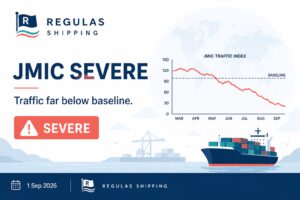
The twin hits landed days after the Larak Island US strike and weekend traffic collapse, signalling that any tentative recovery in Gulf exits can reverse in a single evening. For CSOs, simultaneous attacks on two VLCCs compress emergency response capacity and raise the probability of complex SAR and salvage scenarios.
What Operators Should Note
- Plan for clustered multi-ship attack evenings, not only isolated single-vessel events.
- Reassess any Saudi-oil Hormuz exit programme after the Sidr/Senegal Prosperity pairing.
- Expect dark-AIS VLCCs to remain high-value targets regardless of tracking posture.
- Pre-arrange tug, salvage and medical escalation paths for Musandam approaches.
- Update charter-party war-risk and deviation clauses before the next Gulf stem.
Regulas Shipping will follow vessel status, casualty confirmations and UKMTO follow-ups on the 1 September twin VLCC strikes.