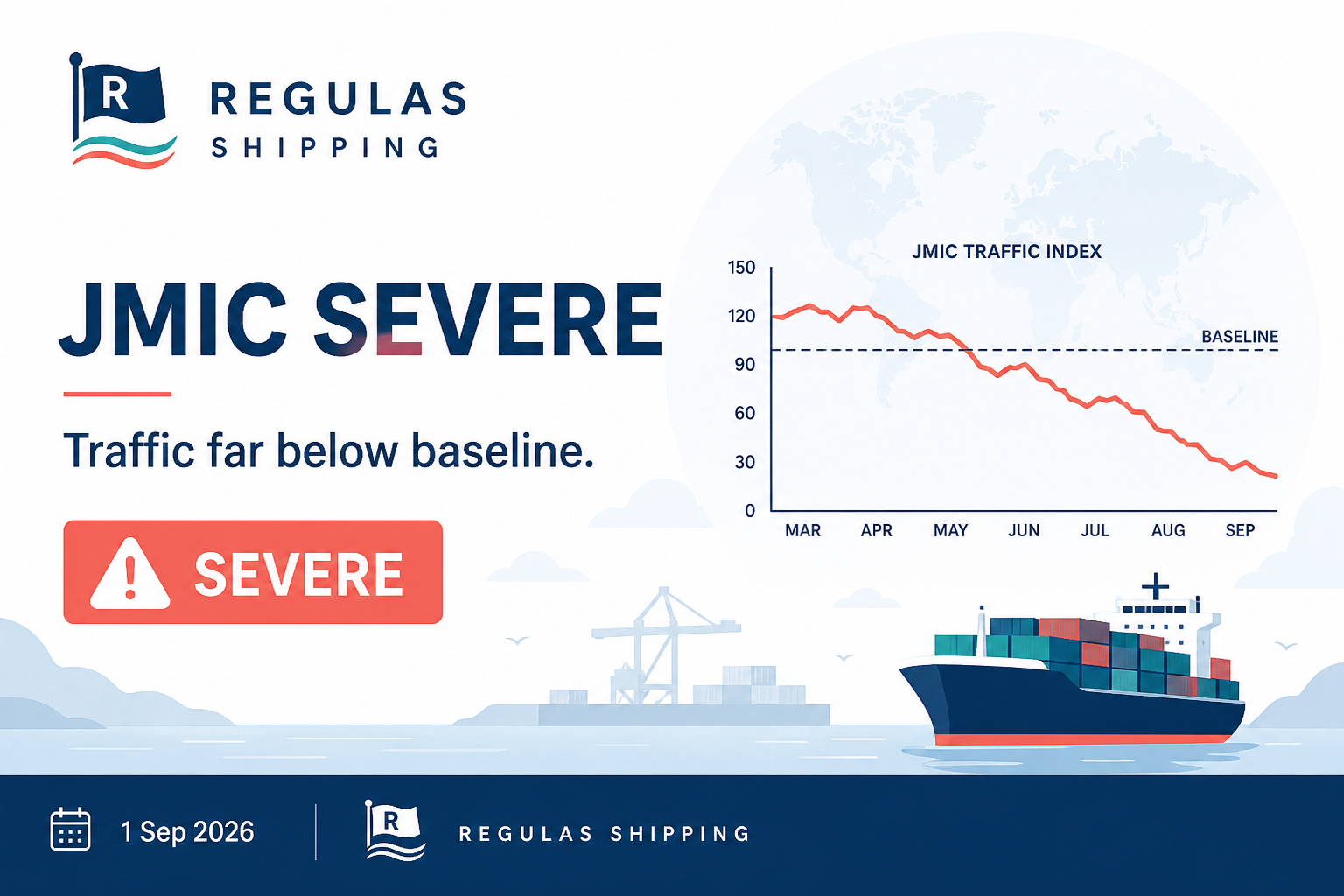
In its 1 September 2026 advisory window, the Joint Maritime Information Center continued to assess the Strait of Hormuz at SEVERE, stating that commercial traffic remained far below baseline even after a modest uptick from recent lows. JMIC again flagged a continued risk of drifting or uncharted mines in and near the TSS, contradicting any market narrative that US mine-clearance statements had ended navigational mine danger.
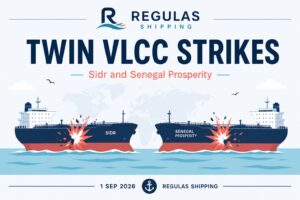
Independent trackers around the same period showed daily commodity crossings still in the low teens or below on multi-day averages — nowhere near the historical roughly 130–140 ships/day peacetime rhythm. The advisory’s timing, on the same calendar day as twin VLCC projectile reports near Khasab, gave operators a coherent picture: political and military claims of openness are running ahead of both traffic recovery and formal threat downgrades.
Practically, SEVERE means voyage decisions should remain crew-safety first. Companies that sailed on the basis of “lanes cleared” messaging without waiting for JMIC/UKMTO alignment exposed seafarers to a threat environment the multinational centre still rates at the top of its scale.
What Operators Should Note
- Anchor decisions to JMIC/UKMTO threat levels, not single-nation reopen claims.
- Keep mine-danger graphics current even after clearance announcements.
- Treat “modest upticks” as noise until multi-week averages and tanker mix recover.
- Require written risk acceptance from commercial stakeholders before any Hormuz transit under SEVERE.
- Align P&I, hull war-risk and crew contracts with the SEVERE designation explicitly.
Regulas Shipping will continue matching JMIC severity language to daily traffic and attack evidence for clients.