Tankers Turn Back Near Yemen as Houthi “Maritime Embargo” Squeezes Saudi-Bound Shipping
July 2026 | Maritime Security Desk
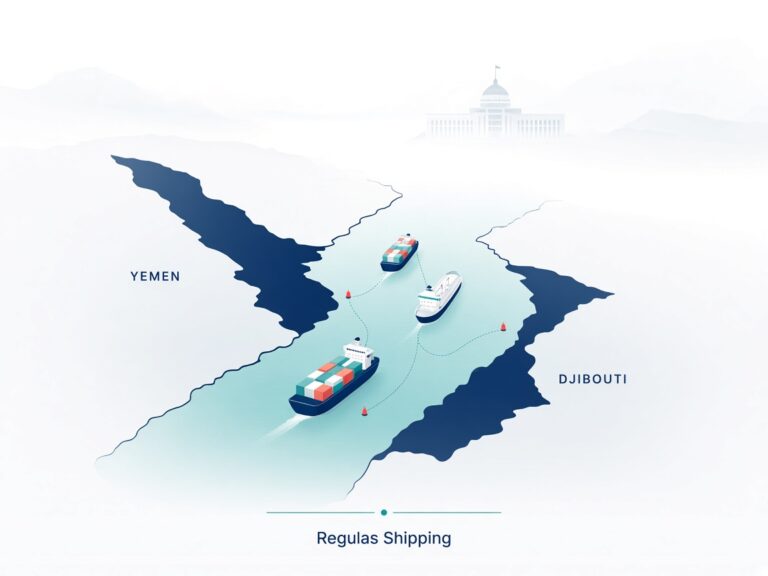
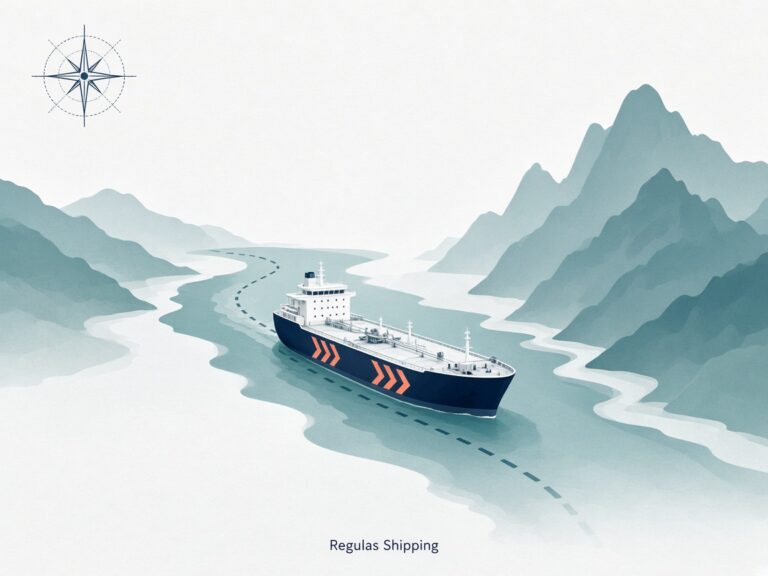
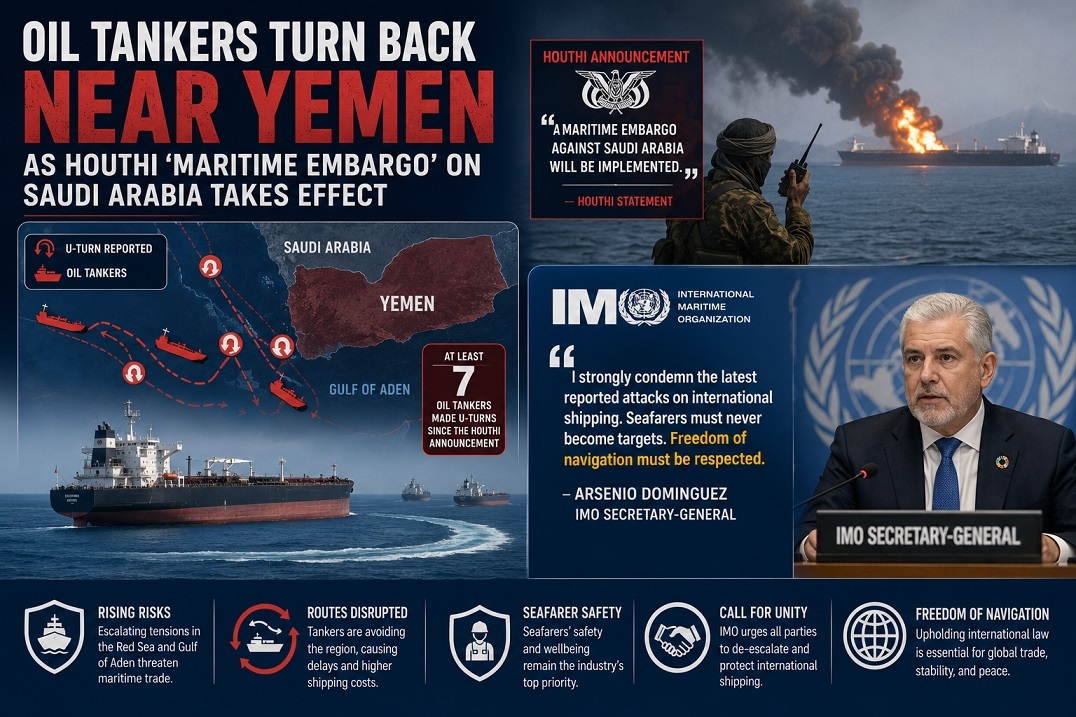
At least seven oil tankers have made abrupt U-turns near Yemeni waters in recent days after the Iran-linked Houthi group declared a self-styled “maritime embargo” against ships bound for Saudi Arabia. The reversals mark one of the clearest operational signs yet that owners and masters are choosing to avoid the corridor rather than test the group’s stated intentions, while IMO Secretary-General Arsenio Dominguez has publicly condemned the latest reported attacks on commercial shipping in the area.
What Triggered the Reversals
Vessel tracking has shown multiple tankers altering course and heading away from Yemeni waters shortly after the Houthi announcement of restrictions targeting Saudi-linked trade. For masters and operators, an abrupt course reversal is rarely a casual decision, it typically follows a direct threat assessment weighing the announced embargo against the practical risk of transiting a corridor where the group has previously demonstrated both the intent and the capability to strike commercial vessels.
IMO’s Response
IMO Secretary-General Arsenio Dominguez issued a public statement condemning the latest reported attacks on international shipping tied to the embargo declaration. While an IMO statement carries no direct enforcement power, it reinforces the organisation’s consistent position that coercive interference with commercial navigation runs contrary to the international legal framework governing freedom of passage, and it gives flag states, insurers, and industry bodies a formal reference point when assessing the legitimacy of the Houthi group’s claimed authority over the corridor.
Why Saudi-Bound Trade Is the Specific Target
Unlike earlier phases of Red Sea disruption, which broadly targeted vessels linked to Israel, this embargo is explicitly framed around Saudi Arabia, reflecting the wider regional realignment following the recent escalation between Iran and Western forces. For charterers and owners, that distinction matters operationally: risk exposure now needs to be assessed not just by vessel flag or ownership, but by cargo origin, destination, and any commercial ties to Saudi ports.
Practical Steps for Owners and Charterers
- Reassess voyage planning for any fixture with Saudi Arabian load or discharge ports, including transhipment cargo that may still carry embargo-relevant exposure
- Maintain close coordination with war-risk underwriters before committing to transits through Yemeni waters and the wider Bab el-Mandeb corridor
- Treat AIS course-reversal patterns from other operators as a live risk indicator, not just anecdotal news, when briefing masters ahead of a voyage
- Keep security advisories under continuous review rather than relying on a single point-in-time risk assessment, given how quickly the embargo’s scope could expand or narrow
The Bottom Line
The tanker U-turns near Yemen show that the Houthi embargo declaration is already shaping real-world routing decisions, not just headlines. IMO condemnation adds diplomatic weight but does not change conditions on the water. For fleet managers, the safest course is to treat the embargo as an active, evolving threat, keep voyage plans flexible, and lean on security and insurance advisories rather than assuming the situation will resolve on its own.
This article is based on publicly reported vessel movements and statements from the IMO Secretary-General. Operators should consult current security advisories and their war-risk underwriters before planning any transit through the affected corridor.