The 15 members of the United Nations Security Council issued a statement on Friday, 18 September 2026, condemning Houthi attacks on Saudi Arabia and reiterating their condemnation of attacks and threats against commercial shipping in the Red Sea and the Bab el-Mandeb Strait. Anadolu, Arab News and Associated Press products carried the text on Saturday. The council demanded that the Houthis “immediately cease their military escalation,” affirmed “the inherent right of the Kingdom of Saudi Arabia to self-defence in accordance with international law,” and said the widening confrontation risked “threatening maritime security and international trade.” That is a political product. It is not a routing circular, a war-risk cancellation, or a reopening of Yanbu.
Council members recalled their 7 August statement on Houthi missile attacks on the kingdom and on assaults on commercial vessels. Friday’s text went further on the coastal file. Members condemned attacks and threats against shipping in the Red Sea and Bab el-Mandeb, stressed the need to safeguard vessels and crews, and said Houthi forces must respect international law, “in particular the United Nations Convention on the Law of the Sea,” and uphold freedom of navigation. They called for practical cooperation, including with Yemen’s internationally recognised government, to enforce the arms embargo under resolution 2216 and to prevent the group from obtaining weapons, training or financing. They also demanded the unconditional release of detainees, including 73 United Nations personnel and staff of non-governmental organisations, civil society groups and diplomatic missions.
The humanitarian numbers in the same statement are the operational context, not a separate story. Members expressed grave concern at reports of civilians killed and injured and noted that at least 125,000 people have been displaced in Yemen since the start of September, according to the UN Office for the Coordination of Humanitarian Affairs. They warned that further escalation would worsen an already dire humanitarian situation and called for full, safe, rapid and unhindered humanitarian access. Special Envoy Hans Grundberg’s Yemeni-led political track was reaffirmed. None of that changes a master’s passage plan. It does tell owners why the next week of Bab el-Mandeb traffic will be read in New York as well as in Djibouti.
What the council actually said about ships
Friday’s language on shipping is a restatement with a sharper coastal hook, not a new legal instrument. Resolution 2722 already condemned Houthi attacks on merchant shipping. Resolution 2216 already imposed the targeted arms embargo. UNCLOS already governs innocent passage and transit passage. The new operational fact is that all 15 members put Saudi energy and civilian infrastructure, Red Sea threats, and the Houthi advance toward Bab el-Mandeb in one paragraph and named the risk to international trade. Bahrain had already convened the council this month on the same file. The United Kingdom said at the earlier emergency sitting that the strikes had endangered civilians, regional stability and international shipping. Friday’s product is the consensus statement that sitting produced.
The attacks the council is describing are not abstract. The Saudi-led coalition reported an 8 September barrage that wounded 73 people and hit Aramco infrastructure near the Yemeni border, followed by strikes on Khamis Mushait, Abha, Jazan and Najran through mid-September, including a 14 September attack that wounded 13 more civilians. Arabian Post reporting on Saturday said Civil Defence warnings were activated on Friday night in Jeddah, Taif, Khamis Mushait and AlUla before later updates indicated the immediate danger had passed in some locations. The East-West Petroline shutdown after the 11 September drone strikes is already on this desk. Friday’s statement treats that energy file and the Bab el-Mandeb file as the same escalation. Owners should do the same in the voyage brief, not in the press release.
Houthi-controlled media showed Friday rallies in northern Yemen after Riyadh said it had intercepted a drone aimed at Mecca. The Houthi leadership has denied responsibility for that specific claim. The group’s public targeting language for merchant ships remains Saudi-linked shipping. ACLED and other analysts have already warned that the criteria for what counts as Saudi-linked can be widened. During the earlier Red Sea campaign the group struck vessels with no known link to the original dispute. A Security Council paragraph on UNCLOS does not freeze that targeting list. It records that the council still treats the strait as an international waterway while the group holds Mokha and is reported on Perim and the Hanish islands.
August traffic: Suez recovered, Bab el-Mandeb did not
Lloyd’s List Intelligence’s Red Sea Brief dated 18 September is the first monthly readout that sits under Friday’s statement. Suez Canal transits in August reached 1,232 cargo-carrying ships over 10,000 dwt, carrying 102.4 million dwt. That is up 28 percent year on year, with tonnage up 43 percent month on month, and the busiest month for the canal since December 2023. It is still 39 percent below pre-crisis levels. During the worst of the disruption the monthly average was 884 transits and 66 million dwt. The northern chokepoint has been rebuilding for a year. Lloyd’s List says the Hormuz disruption and the earlier shift of some Saudi export barrels toward Red Sea outlets helped that recovery. It also says it is too early to measure the effect of the Petroline halt on Suez activity. Treat August as a completed month, not as a forecast for September.
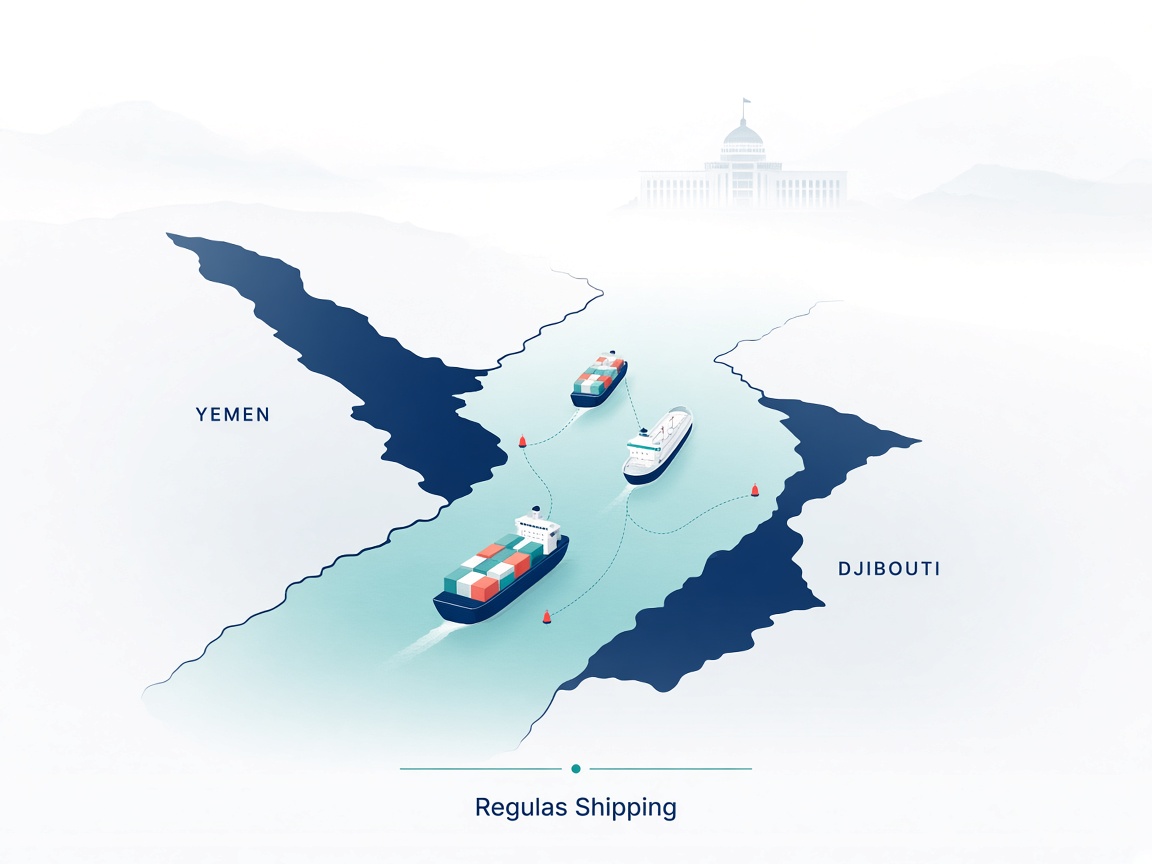
Bab el-Mandeb did the opposite in August. Lloyd’s List counted 1,166 transits and 92.7 million dwt through the southern chokepoint: up 6 percent year on year, but down 14 percent in transits and 19 percent in deadweight from July, and 49 percent below 2023 figures. During the worst Red Sea months the average was 965 transits and 65.9 million dwt. August is therefore better than the floor and worse than July. The brief’s executive line is the one that matters for operators: Suez recovery gathered pace; the Bab el-Mandeb revival stalled. Mega-boxships are the confidence signal. Forty-four ultra-large containerships have transited Bab el-Mandeb this year, 39 of them since July, against a single ship of that size in 2025. Containership traffic measured by capacity has more than doubled year on year and remains about 70 percent below pre-Houthi-crisis levels. The renewed threats have not, on Lloyd’s List’s reading, derailed the liner return. They have erased much of the extra southern-strait volume that the Hormuz crisis had generated.
The Saudi-linked cut is sharper than the headline counts. Traceable Saudi-affiliated transits by flag or ownership collapsed after the July embargo declaration. Only one Saudi-linked tanker has completed a Bab el-Mandeb transit since 20 July. A faction of the industry is avoiding the region. Another faction is coming back. Lloyd’s List says several high-profile, US-listed shipping companies are sending vessels through the waterway, including ships that have not used it in more than two years. EU-owned tonnage, excluding Greece, more than doubled year on year and rose 13 percent from July to August. That is a split book, not a reopened strait. Kpler’s Dimitris Ampatzidis put this week’s daily picture at about 26 to 35 vessels, down from a 35-to-40 daily average over the prior eight weeks. Mohamed Kotb of United Insurance Brokers in London described the traffic as “severely impaired and increasingly selective.” Daily Kpler commodity snapshots earlier this week sat in the low-to-mid 20s against a ten-day average near 26. Those figures can be true at the same time as the August monthly recovery. They describe different windows.
What Friday changes, and what it does not
A unanimous council statement does not put a frigate in the TSS. It does not restore Petroline. It does not alter Liberia’s ISPS Level 3 designation for the Red Sea and Gulf of Aden. It does not move Gemini’s conditional AE5, AE11, AE12 and ME2 restorations, MSC’s westbound Indusa, or COSCO’s southbound OOCL Portugal from case-by-case commercial decisions into a cleared corridor. Italy’s planning order for a national escort remains a flag-specific product, not a council product. South Korea said on Friday that it is considering an expansion of its existing Gulf of Aden naval operation to protect its own ships and oil-shipping routes, and that it will not send troops into the Iran war. That is another national option being built while the council restates UNCLOS. Owners should log it as capacity talk, not as cover.
The arms-embargo paragraph is the one underwriters and compliance teams will actually quote. Practical cooperation to stop weapons, training and finance reaching the Houthis is an implementation request, not a new listing. Ships that have been treating Bab el-Mandeb as a Saudi-only problem should keep the small-boat and piracy file on the same page. Lloyd’s List noted fresh warnings on Somali piracy across the Gulf of Aden and waters off Somalia after recent successful hijackings. A westbound tanker reported a skiff intercept attempt about 75 nautical miles east of Aden earlier this week. The council statement does not mention that approach-water problem. The master still has to.
Lloyd’s List will now publish the Red Sea Brief every other week unless circumstances change. That is an analyst decision that the market has adjusted. It is not a reason for a company security officer to thin the daily UKMTO and MSCIO read. The Houthis have sought to reassure industry that Red Sea navigation remains safe except for vessels covered by the Saudi embargo. Friday’s council text is the opposite reassurance: the 15 members still see a threat to maritime security and international trade. Both statements can sit on the bridge. Only one of them is a targeting list.
What Operators Should Note
- Treat Friday’s Security Council product as a restatement, not as a routing change. UNCLOS, resolution 2216 and resolution 2722 were already the law. The new fact is that all 15 members put Saudi energy strikes, Red Sea threats and the Bab el-Mandeb coastal advance in one paragraph. Do not alter a passage plan on the word “condemned.”
- Keep August’s two chokepoints on separate lines of the same brief. Suez ran 1,232 cargo ships and 102.4 million dwt in August, the busiest month since December 2023 and still 39 percent below pre-crisis. Bab el-Mandeb ran 1,166 ships and 92.7 million dwt, down 14 percent month on month and 49 percent versus 2023. A northern recovery is not a southern clearance.
- Do not read the ultra-large containership return as cover for tankers. Forty-four ULCS have used Bab el-Mandeb this year, 39 of them since July. Only one Saudi-linked tanker has completed a transit since 20 July. Liner restorations remain case-by-case and conditional. Tanker war-risk and Saudi-affiliation tests are a different product.
- Assume “Saudi-linked” can widen. The group’s public language is still the embargo list. Earlier Red Sea practice showed that the list can move. Beneficial ownership, cargo origin, recent Saudi port calls, and AIS history should be in the CSO note before the voyage, not after a hail.
- Keep Liberia ISPS Level 3, BMP, citadel and UKMTO/MSCIO reporting in force where they apply. A council paragraph on freedom of navigation does not cancel additional premium, crew-refusal rights, or the small-boat problem on the Aden approaches. Log the 75-nautical-mile skiff report and the Somali piracy warnings with the Houthi missile file.
- National escorts are not the council’s product. Italy is preparing a national escort. South Korea is considering an expansion of its Gulf of Aden operation for its own ships. Neither is a substitute for a published convoy schedule or for Aspides tasking. Eligibility will be flag- and ownership-specific.
- Yanbu remains a closed workaround while Petroline is stopped. Friday’s energy language and the 11 September pipeline halt belong in the same fixture discussion as Bab el-Mandeb. A Red Sea load port is not a Hormuz bypass until the line is pumping again.
Regulas Shipping will keep lining Friday’s Security Council language against the August Suez and Bab el-Mandeb counts, the Saudi-linked tanker gap and the daily UKMTO picture so operators can treat a unanimous statement as a political fact, not as a reopened strait.