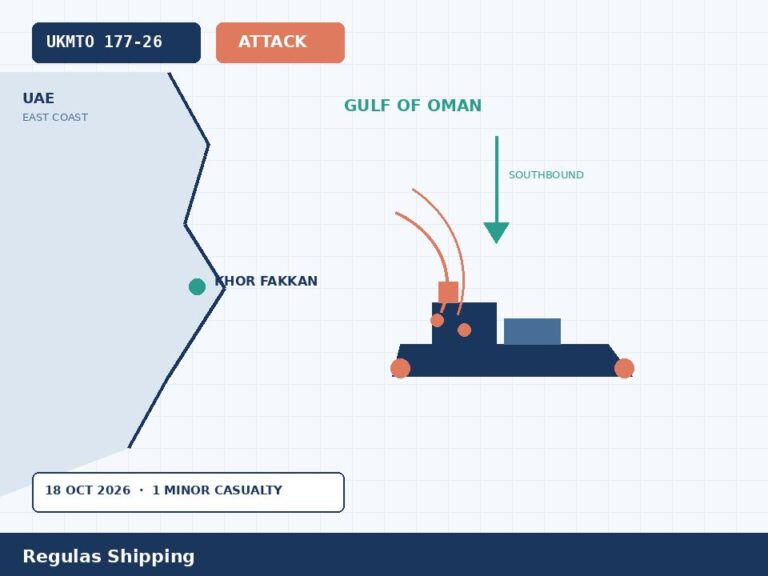
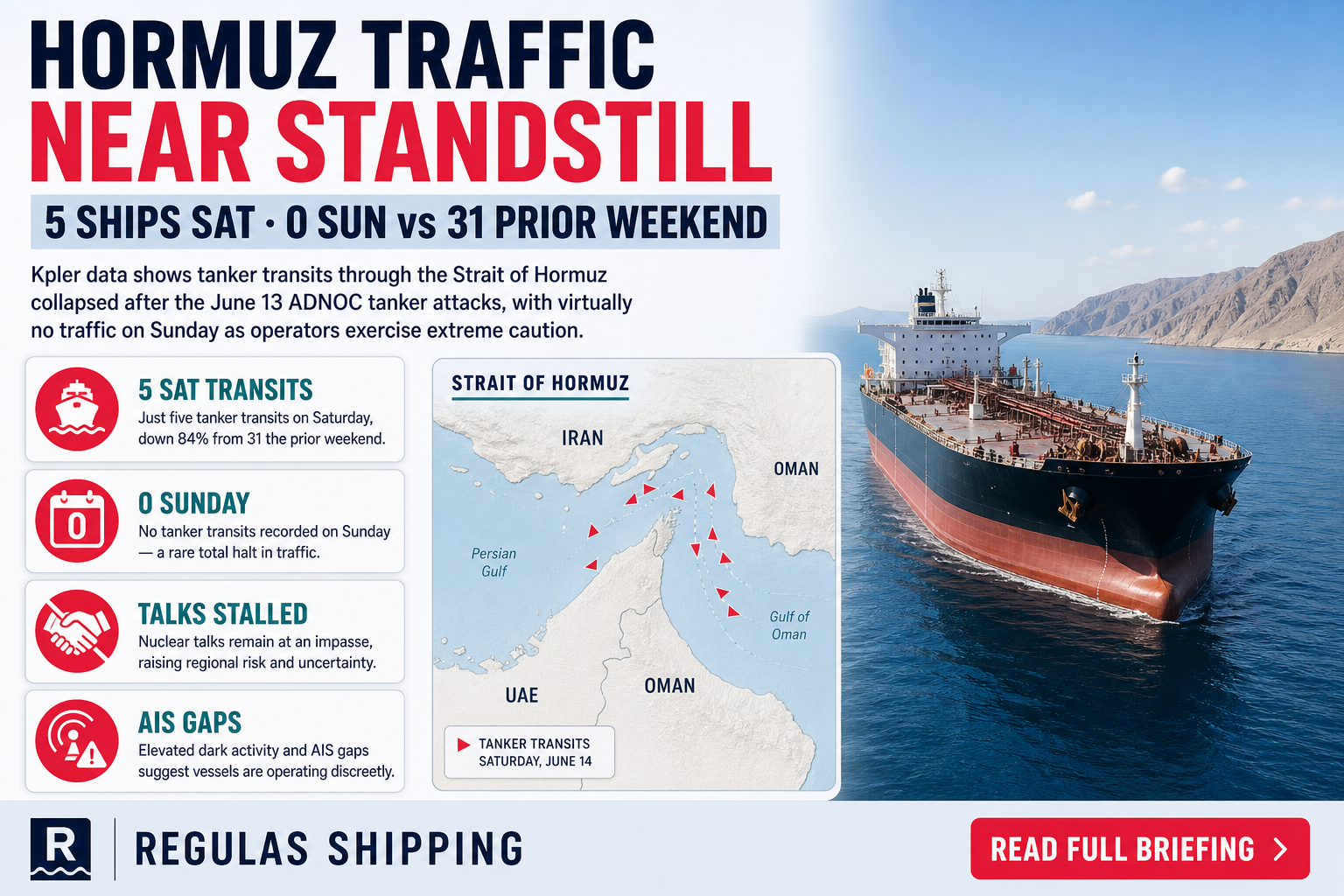
Ship-tracking data released on 17 August show commercial traffic through the Strait of Hormuz has fallen to a near standstill. Commodity analytics firm Kpler recorded five commodity vessels crossing on Saturday and none on Sunday, against 31 transits over the previous weekend — a collapse that followed last week’s attacks on Abu Dhabi National Oil Company (ADNOC) vessels and another stall in U.S.–Iran talks.
Among Saturday’s sparse movements, Kpler identified an empty Very Large Crude Carrier sailing with AIS switched off and an Indian-flagged Very Large Gas Carrier using the Iranian northern route. A small tanker laden with Iranian fuel oil was tracked exiting the strait. Analysts note some ships may still pass dark, but the visible count is nowhere near the more than 130 daily transits that were normal before the U.S.–Israel–Iran war escalated in February.
Diplomatic Impasse Keeps the Gate Shut
Washington has said it can maintain a naval blockade of Iran indefinitely. Iranian Foreign Minister Abbas Araqchi, speaking to local media on Saturday, said shipping will resume only if Washington meets Tehran’s conditions for the strait. Before the conflict, Hormuz handled roughly a fifth of global crude and LNG shipments.
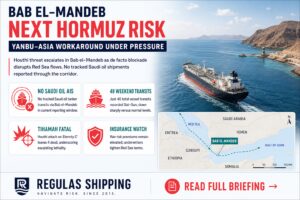
The same weekend data also showed pressure at Bab el-Mandeb, where Houthi forces declared a naval blockade on Saudi Arabia on 20 July: 49 commodity-vessel weekend transits versus 55 the week before, with no tracked Saudi oil shipments.
What Operators Should Note
- Treat Hormuz as commercially closed until verified AIS recovery, not merely constrained.
- Expect dark-sailing and northern-route pressure among any residual movements.
- Do not assume Bab el-Mandeb is a clean workaround while Saudi-linked oil cargoes disappear from tracking.
- Reprice fixtures against indefinite dual-blockade risk while talks remain stalled.
RegulAs Shipping will update transit tallies as fresh Kpler and UKMTO figures are published.