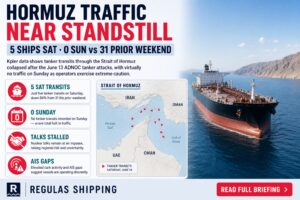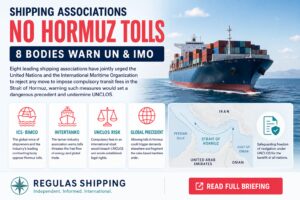
As Hormuz traffic grinds toward zero, security and market analysis is pivoting to a second choke point: the Bab el-Mandeb Strait. The argument from recent industry and strategic briefings is blunt — Hormuz closure has largely been absorbed into freight and oil pricing, while the Saudi East–West / Yanbu workaround that kept Asian supply moving still has to clear Bab el-Mandeb.
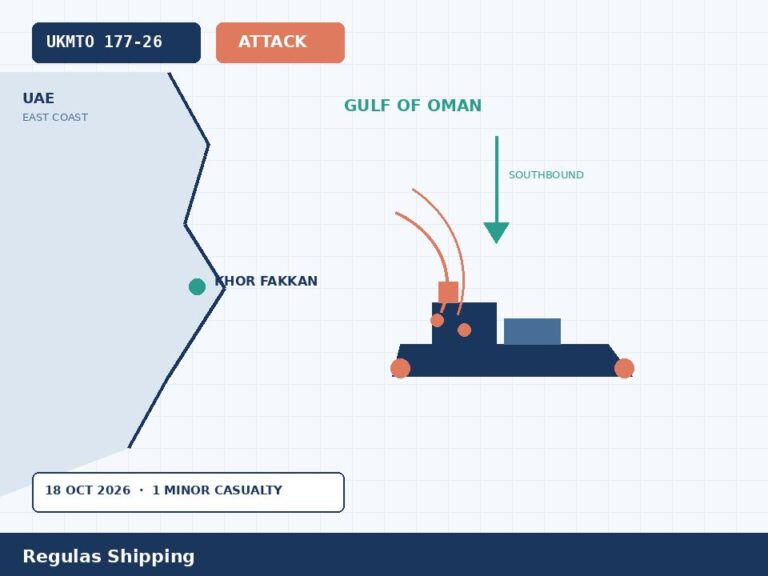
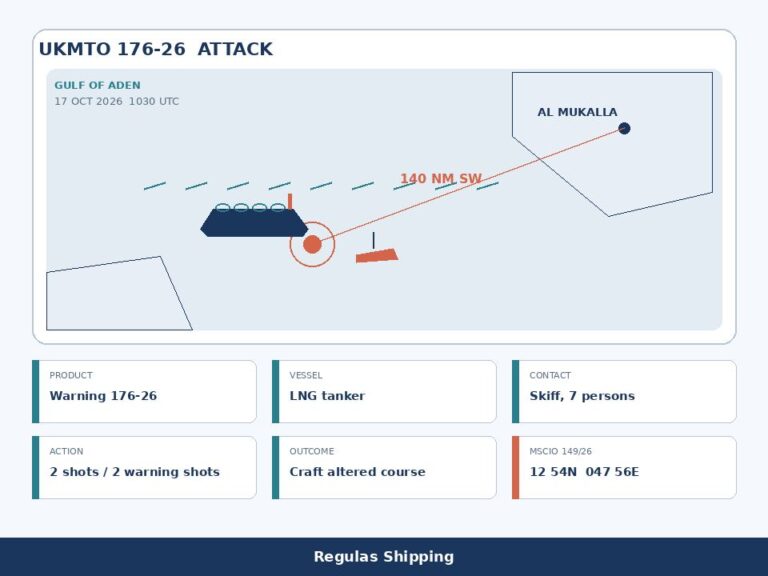
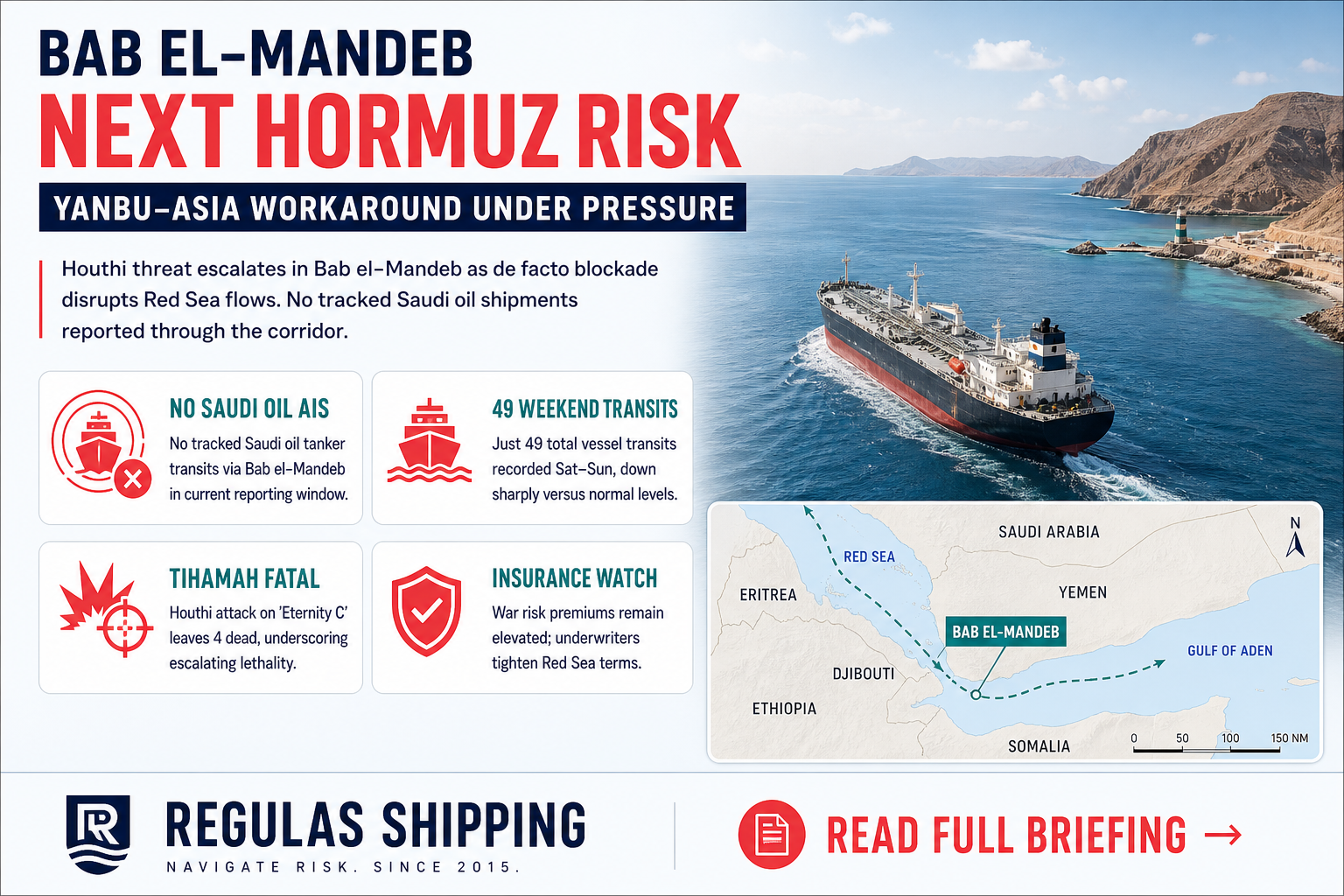
That corridor is under direct pressure. Houthis declared a Saudi-focused naval blockade on 20 July. The 11 August fatal strike on the cargo ship Tihamah — six dead after missiles hit the ship and rescue craft — showed the blockade is not rhetorical. Weekend Kpler figures for 15–16 August logged only 49 commodity-vessel Bab el-Mandeb transits, down from 55 the prior week, and recorded no tracked Saudi oil shipments.
Why Operators Should Reprice the Workaround
Saudi Arabia’s Red Sea export path via Yanbu has been the main reason oil markets did not spike into triple digits after Hormuz seized up. If insurers and owners treat Bab el-Mandeb like a second Hormuz — or if a Yanbu-origin tanker is hit — that workaround fails for Asia-bound cargoes and forces longer Cape diversions at far higher cost and time.
War-risk cover for Red Sea and Gulf of Aden waters already tightened from 16 August across multiple P&I clubs’ non-mutual books. Al-Mokha port’s suspension after missile attacks adds a local terminal-risk layer on Yemen’s Red Sea coast. For charterers still nominating Red Sea westbound or Gulf of Aden legs, the residual risk is no longer “Hormuz spillover” — it is a primary routing decision.
What Operators Should Note
- Model Yanbu–Asia fixtures with Bab el-Mandeb closure scenarios, not only Hormuz delay.
- Watch war-risk and Joint War Committee listings for any Bab el-Mandeb upgrade toward Hormuz-equivalent treatment.
- Treat Saudi-linked AIS absence as a commercial signal, not just a tracking gap.
- Separate crew-safety and salvage risk after Tihamah from pure hull-premium calculations.
RegulAs Shipping will continue tracking Bab el-Mandeb transit counts alongside Hormuz as the dual-chokepoint risk evolves.