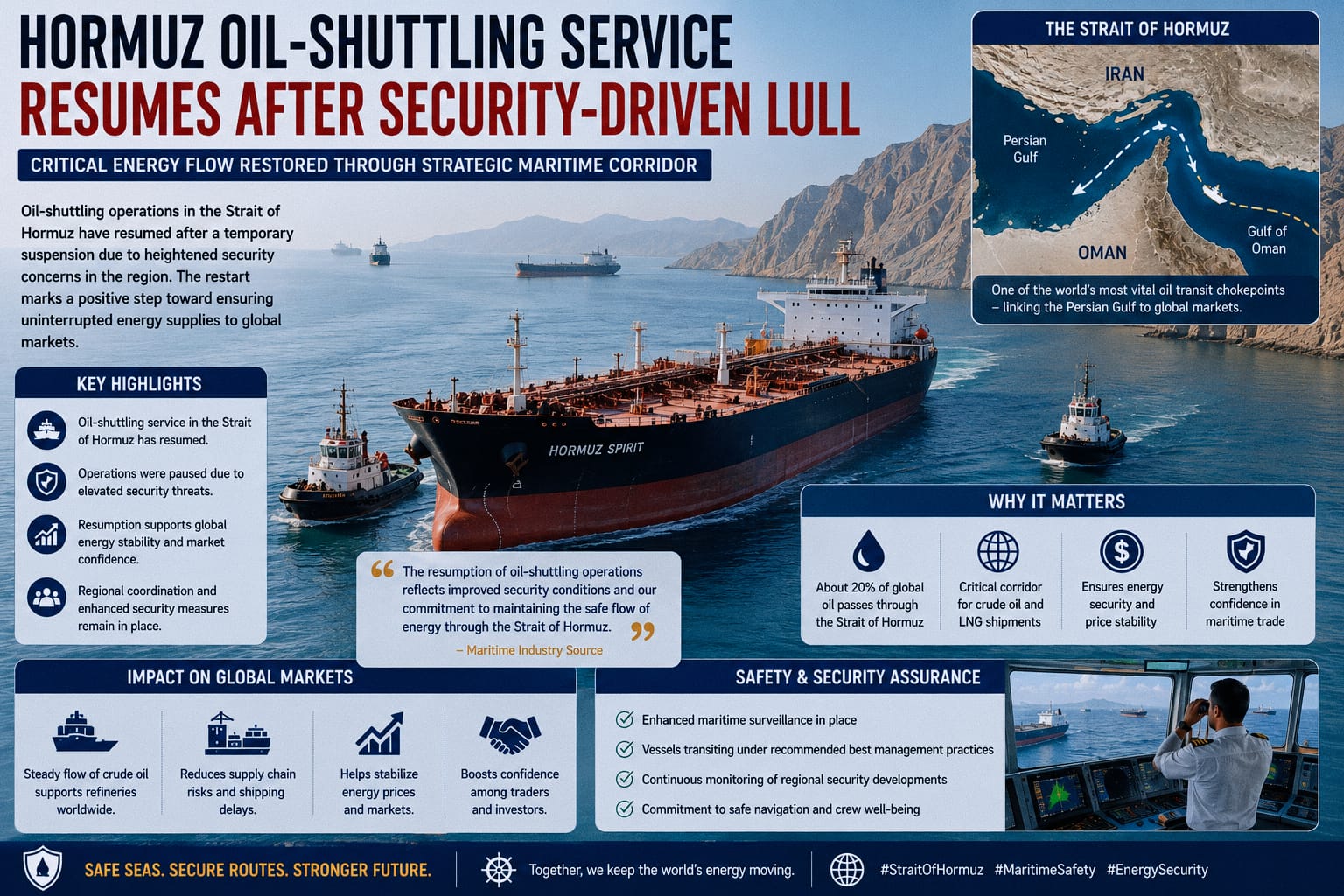
Hormuz Oil-Shuttling Service Resumes After Security-Driven Lull
August 2026 | Maritime Industry Desk
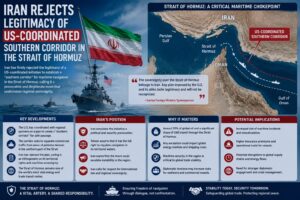
The ship-to-ship oil-shuttling service critical to moving crude cargoes out of the Strait of Hormuz has resumed after a recent pause, with tracking data showing operators moving millions of barrels again even as Middle East hostilities continue to escalate. The resumption signals that despite the wave of attacks and near-miss incidents in the Strait, commercial operators are adapting logistics rather than halting the flow of oil entirely.
What the Shuttling Service Does
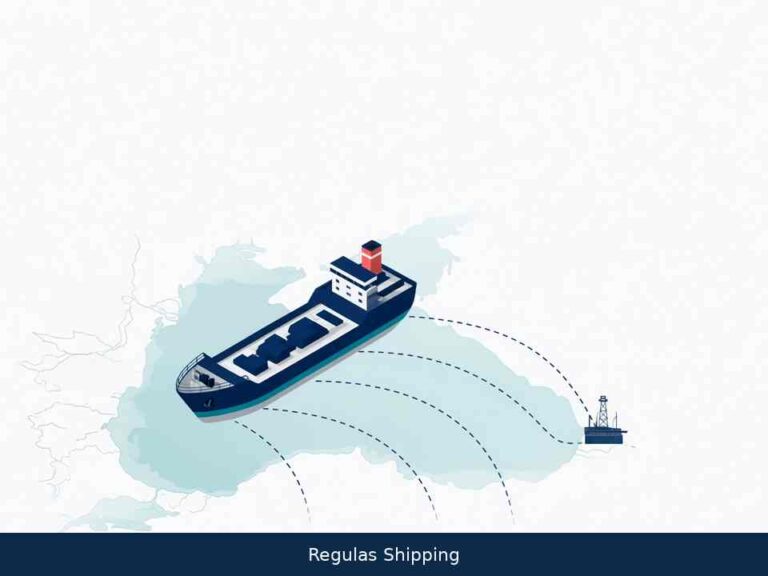
Ship-to-ship transfers allow smaller vessels to move crude from onshore terminals to larger tankers waiting outside the most contested stretches of the Strait, reducing the time large, harder-to-maneuver vessels spend in the highest-risk transit zones. When this shuttling activity pauses, it typically reflects operators pulling back from active risk exposure, which is exactly what happened during the recent lull tied to the string of attacks and warnings in the corridor.
Why the Resumption Matters
- Signals operators are adapting to sustained risk rather than exiting the trade altogether
- Millions of barrels are moving again despite continued regional hostilities and recent vessel strikes
- Reflects commercial pressure to maintain energy supply flows even amid elevated security risk
- May indicate operators have adjusted risk tolerance, insurance arrangements, or operational procedures to resume activity
A Signal Worth Watching Closely
The resumption of shuttling activity is not necessarily a sign that the underlying security situation has improved, recent incidents including the GasLog Shanghai strike and UKMTO’s attack warnings suggest otherwise. It more likely reflects the economic reality that global oil markets cannot sustain an extended halt in Hormuz throughput, pushing operators to resume activity even while security conditions remain elevated.
Considerations for Operators
- Do not interpret resumed shuttling activity across the market as a signal that individual vessel risk has decreased
- Continue to apply heightened security protocols regardless of broader market activity levels
- Monitor whether resumed activity brings any updated guidance from flag states or insurers on acceptable risk thresholds
- Track whether shuttling volumes hold steady or reflect a temporary catch-up after the lull, which would suggest continued caution elsewhere in the fleet
The Bottom Line
The resumption of oil-shuttling through Hormuz shows the practical limits of security-driven pauses in a market that depends on this corridor for a significant share of global energy flows. Operators returning to the trade are not necessarily signaling reduced risk, they are signaling that commercial pressure has outweighed caution for now, a distinction worth keeping in mind when reading market activity as a proxy for security conditions.
This article is based on publicly reported shipping and tracking data regarding Strait of Hormuz oil transport activity. Conditions remain fluid and operators should verify current advisories before finalizing voyage plans.