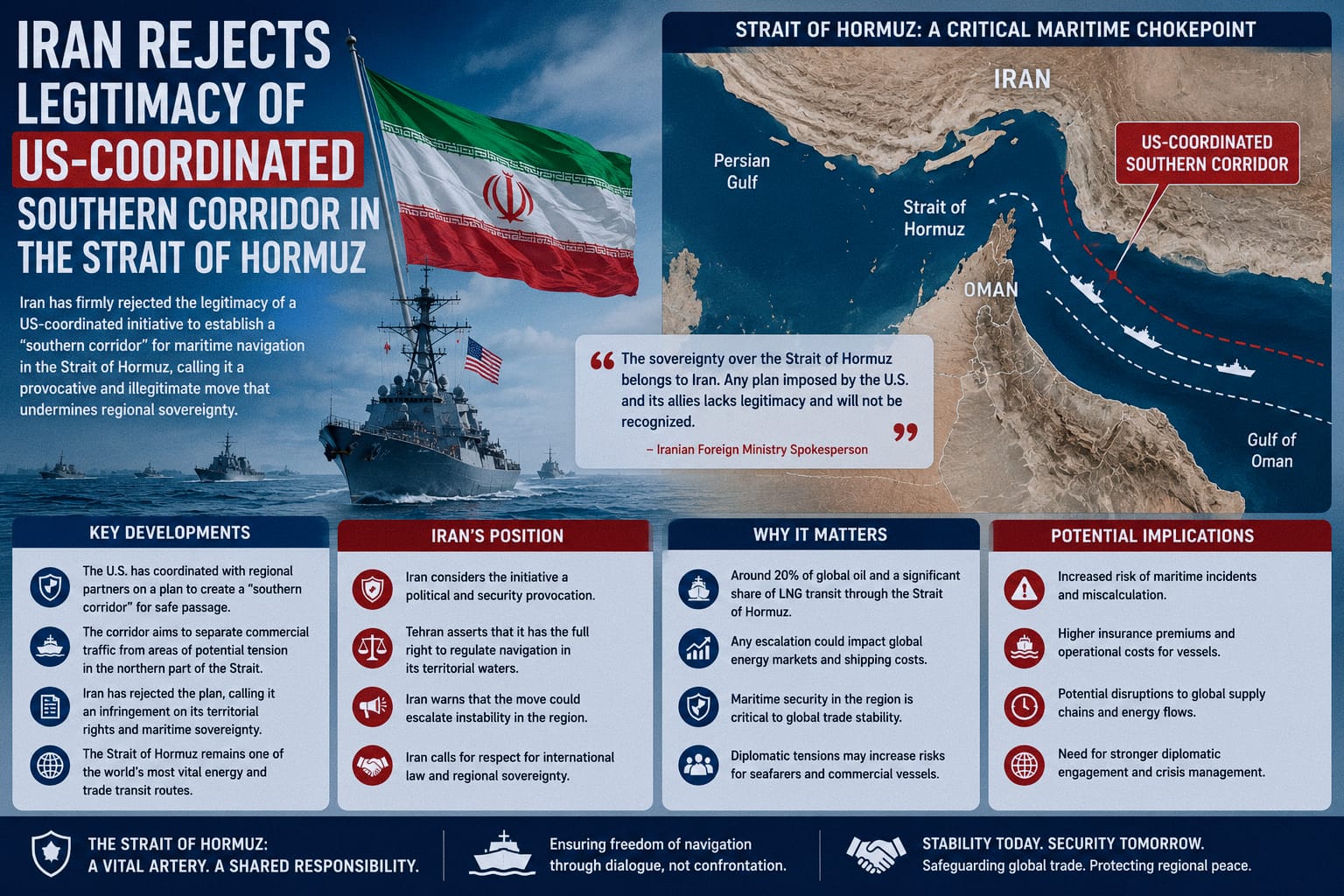
Iran Rejects Legitimacy of US-Coordinated Southern Corridor in the Strait of Hormuz
August 2026 | Regulatory Update Desk
Iran does not recognize the southern corridor in the Strait of Hormuz, the US-coordinated route through Omani waters used to guide commercial vessels away from Iranian territorial waters, and has repeatedly signaled it may not treat vessels using that route as exempt from its security concerns. This unresolved dispute over the corridor’s legal status is emerging as a central factor behind the recent wave of incidents targeting vessels transiting through it.
What the Southern Corridor Is
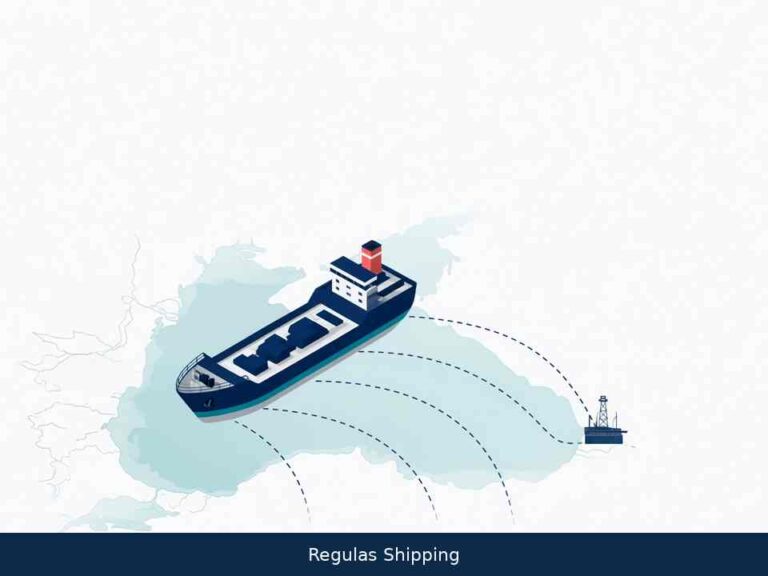
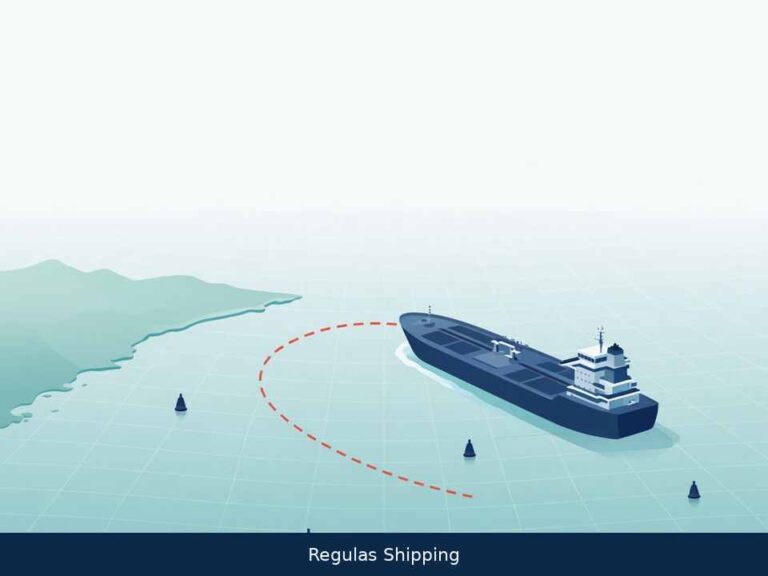
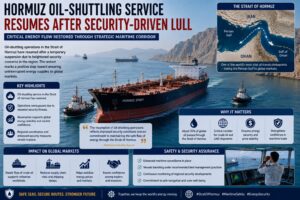
The southern corridor is a guided transit route established with US coordination, routing commercial vessels through Omani waters rather than the traditional shipping lane that runs closer to Iranian territorial waters. It was designed as a lower-risk alternative for vessels concerned about proximity to Iranian forces, particularly during periods of heightened regional tension.
Why Recognition Matters
- Iran’s non-recognition means vessels using the corridor cannot assume any special protected status in Iranian eyes
- Repeated threats against the route’s security suggest Iran may view corridor use itself as a provocative act
- This directly undercuts the corridor’s core value proposition as a safer alternative routing option
- Operators who selected this route specifically for risk reduction may need to reassess that assumption entirely
Connecting the Dots With Recent Incidents
This dispute over legitimacy is not an abstract diplomatic disagreement, it appears directly connected to the recent pattern of UKMTO attack warnings and the confirmed strike on the LNG carrier GasLog Shanghai, both of which occurred in or near this same corridor. When a coastal state disputes the legal basis of a transit route, vessels using that route inherit legal and security ambiguity regardless of what other authorities have designated it.
Considerations for Owners and Charterers
- Do not assume the southern corridor confers meaningfully lower security risk given Iran’s stated non-recognition
- Factor this legal ambiguity into war-risk insurance discussions and route selection decisions
- Monitor for any formal diplomatic resolution or updated multinational guidance on the corridor’s status
- Coordinate voyage planning with the same scrutiny applied to the traditional shipping lane, rather than treating the southern route as a lower-risk default
The Bottom Line
A transit corridor is only as safe as the parties who recognize it, and Iran’s continued rejection of the southern corridor’s legitimacy means vessels using it face real, not just theoretical, security exposure. Recent incidents in the corridor suggest this dispute has moved from diplomatic rhetoric to operational reality, and route planning should be adjusted accordingly.
This article is based on publicly reported statements regarding the Strait of Hormuz transit corridors. Operators should consult current UKMTO and flag state guidance before finalizing routing decisions.