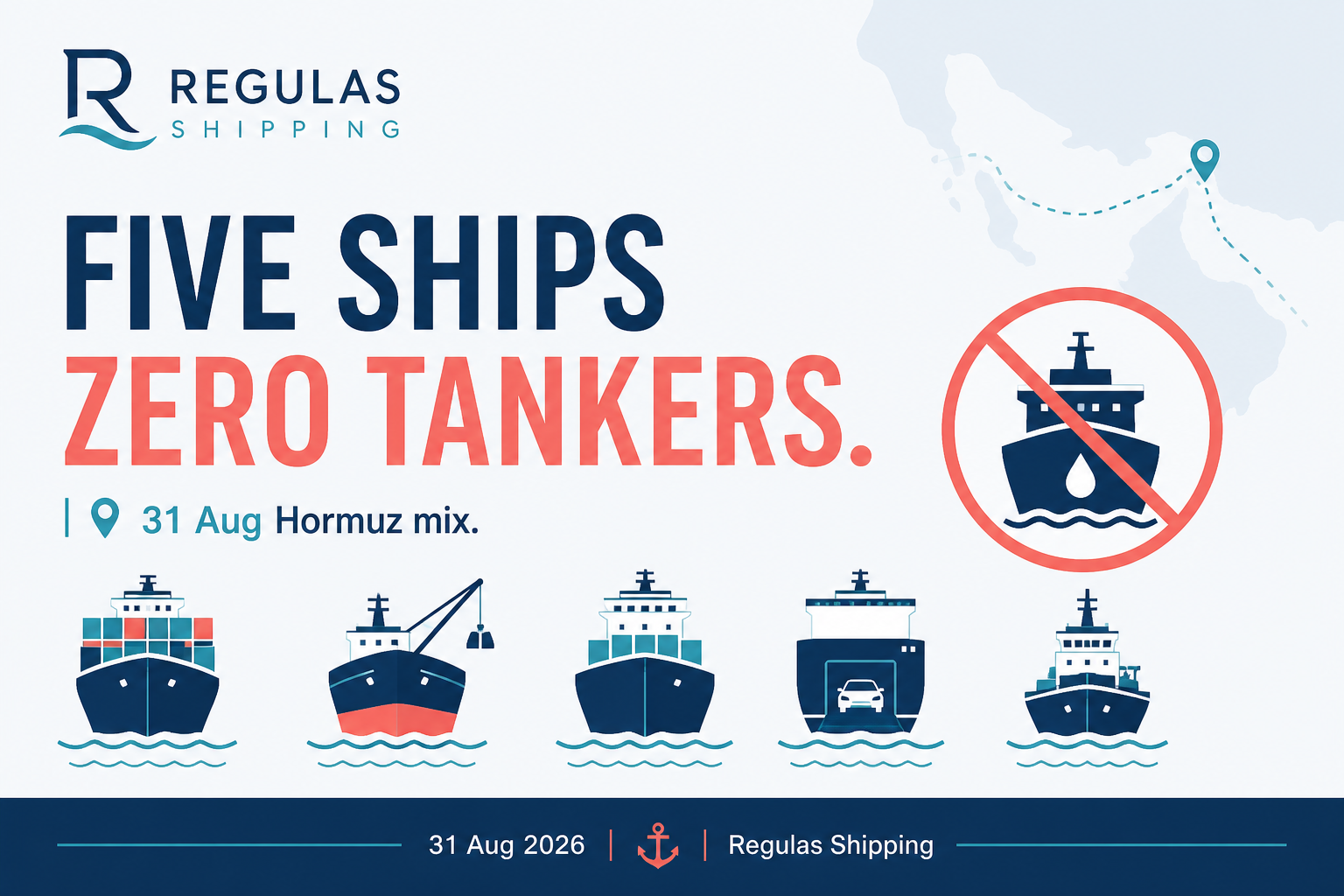
On 31 August 2026, the first full trading-day picture after CENTCOM’s late-August mine-clearance messaging and the Larak Island strike showed how little commercial confidence had returned. Preliminary Kpler figures reported via industry wires counted only five commodity vessels through the Strait of Hormuz — roughly half the recent ten-day average near 14 — and not one liquid tanker among them.
Composition told the real story: reporting described an empty handy-sized gas tanker entering via the Iranian route, dry bulk movements, and an absence of visible crude oil flows on a waterway that normally carries a large share of seaborne oil. Brent traded near elevated levels around the same window as markets priced continued chokepoint friction. For operators, “lanes declared clear” and “oil is moving normally” remain different claims.
Dark AIS may hide some additional tanker movements, but the lit market’s refusal to show liquid tankers is itself a risk signal. Insurers, oil majors and ship managers often wait for sustained multi-day recovery in both counts and mix before treating Hormuz as commercially usable again.
What Operators Should Note
- Watch vessel-type mix daily — zero liquid tankers is a stronger caution than a soft total.
- Do not fix VLCC programmes on demining headlines while lit tanker counts stay near zero.
- Stress war-risk and floating storage options against multi-day suppressed prints.
- Challenge any counterparty claim that Hormuz is “open for oil” without contemporaneous tanker evidence.
- Keep STS and pipeline-outlet contingencies in active commercial playbooks.
Regulas Shipping will keep publishing Hormuz count-and-mix readouts so commercial and safety teams share one picture.