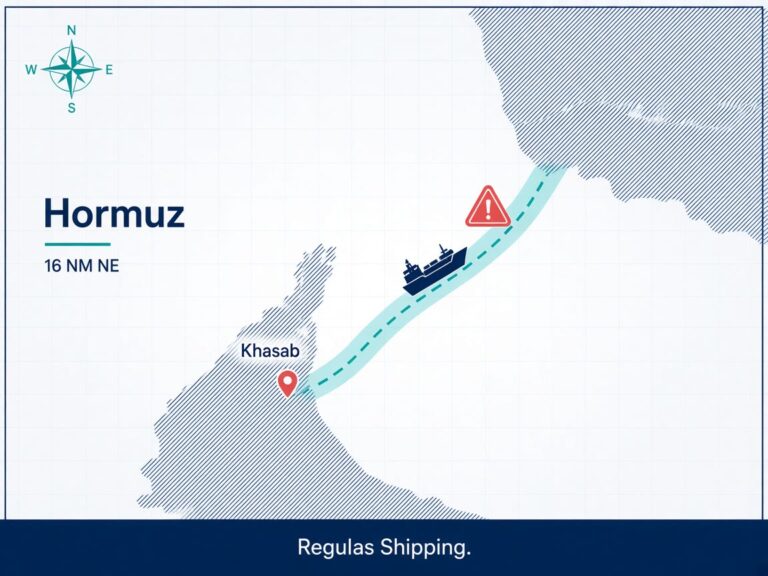
Preliminary Kpler data reported by Reuters on Wednesday, 16 September 2026, put commodity-vessel transits through the Strait of Hormuz at four on Tuesday, 15 September, down from seven a day earlier and well short of the preceding ten-day average of 18. Two ships were exiting and two were entering. None of them was a very large crude carrier. None was an LNG carrier. MarineTraffic figures carried by Al Jazeera put Tuesday even lower, at three hulls: one LPG carrier and two cargo ships, one of them Iranian-flagged. On either count the waterway that handled about one-fifth of the world’s oil and liquefied natural gas before the Iran war, and on the order of 125 large commercial vessels a day, is now a single-digit strait.
That is not a modest wartime dip. It is the near-absence of the crude and LNG traffic that makes Hormuz matter. Tuesday’s named exits were a very large gas carrier and a Panamax products tanker. The two entries were a short-range dirty-products tanker and a dry-bulk carrier, both laden, both on the Iranian-controlled route. A strait moving LPG, naphtha, dirty products and bulk is not moving Gulf crude to Asia. Cargoes not lifted this week are deliveries that do not arrive in six to eight weeks. Physical tightness in the barrel tends to print after the shipping data, not on the same day.
What actually moved
Reuters, citing preliminary Kpler, named the exiting gas carrier as Salute, carrying about 470,000 barrels of liquefied petroleum gas on the Iranian route. Open-register particulars for the Madagascar-flagged VLGC Salute (IMO 8912546, MMSI 647553028, call sign 5RA28) match a 1992-built, 224-metre, 49,301 dwt fully refrigerated LPG tanker. Screening products have flagged that hull against watchlists; that is a compliance check for the next fixture, not a confirmation that Tuesday’s transit was a sanctioned voyage. Until Kpler or a coastal-state notice publishes the MMSI in the day’s product, treat the identification as tracker-derived.
The same feed named a Panamax products tanker Nautilus exiting with about 510,000 barrels of naphtha on an unidentified dark route. A Liberian-flagged LR1 chemical/oil products tanker of that name (IMO 1030052, MMSI 636024848, call sign 5LUO8) is a 2025-built, 228-metre, 74,916 dwt hull. Dark-route in this context means the tracker could not assign the exit to a published traffic-separation or Iranian-managed lane, not that the ship was necessarily AIS-off for the whole transit. Reuters noted that some ships may be sailing with transponders switched off and are therefore not counted at all. Four AIS-visible commodity transits is a floor, not a census. It is still an 80 percent drop against the ten-day average, and a collapse against the pre-war baseline.
Monday’s count is the other useful comparison. Wednesday’s Reuters product put Monday at seven transits. A separate Kpler read published on Tuesday had put Monday at four, down from ten on Sunday, with two dry-bulk exits and two ballast tankers entering. MarineTraffic/Al Jazeera put Monday at five. The spread is what operators should expect when dark transits, Iranian-route assignments and delayed AIS fills sit on the same waterway. The direction is not in dispute. The strait is in single digits. VLCCs and LNG carriers did not print in Tuesday’s visible set.
Why the mix is the operational fact
Transit counts understate the energy shock when the mix shifts away from crude. A VLCC lifts on the order of two million barrels. Tuesday’s named energy exits were an LPG cargo of about 470,000 barrels and a naphtha cargo of about 510,000 barrels. There was no VLCC and no LNG tanker in the Kpler set. A drop from 18 daily transits to four is not a four-and-a-half-fold cut in oil moving through the strait. It is steeper than that, because the hulls that stopped sailing first are the ones that carry the crude. For practical purposes, Hormuz is not exporting Gulf crude on a day like Tuesday. Shuttle and ship-to-ship patterns in the Gulf of Oman, and residual U.S.-facilitated movements that do not always match AIS products, are a separate file. They do not restore a 125-ship peacetime lane.
CENTCOM and U.S. officials have continued to cite facilitation statistics — residual oil movements under naval cover, ships redirected, humanitarian passages. Those figures describe a military logistics problem. They are not a commercial traffic picture. JMIC still rates the strait SEVERE. Iran’s Persian Gulf Strait Authority has published a Non-Compliance List that stood at 77 vessels as of 14 September, with warnings to P&I clubs and class. Iranian foreign minister Abbas Araghchi has tied any reopening to a U.S. return to commitments under the Islamabad memorandum. Oman postponed the Salalah briefing that was due on Monday. Owners price that stack as detention risk, not as a TSS amendment.
Insurance and the missing workarounds
Formal closure is rarely what stops merchant traffic. War-risk underwriting does, and it works faster than a blockade notice. When the additional premium, quoted per voyage as a percentage of hull value, erases the charter, the owner declines the business without any authority having to prohibit it. Crew contracts that allow seafarers to refuse a designated war-risk area add a second stop. An owner cannot sail a vessel that cannot be manned. Tuesday’s four-ship print is consistent with that arithmetic, not with a sudden shortage of ships in the region.
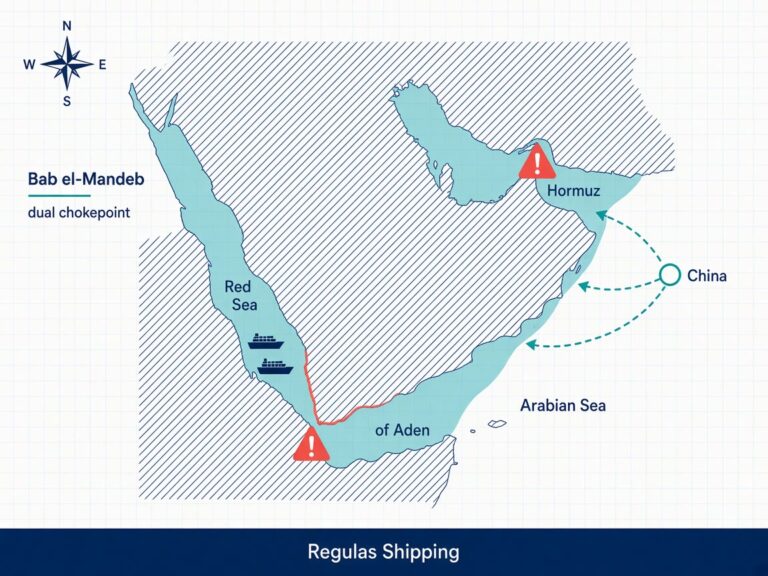
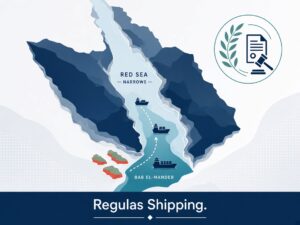
The workarounds are also constrained. Saudi Arabia’s East–West Petroline to Yanbu, which had been absorbing on the order of 4 to 5 million barrels a day after Hormuz tightened, was stopped after drone strikes on pumping stations. Rystad Energy put recent Yanbu loadings in a 2.6 to 4 million barrel-a-day range now at risk of disappearing from the market. Officials have said repairs could take weeks. Japan’s shipowners, cited by the Asahi Shimbun on 13 September, warn that Saudi-to-Asia voyages could stretch to about 100 days round trip if Bab el-Mandeb closed as well, against about 40 days via Hormuz and 40 to 50 days via the Red Sea. That 100-day figure is a contingency, not today’s routing. It is the measure of how little redundancy is left once both chokepoints are impaired.
Freight is already doing part of the rationing. A Kpler market note published on 16 September put MEG–China VLCC freight at $24 per barrel and Gulf of Oman loadings outside the Strait at $12 per barrel. Freight now accounts for about 25 percent of the fob crude price from the MEG, against 17 percent at the start of the conflict and around 5 percent before the war. In the Gulf of Oman, freight is about 11 percent of crude value. Those are the highest shares of the conflict to date. For an Asian refiner the delivered cost is the barrel plus the voyage. It is the second term that has been repricing. Kpler’s further point is that the next adjustment, if attacks continue at the recent cadence, is more likely to come through lower loadings than through another proportional rise in rates. A four-ship Tuesday with no VLCCs is that mechanism starting to print in the transit count.
What it changes on the bridge
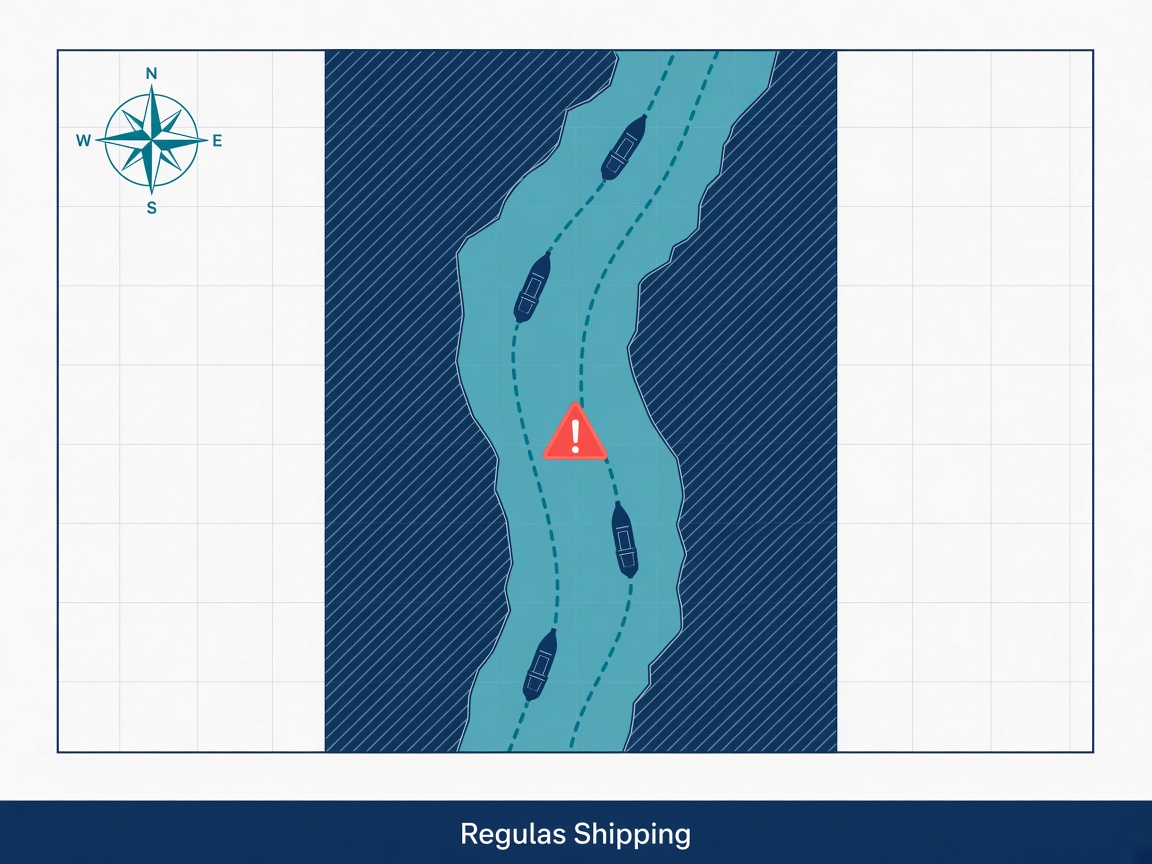
A single-digit strait is a targeting and a SAR problem as well as a cargo problem. Fewer merchant witnesses, fewer assisting hulls, and a higher share of traffic on the Iranian-managed northern route all change the passage plan. Dark-route exits, such as the naphtha tanker in Tuesday’s product, mean the AIS picture the next ship sees may not match the lane the last ship used. Company security officers should not treat an empty radar plot as a clear TSS. They should treat it as a waterway where residual traffic, unmanned surface craft, IRGC small boats and U.S. covering fire can occupy the same approaches, as Monday’s Larak Saildrone exchange already showed.
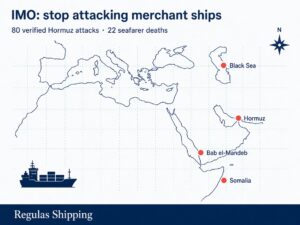
The daily count is now the cleanest indicator of whether anything has changed. A move back toward double digits would mean owners and insurers believe passage is survivable again. Continued single digits, especially without VLCCs or LNG, means the commercial closure is holding regardless of facilitation statistics or postponed Gulf talks. Bab el-Mandeb, by contrast, printed 22 commodity transits on Tuesday against 24 on Monday — thin against peacetime, but an order of magnitude above Hormuz. That gap is why some liner schedules are being put back through Suez while crude remains stuck behind a strait that is no longer carrying VLCCs.
What Operators Should Note
- Use Wednesday’s Kpler print as the working figure, and keep the MarineTraffic count beside it. Reuters put Tuesday at four commodity transits, two in and two out, against a ten-day average of 18. Al Jazeera’s MarineTraffic read was three. Neither includes dark hulls. Do not brief charterers on a “residual 18-ship average” as if Tuesday had not printed.
- Log the mix, not only the headcount. No VLCC and no LNG tanker in Tuesday’s visible set. Named exits: VLGC Salute with about 470,000 barrels of LPG on the Iranian route, and Panamax Nautilus with about 510,000 barrels of naphtha on an unidentified dark route. Both entries were laden — a short-range dirty-products tanker and a dry-bulk carrier — on the Iranian route. That is not a crude-export day.
- Treat tracker names as tracker names until a warning product carries IMO/MMSI. Open-register matches for Salute (IMO 8912546) and a Liberian LR1 Nautilus (IMO 1030052) are useful for the CSO pack. They are not a UKMTO identification. Screen Salute against current sanctions and PGSA lists before the next fixture that assumes that hull is ordinary LPG tonnage.
- Do not read CENTCOM facilitation numbers as a commercial TSS. Residual oil under naval cover and redirected ships describe a military logistics picture. JMIC’s SEVERE rating, the PGSA 77-vessel list, directed hails onto the northern route, and war-risk warranties still govern the commercial go/no-go.
- Re-price the dual-chokepoint case in the charter, not in a later email. Petroline/Yanbu is offline for repairs measured in weeks. Japanese shipowners put a Bab el-Mandeb-plus-Cape contingency at about 100 days round trip for Saudi barrels to Asia. If the fixture still assumes a Hormuz VLCC or a Yanbu–Bab el-Mandeb workaround, name the alternative (Gulf of Oman STS, Mediterranean outturn, Cape, or cancellation) before the ship is stemmed.
- Keep dark-AIS and empty-lane procedures in the standing orders. Tuesday’s naphtha exit was assigned to an unknown dark route. Reuters says uncounted AIS-off ships are likely. Extra lookouts, a 30-nautical-mile U.S. unit standoff, and a written instruction not to close small-boat or USV contacts remain live on approach, even when the radar looks empty.
Regulas Shipping will keep lining Kpler, MarineTraffic and UKMTO products against the daily Hormuz count so operators can treat a single-digit, no-VLCC day as a routing and insurance decision, not as residual peacetime traffic.