Attack on Civilian Tanker Near Hormuz Intensifies Gulf War-Risk Concerns
May 2026 | Maritime Security & Insurance Desk
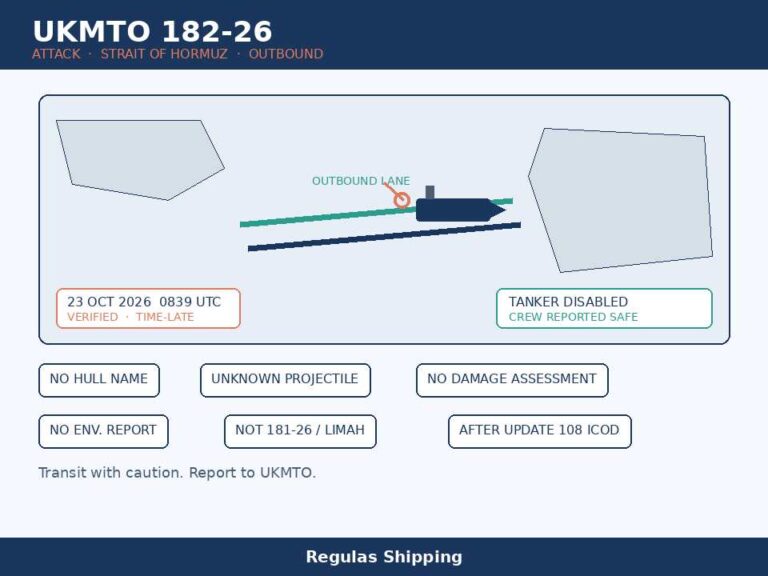
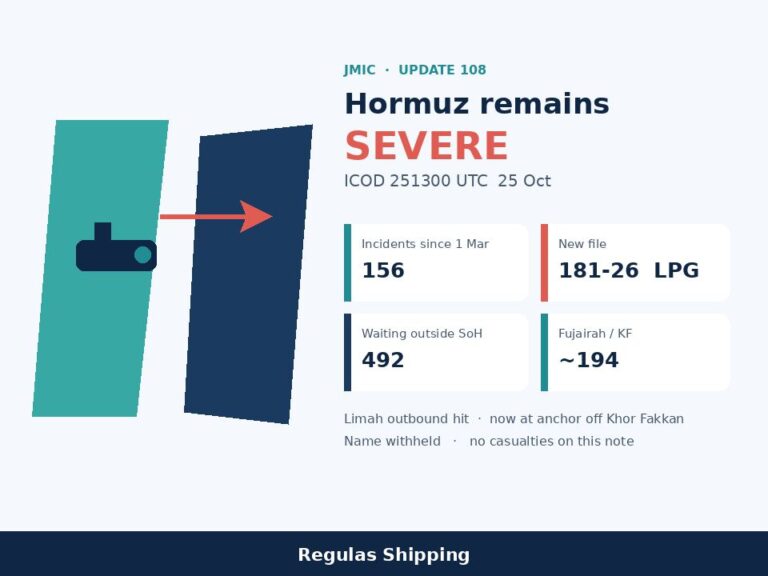
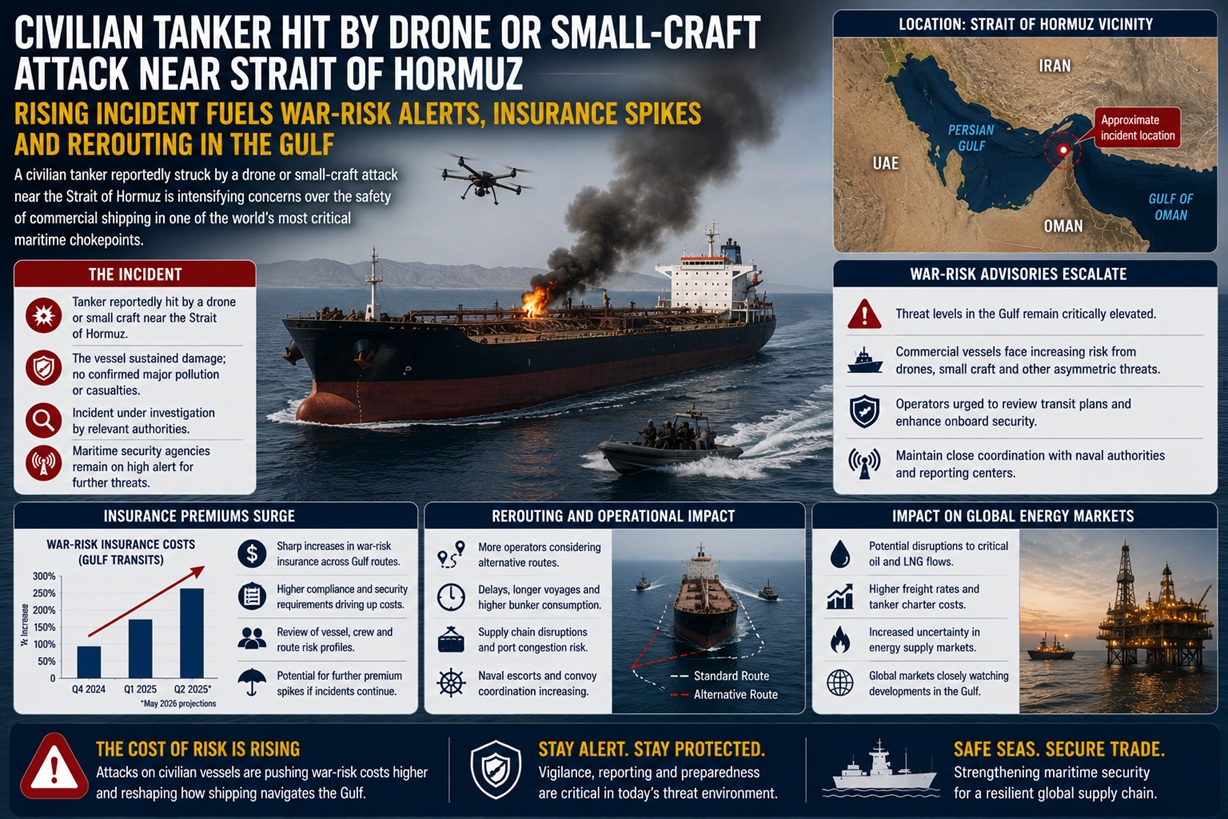
A civilian tanker reportedly struck by either a drone or small-craft attack near the Strait of Hormuz is adding fresh pressure to an already volatile Gulf shipping environment, as insurers and flag administrations warn of rapidly escalating war-risk exposure across the region.
The incident, which remains under investigation, has intensified concerns over the safety of commercial navigation through one of the world’s most strategically critical maritime chokepoints.
Incident Adds to Mounting Security Pressure in the Gulf
According to regional maritime-security reporting, the tanker sustained damage following a suspected hostile incident in waters near the Strait of Hormuz.
While authorities have not officially confirmed the exact nature of the strike, early assessments suggest:
- Possible drone involvement
- Attack by fast-moving small craft
- Localized structural damage to the vessel
- No confirmed large-scale pollution event at this stage
The vessel was reportedly able to continue under monitoring, though security agencies remain on alert for additional threats in the area.
War-Risk Advisories Intensify
The incident has immediately reinforced maritime war-risk advisories issued for Gulf transit routes.
Shipping insurers and security consultants are warning that:
- Threat levels in the Gulf remain critically elevated
- Commercial vessels are increasingly exposed to asymmetric attacks
- Maritime incidents may continue to occur with limited warning
Underwriters are now reassessing exposure across:
- Tanker operations
- LNG shipping
- Bulk cargo movements
- Coastal and regional trade traffic
Insurance Premiums Surge Across Gulf Routes
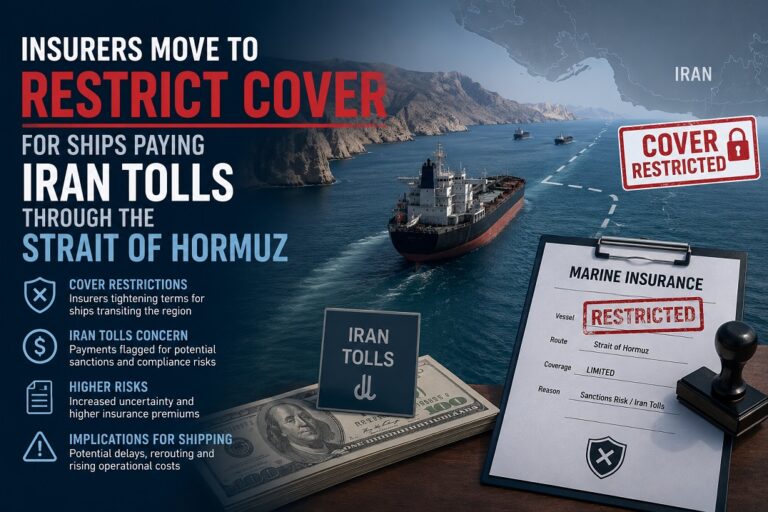
Industry sources indicate that war-risk insurance premiums for Gulf transits have already risen sharply in recent months, and the latest tanker incident is expected to accelerate that trend.
Operators may now face:
- Significant increases in voyage insurance costs
- Expanded security compliance requirements
- Additional crew-risk coverage obligations
- Greater scrutiny from financiers and charterers
Some insurers are reportedly reviewing:
- Vessel-specific risk profiles
- Transit timing restrictions
- Crew nationality exposure
- Routing and reporting compliance standards
Flag Administrations Urge Heightened Vigilance
Several maritime administrations and vessel registries are advising operators to:
- Reassess Gulf transit necessity
- Strengthen onboard security readiness
- Maintain continuous communication with naval authorities
- Follow enhanced reporting and route-monitoring procedures
The warnings reflect growing concern that commercial shipping is increasingly operating within an environment shaped by:
- Military activity
- Drone threats
- Electronic interference
- Unpredictable regional escalation
Rerouting and Delays Becoming More Common
The rise in Gulf security incidents is already influencing operational decisions across the shipping sector.
Some owners and charterers are:
- Delaying Gulf port calls
- Adjusting transit schedules
- Considering alternative supply-chain routing where commercially viable
- Increasing use of convoy coordination and naval reporting systems
However, analysts note that rerouting options remain limited due to the strategic importance of Hormuz for global oil and LNG exports.
Global Energy Markets Watching Closely
The Strait of Hormuz remains essential for:
- Crude oil exports from the Gulf
- LNG shipments to Asia and Europe
- Strategic energy flows supporting global supply stability
Even isolated attacks can:
- Trigger freight volatility
- Increase tanker charter rates
- Disrupt energy-market confidence
- Raise concerns over supply continuity
Market participants are now closely monitoring whether attacks on civilian shipping become more frequent or more sophisticated.
The Broader Security Picture
The latest tanker incident reflects a wider pattern of maritime instability across the region, including:
- Vessel interceptions
- Small-craft harassment
- Drone and projectile threats
- GPS and communications interference
- Expanded naval deployments
Security analysts warn that the overlap between geopolitical confrontation and commercial shipping is creating one of the most complex operating environments the maritime industry has faced in years.
The Bottom Line
The reported attack on a civilian tanker near the Strait of Hormuz is reinforcing fears that Gulf shipping risks are entering a new and more dangerous phase.
As insurers raise premiums, operators reassess routing strategies, and maritime authorities issue heightened advisories, commercial shipping in the Gulf is increasingly defined by a stark reality:
the cost of navigating one of the world’s most vital energy corridors is rising sharply—not only financially, but operationally and strategically as well.