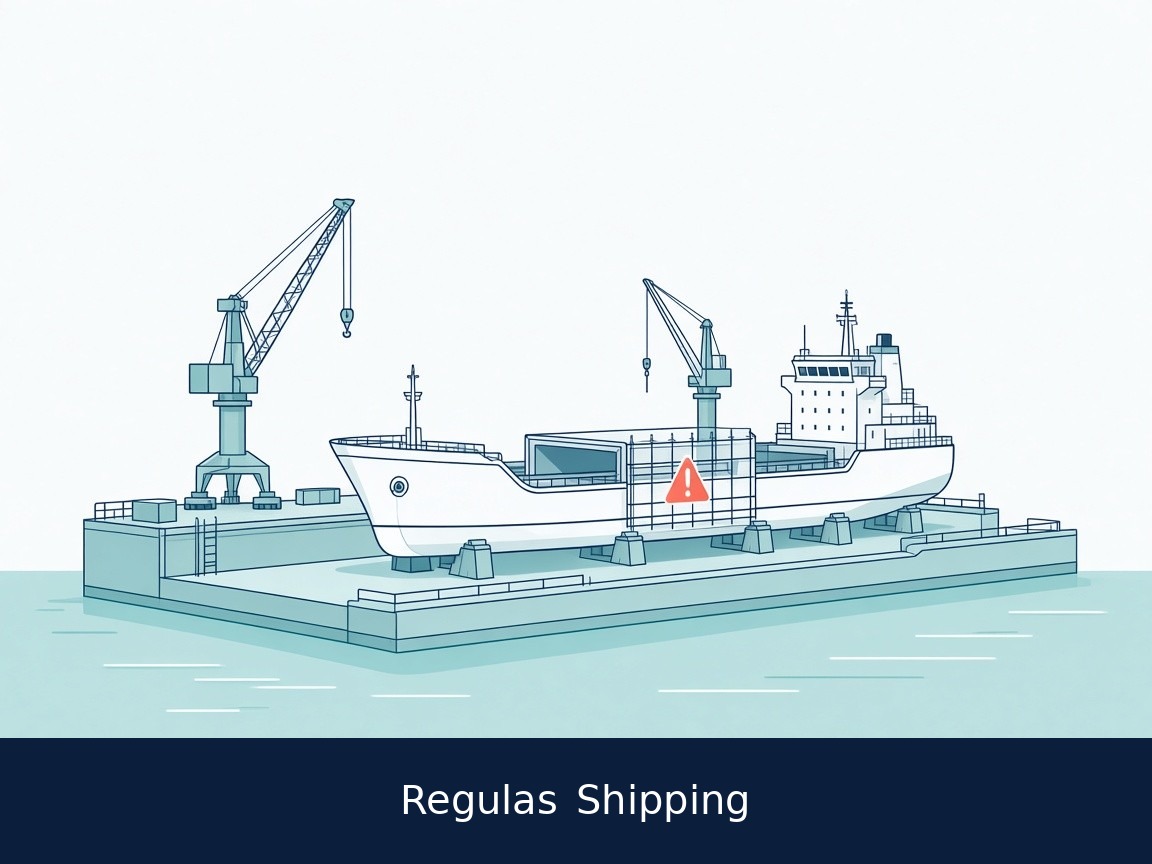
A fire on the Liberia-flagged Supramax bulk carrier Ocean Melody killed 25 people on Thursday, 10 September 2026, while the ship was under repair and inspection at Qingdao Beihai Shipbuilding, a China State Shipbuilding Corporation yard in Shandong. The blaze started at about 11:15 local time (03:15 UTC) and open flame was reported out at about 14:30. Forty-two people were on board. Twelve left the ship uninjured. Five injured people were taken to hospital and were later described as stable. The other 25 were first listed as missing. By Thursday evening the Qingdao fire and rescue command said all 25 had been found with no signs of life. State media on Friday, 11 September, said investigators had not yet named a cause. President Xi Jinping ordered intensified search and rescue, a swift investigation and accountability. The Ministry of Emergency Management sent a team to the yard.
Ocean Melody is IMO 9303065, about 55,742 deadweight, 190 metres long and 32 metres in beam, 31,279 gross tons, built by Mitsui E&S in February 2006 and classed by ClassNK. The registered owner is Huili Shipping Co Ltd. The ISM manager is Yuyangkunpeng (Shanghai) Ship Management. The ship arrived at the Qingdao yard on 31 August after a late-August approach through the Taiwan Strait and had remained there for repair. Qingdao Beihai is not a small repair berth. A 2022 CSSC recruitment notice put the yard’s newbuilding capacity at about three million deadweight tonnes a year and its repair capacity at 212 ships. CSSC is China’s principal naval and commercial builder. A fatality count of 25 on a foreign-flag bulker in that yard is a flag-state, class, ISM and shipyard-permit event, not only a local fire-brigade story.
Friday’s CCTV interviews are the operational record until the investigation report appears. Firefighter Hao Xiang said the hold was “extremely hot” and that steam had melted old oil grime so the decks were slippery. Another firefighter said an infrared thermometer read about 85°C and that “the flames were rising from the bottom,” with “a distinct smell of diesel.” A neighbour told AFP he saw thick smoke and did not hear an explosion. CCTV video walked a reporter through fire-damaged equipment and white ash. Experts from across the country were already on site on 11 September. The hold-from-below description, the diesel odour and the three-hour burn on a ship that had been in the yard for ten days are enough for a designated person ashore to treat this as a hot-work, residual-fuel and enclosed-space problem until the report says otherwise. They are not enough to name a cause in the voyage memo.
Shipyard periods are where the safety management system is weakest in practice. The ship is not at sea. The crew is mixed with yard workers, riding gangs and inspectors. Permits to work, gas-free certificates, fire-watch and a single person who can stop the job are easy to thin when the dock schedule is tight. Liberia is the flag. ClassNK is the class. The ISM manager is in Shanghai. The yard is a CSSC subsidiary that can have more than two hundred ships a year in repair. If the 42 people on board were a mix of crew and contractors, the next-of-kin, the flag casualty file and the yard’s own labour report will not be the same list. Owners who send a Supramax into a Chinese repair yard this autumn need a named superintendent who owns the permit-to-work file, the fire-watch roster and the accountability trail that Beijing has already said it wants, not a standing instruction that “the yard will handle fire.”
Port State Control will not be the first question. The first questions are flag, class, the ISM audit trail and whether hot work, tank cleaning or engine-room work was going on in a space that still held diesel or oily residue. Insurers will ask for the repair specification, the gas-free certificates, the fire-main status while the ship was alongside, and whether the crew still had a fire party that could reach a hold fire that firefighters later described as coming from below. Other ships in Qingdao Beihai, and other Liberia-flag bulkers in Chinese repair yards, should assume that inspectors will look at their permit files this month. A 25-fatality repair fire is the kind of event that produces a concentrated inspection campaign even before a circular is published.
There is no public list yet of how many of the dead were crew and how many were yard or contractor staff. That gap matters for the company security and welfare file. A seafarer fatality is an MLC and flag notification. A contractor fatality is a yard and local labour event that still sits on the owner’s repair contract. Until Huili, Yuyangkunpeng and Liberia publish a split, operators should brief manning agents and next-of-kin as if both lists are live. Do not wait for the investigation to finish before confirming who was on board your own ships in repair this week.
What Operators Should Note
- Treat Ocean Melody as a shipyard fire with a closed fatality count, not as an unfinished missing-person search. IMO 9303065, Liberia, 55,742 dwt, Huili / Yuyangkunpeng, Qingdao Beihai, 11:15 to 14:30 on 10 September, 42 souls, 25 dead, five injured and stable, 12 uninjured. Xi ordered an investigation and accountability. Do not write the file as “cause unknown, wait.” Write it as “cause unknown, controls required now.”
- Rebuild the permit-to-work pack for every ship in repair this month. Friday’s firefighters described a hold fire from below, about 85°C, diesel smell, slippery oil-grime decks. Until the report says otherwise, assume residual fuel, oily residue or hot work in an enclosed space. Require a current gas-free certificate, a named fire watch, a charged fire main and a stop-work authority that a riding crew member can actually use.
- Keep a single list of everyone on board during yard periods. Crew, riding gang, class surveyor, owner’s superintendent and yard contractors must be on one document with next-of-kin and employer. The Ocean Melody count of 42 will split across at least two legal regimes. If you cannot name who is on your ship in a Chinese yard tonight, you cannot notify families or the flag.
- Notify flag, class and the ISM designated person as if this were your ship. Liberia and ClassNK will take questions. The designated person ashore should already have a standing call list for a yard fire: flag, class, P&I, hull, manning agent, yard safety office. Test that list this week on every ship in drydock or alongside for repair, not only on ships in Qingdao.
- Expect inspectors to ask for the repair specification and the fire-party arrangement, not only for the ISM certificate. A ten-day yard stay is long enough for fire-main isolation, disabled detection and a thinned crew. Record what systems were isolated, who owned the isolation, and how a hold fire would have been fought at 11:15. That file is what P&I will request.
- Do not put a cause in the charter-party or press line. CCTV has diesel odour and a bottom-up burn. AFP has smoke without an explosion. That is not a finding. A premature “engine-room fire” or “hot-work incident” statement will have to be walked back when the investigation names the space and the work permit.
- Brief other bulkers already stemmed for Chinese repair yards. Qingdao Beihai’s published repair capacity is 212 ships a year. A 25-fatality fire at a CSSC yard will tighten access, hot-work permissions and superintendent attendance across the group. Build extra days and extra superintendent cost into any remaining 2026 China repair window.
Regulas Shipping will keep lining the Ocean Melody fatality count, the Qingdao investigation and flag-class questions against shipyard permit practice so operators can treat a repair period as a fire-and-welfare operation, not as a pause in the safety management system.