Iran’s Islamic Revolutionary Guard Corps Navy said on Thursday, 10 September 2026, that it had struck a U.S. Saildrone Explorer unmanned surface vessel at the entrance to the Strait of Hormuz. Iranian outlets identified the hull as number 5838, said the craft was on an “aggressive mission,” and released video they described as the moment of the hit. IRGC Navy commander Alireza Tangsiri was quoted naming the same hull. Tasnim published a still that it said showed the sail-drone on fire. The U.S. military had not confirmed the strike, the capture, or the status of hull 5838 as of Saturday, 12 September.
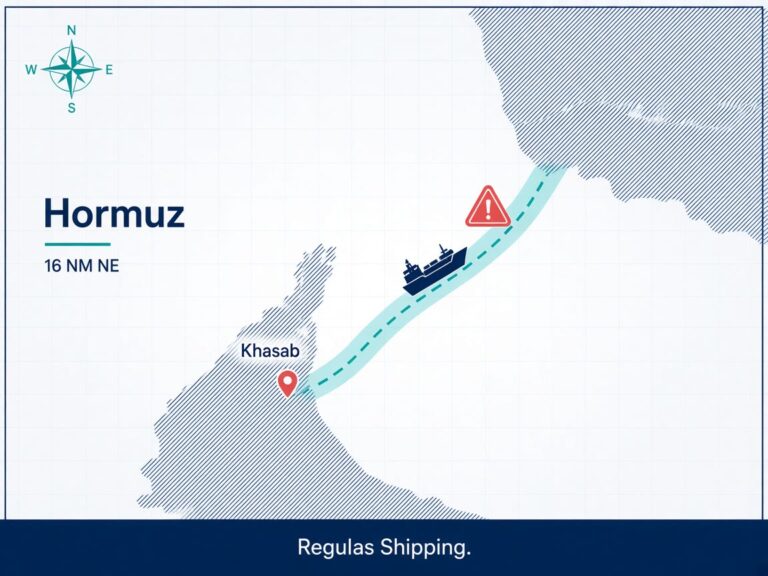
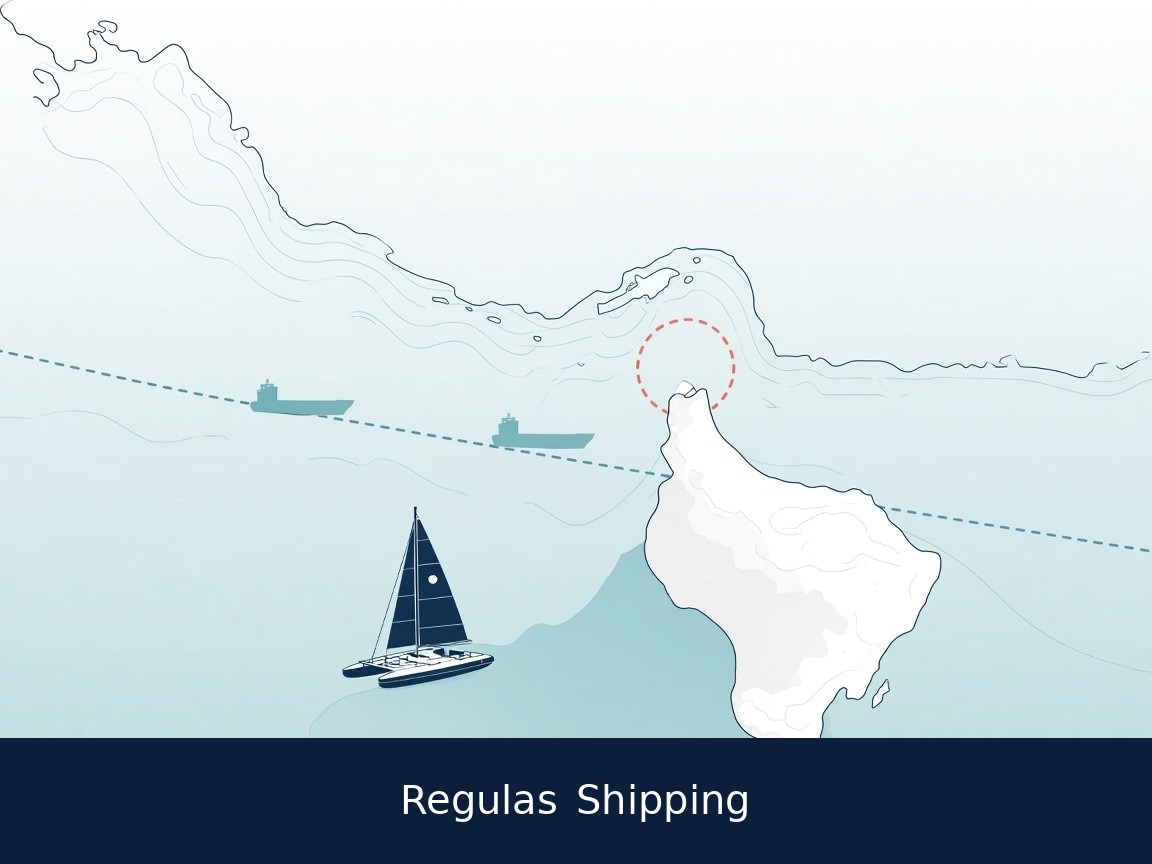
A Saildrone Explorer is about seven metres long. It is wind-driven, solar-powered, and fitted with cameras, communications gear and sensors used for maritime domain awareness. Fifth Fleet and Task Force 59 have previously operated the type from Bahrain. The IRGC said those units had been used in the region and that, after strikes on the U.S. naval presence in Bahrain, the craft were now being run from a unit near Khasab on Oman’s Musandam Peninsula — the same gateway where UKMTO Warning 133-26 logged four unknown projectiles on two unidentified merchant ships the same evening. Iranian claims about the Khasab basing have not been independently confirmed. What is confirmed is the warning that followed the claimed hit: the IRGC repeated that the strait is closed and under its control, and that “any hostile presence in the strategic waterway will be targeted.”
Thursday’s claim sits on top of an earlier unmanned-systems incident. On 8 September the IRGC said it had captured a U.S. Dive-LD unmanned underwater vehicle at the entrance to the strait. U.S. officials said the underwater drone had malfunctioned while surveying regional waters and described it as an older system without sensitive or classified equipment. They did not say whether Iranian forces had taken it. Two unmanned-system confrontations in three days, one of them still unconfirmed by Washington, is now part of the merchant-ship risk file even though neither platform is a tanker. The IRGC is treating unmanned surveillance craft as hostile presence. A master who sees a small sail-drone, a skiff, or an unidentified contact near the TSS cannot assume that only naval units are in the engagement envelope.
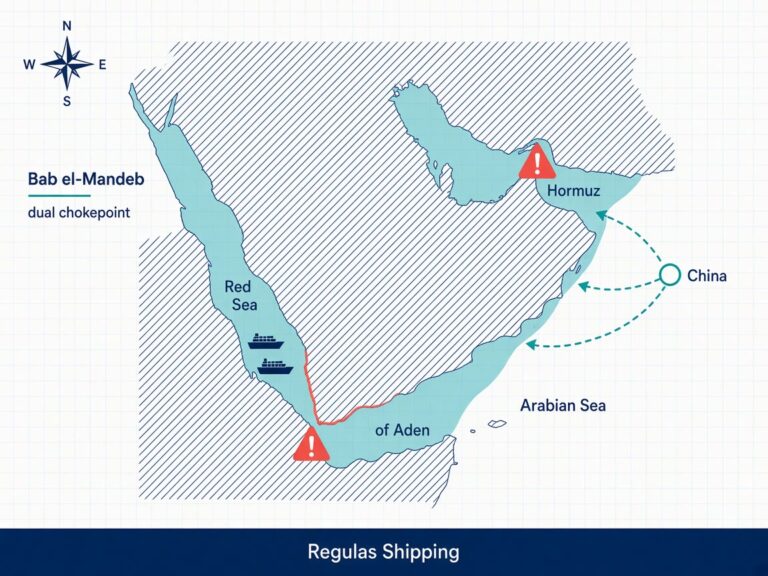
The commercial overlay arrived the same day. U.S. Central Command said that, as of 10 September, U.S. forces had redirected 96 commercial vessels as part of the naval blockade of Iran that resumed on 14 July, and had allowed more than 50 vessels supporting humanitarian aid to pass. Preliminary ship-tracking put Hormuz transits at seven on Thursday — two exits and five entries — against a 10-day average of 15, and down from 11 the day before. Those figures exclude dark AIS. UKMTO kept the strait at “severe” and said the likelihood of attacks on vessels remains high. Brent settled at $107.63 and West Texas Intermediate at $102.48 on Thursday, the highest closes since 19 May. The IRGC had already said, on 9 September, that a restricted maritime zone would stretch from Chabahar into parts of the Gulf of Oman and the Arabian Sea, with coordinates to follow, and that a vessel entering without coordination would face sanctions and future access limits. A Hormuz transit decision now starts well before the TSS: it starts at the Gulf of Oman approaches, against a U.S. redirection count that has moved from the low nineties into 96 and an Iranian zone whose lines are still unpublished.
Operational implications are about classification, not about who owns the sail-drone. A company security officer who writes the voyage order as “avoid military unmanned systems” has not written a usable order. The IRGC’s language is “hostile presence.” That can be a Saildrone, a survey launch, a coalition aircraft overhead, or a merchant ship that Iranian forces decide is non-compliant. CENTCOM’s 96 redirected hulls are the other side of the same lane: a ship that does not fit the U.S. blockade rule can be turned around before it reaches the strait, and a ship that does fit it can still be in an IRGC engagement area. Shuttle and STS programmes in the Gulf of Oman — the workaround that has kept some barrels moving — sit closer to Khasab and to any Chabahar-origin restricted zone than a Ras Tanura–Fujairah narrative admits. War-risk and P&I will ask whether the master was briefed that unmanned contacts are now a reported firing event, not only a curiosity on the radar, and whether the owner had a written rule for a U.S. redirection order versus an Iranian coordination demand.
Iran and Oman are due to put a temporary traffic-separation and corridor script in front of Gulf foreign ministers in Salalah on Monday, 14 September. That meeting does not cancel Thursday’s claimed strike, the Dive-LD episode, or CENTCOM’s 96-ship count. A corridor announcement next week is a routing product only if UKMTO and JMIC downgrade the threat and the unpublished Chabahar zone is issued as coordinates a master can plot. Until then, the live file is a claimed hit on hull 5838, an unconfirmed U.S. position, a severe threat rating, single-digit transits, and a warning that any hostile presence will be targeted.
What Operators Should Note
- Treat the Saildrone claim as an engagement warning, not as a navy-only story. IRGC Navy, 10 September, Hormuz entrance, hull 5838, “aggressive mission,” video released, Tangsiri named the hull. Washington had not confirmed as of 12 September. Brief the master that an unmanned sail-drone or small USV near the TSS can now be a reported firing event. Do not wait for a U.S. statement before updating the voyage-order language.
- Log the 8 September Dive-LD capture in the same unmanned-systems file. IRGC said it took a U.S. underwater drone at the strait entrance. U.S. officials called it a malfunctioned older survey system without classified equipment and did not confirm a seizure. Two unmanned incidents in three days is a pattern for the lookout brief, even if neither craft is a merchant ship.
- Read “hostile presence will be targeted” as the targeting rule. The IRGC repeated that the strait is closed and under its control. Hostile presence is not defined as a warship. Association by AIS, last port, cargo, charterer, aircraft overhead or proximity to a U.S. unmanned craft can put a merchant hull inside the envelope. Update the Ship Security Plan with that wording, not with “avoid naval units.”
- Put CENTCOM’s 96 redirected ships and the seven-transit Thursday print in the commercial brief. Blockade resumed 14 July; 96 commercial hulls redirected as of 10 September; more than 50 humanitarian passages allowed. Tracking showed seven Hormuz transits on Thursday against a 10-day average of 15. A fixture that assumes a daylight TSS run is a commercial assumption, not a security one.
- Plot the unpublished Chabahar restricted zone as a Gulf of Oman problem, not only a Hormuz problem. IRGC said on 9 September the zone will run from Chabahar into parts of the Gulf of Oman and the Arabian Sea, coordinates later, sanctions and future access limits for uncoordinated entry. Shuttle, STS and Fujairah-bound hulls can meet that zone before they meet the TSS. Ask war-risk whether the policy still describes the risk as “Hormuz transit” only.
- Keep UKMTO and JMIC as the live threat source. UKMTO held Hormuz at severe on Thursday and said the likelihood of attacks remains high. A Monday corridor talk in Oman does not downgrade that rating. Report unmanned contacts, projectiles and approach events while they are happening. Khasab remains the same gateway as Warning 133-26.
- Write the U.S. redirection versus Iranian coordination conflict into the charter and the master’s night orders. Name who pays if CENTCOM turns the ship, if Iran demands a fee or a permit, or if the owner refuses either instruction. Do not leave the master to choose between two conflicting state orders without a named company officer on the phone.
Regulas Shipping will keep lining the hull-5838 claim, the Dive-LD episode and CENTCOM’s redirection count against UKMTO and JMIC ratings so operators can treat an unmanned contact at the Hormuz entrance as a firing-risk event, not as background naval activity.