QatarEnergy chief executive Saad Sherida Al-Kaabi said on Sunday, 20 September, that some of the company’s expansion projects could be delayed because critical equipment is unable to reach Qatar through the disrupted Strait of Hormuz. Speaking at the Qatar Economic Forum powered by Bloomberg, the UNGA Special Edition 2026 in New York, in a session titled “Geopolitics and Energy Security in Global Markets,” Al-Kaabi, who is also Qatar’s minister of state for energy affairs, separated current output from project logistics: Ras Laffan is producing only a “very minute” volume of LNG, while inbound equipment for the North Field build-out remains blocked.
He kept the near-term construction message constructive. “North Field East is going very well. We expect the first train to come online in the first half of next year, and then possibly a few more trains from NFE to come next year. North Field South (NFS) is also going well,” he said, according to The Peninsula. The caveat followed immediately: some equipment will not be able to enter because of the Hormuz crisis, and if that continues it could delay some of these projects. Reuters reported the same warning on 20 September and, in a 21 September follow-up, that additional NFE trains will depend on the strait crisis even if the first train remains aimed at the first half of 2027.
QatarEnergy has not published a revised startup date. The company is signalling execution risk, not confirming that North Field East or North Field South will start late. For operators the distinction still matters: Hormuz is no longer only an outbound cargo problem. It is also an inbound project-cargo and commissioning problem for the world’s largest LNG expansion.
Incident context
Al-Kaabi was answering a live market question: how fast can Qatar restore LNG if the strait reopens? His reply, as carried by The Peninsula, was that “with the subtraction of the 17 percent, we can get back to normal operations within a couple of weeks.” The 17 percent is not a Hormuz shipping haircut. It is the share of Qatari LNG export capacity lost when missile strikes hit Ras Laffan Industrial City on 18–19 March 2026. QatarEnergy said in March that the attacks damaged Trains 4 and 6, together 12.8 million tonnes per annum, and that the damage could cost about $20 billion a year in lost revenue and take up to five years to repair. Train 4 is a QatarEnergy–ExxonMobil joint venture (66/34); Train 6 is 70/30. Those trains stay out of the restart math. The rest of the system, he said, could be brought back in a couple of weeks if Hormuz opens — provided ships can actually load and sail.
That is not the picture today. Asked about Ras Laffan production, Al-Kaabi said it was “very difficult to put a number, because from an LNG perspective, it’s very minute what we’re producing.” Domestic gas, jet fuel, gasoline, diesel and electricity were being covered, and some petrochemical units had land access to export, “but the majority of our production is not producing.” Iran International and Reuters both repeated the “very minute” LNG characterisation from the same New York session.
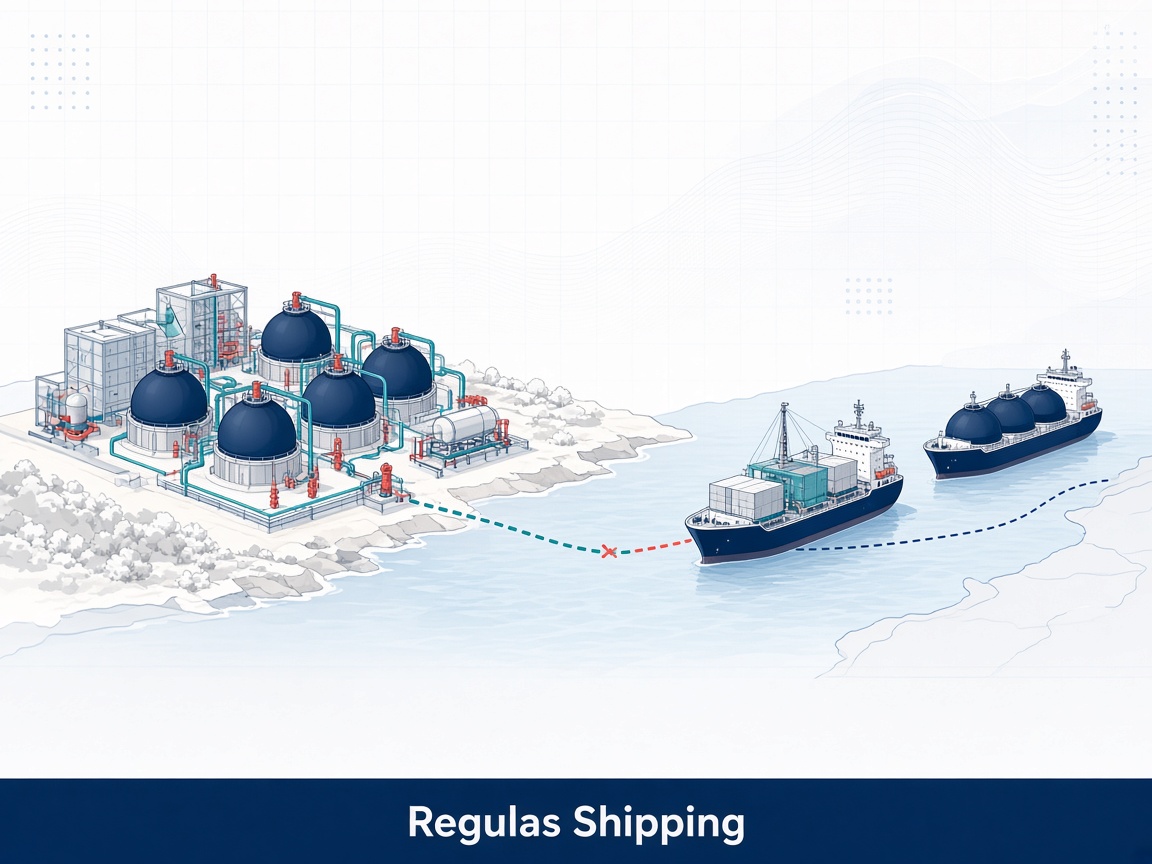
The North Field programme is the piece that now sits behind the equipment bottleneck. QatarEnergy’s own project materials describe North Field East as four liquefaction trains of 8 MTPA each, adding 32 MTPA and lifting nameplate capacity from 77 MTPA to 110 MTPA. North Field South adds two further 8 MTPA trains, taking the total to 126 MTPA, with North Field West another 16 MTPA toward 142 MTPA by the end of 2030. Al-Kaabi said NFE is already in a commissioning-adjacent phase for the first train, with further NFE trains possible in 2027 and NFS trains the following year. Reuters’ 21 September write-up put the first NFE train in the first half of 2027 and said later trains will depend on whether Hormuz keeps blocking equipment.
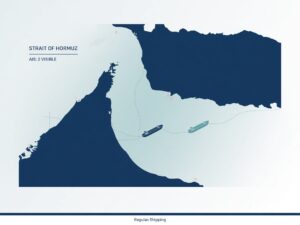
Shipping context around that warning is thin, not closed. Reuters, citing Kpler, reported on Monday that 17 commodity vessels transited Hormuz over the weekend, down from 37 a week earlier, against a pre-war run-rate of about 125 large commercial ships a day. Among the hulls that did show, the LNG carrier Shandong Redwood exited on 19 September with a Ras Laffan cargo bound for Pakistan. Earlier in the week, three LNG carriers — Al Daayen, Al Samriya and Marigold LNG — reappeared outside the strait after days of reduced visibility, and Kpler had Al Rayyan in a dark STS off Oman. Those movements keep individual cargoes alive. They do not restore a reliable inbound lane for heavy modules, compressors, electrical packages and vendor specialists that a train-commissioning sequence needs on a calendar.
Al-Kaabi also used the same session to update non-Qatar LNG and petrochemical clocks that operators should not confuse with NFE. Golden Pass LNG in the United States has started shipments from the first train, with the second and third trains expected in full operation next year. The Golden Triangle ethane cracker with Chevron Phillips, in which QatarEnergy holds 49 percent, was entering commissioning and “should be starting up in the next few weeks.” Those U.S. clocks are not Hormuz-constrained in the same way. The equipment warning is about getting kit into Qatar.
Operational implications
For LNG carrier owners and charterers, two clocks are now running. The cargo clock is the one already visible in AIS: minute Qatari loadings, occasional Pakistan or STS stems, long idle or holding patterns outside the Gulf, and a restart that Al-Kaabi says could be measured in weeks if the strait reopens — minus the 17 percent of capacity already destroyed at Ras Laffan. The project clock is slower and less visible. If specialised equipment stays offshore or in origin yards because it cannot enter, later NFE trains and NFS can slip even while the first NFE train is still described as first-half 2027. QatarEnergy has not said which packages are stuck. Operators should not invent a delay in months; they should treat 2027–28 delivery windows as having a Hormuz-logistics rider.
That rider reaches the fleet as well as the plant. QatarEnergy’s expansion was planned as trains plus ships. New cargoes need new LNG carriers; new carriers delivered into a delayed cargo wave change utilisation, ballast and time-charter cover. A short equipment interruption may be absorbed in construction sequencing. A prolonged block on critical-path items — and Al-Kaabi framed the risk as continuing until equipment can enter — can move commissioning, first gas and the moment those ships have contracted molecules to lift.
For project-cargo and heavy-lift operators the implication is more immediate. A module that cannot enter Hormuz is not only a QatarEnergy problem. It is a voyage, war-risk, lay-up and storage problem at load ports, transshipment hubs and Gulf of Oman holding areas. Insurers already price Hormuz as a listed-area risk. Project policies that assumed a 2026–27 delivery window into Ras Laffan or Mesaieed now have to ask whether the kit waits, goes via an untested land bridge, or is stored until a facilitated transit exists. Crew, vendor specialists and commissioning staff face the same access constraint as the steel.
Buyers on long-term Qatari SPA volumes should also separate restart from replacement. A couple of weeks to resume undamaged trains is not the same as replacing Trains 4 and 6, which QatarEnergy has already said could take up to five years. Trading cover, destination flexibility and the company’s stated push to become a much larger LNG trader are the commercial buffers Al-Kaabi pointed to; they do not put 12.8 MTPA of damaged Ras Laffan capacity back on the berth.
What Operators Should Note
- Separate the restart timetable from the expansion timetable. Al-Kaabi said undamaged LNG operations could return to normal within a couple of weeks if Hormuz reopens, after subtracting the 17 percent of export capacity lost on Trains 4 and 6. That is a cargo-and-shipping restart. It is not a statement that North Field East and South are unaffected.
- Treat the equipment warning as execution risk, not a confirmed slip. The first NFE train is still described as first-half 2027; further NFE trains in 2027 and NFS in 2028 remain the public calendar. Reuters’ 21 September follow-up said additional trains will depend on the strait. Until QatarEnergy issues a revised date, do not write a delay into contracts as fact — but do put a Hormuz-logistics contingency on 2027–28 liftings and newbuilding cover.
- Watch inbound project cargo as closely as outbound LNG. Heavy modules, compressors and electrical packages are now on the critical path Al-Kaabi described. Heavy-lift owners, project charterers and Ras Laffan contractors should confirm whether packages are waiting at origin, in transshipment, or already in Qatar, and whether war-risk and storage cover still match the original delivery window.
- Do not read occasional LNG AIS (Shandong Redwood on 19 September, earlier reappearances of Al Daayen, Al Samriya and Marigold LNG, Oman STS) as a restored Ras Laffan programme. Al-Kaabi said current LNG output is “very minute.” Individual cargoes and dark or STS workarounds do not restore a commissioning pipeline for new trains.
- Keep the damaged-train math in SPA and trading cover. Trains 4 and 6 (12.8 MTPA, about 17 percent of exports, March 2026 strikes, up to five years to repair in the March statement) stay out of any “couple of weeks” restart. Destination flexibility, third-party trading volumes and non-Qatar projects such as Golden Pass are the buffers he pointed to, not a full nameplate return.
- Align fleet and cargo clocks. If later NFE or NFS trains slip while new LNG carriers continue to deliver, utilisation and ballast patterns will change before any official startup revision hits the market. Charterers covering 2027–28 Qatari volumes should ask counterparties how equipment access is being tracked, not only how many ships are waiting outside Hormuz.
Regulas Shipping will keep monitoring QatarEnergy guidance, Ras Laffan loadings and Hormuz project-cargo movements, and will update operators if North Field dates are revised or if inbound equipment flows resume.