The 2026 Port State Control Concentrated Inspection Campaign on cargo securing is no longer a planning circular. It opened on 1 September and runs to 30 November. The Paris and Tokyo Memoranda of Understanding are running it jointly. Member authorities will fold a common questionnaire into routine PSC boardings. A ship should face only one CIC inspection per MoU during the three months. Actions still range from a recorded deficiency to detention. The campaign’s stated purpose is data on compliance with current SOLAS requirements for the loading, stowage and securing of cargo units and cargo transport units — SOLAS Chapters VI and VII and the Code of Safe Practice for Cargo Stowage and Securing (CSS Code). Results will go to both MoU governing bodies and, in due course, to the International Maritime Organization. That is the legal wrapper. The operational fact in the first week of September is that China Maritime Safety Administration, as a Tokyo MoU member, is applying all ten questionnaire items at Shanghai, Shenzhen, Guangzhou, Qingdao, Ningbo, Dalian and Tianjin, and NorthStandard’s China correspondent Huatai Marine has already set out the deficiencies Chinese PSC officers actually write.
The campaign is not a separate boarding programme. Huatai’s circular is explicit: China MSA will not arrange extra CIC-only inspections. The ten items travel with the ordinary PSC visit. That is the part owners still under-price. A ship that would have received a short, familiar inspection in August now carries a cargo-securing overlay that Chinese officers treat as zero-tolerance on simplified lashing. DNV has made the same point for the wider Paris and Tokyo membership: several non-detainable cargo findings can still trigger an ISM deficiency (PSC Code 15150) if the officer reads them as a systematic SMS failure. A missing twistlock log can become a detention argument if the rest of the file looks sloppy. The CIC does not narrow the inspection. It adds a scored questionnaire on top of whatever else the officer came aboard to see.
Huatai’s ten-item map is the practical checklist for any ship that will touch a Chinese port before 30 November, and it is a fair proxy for what Paris MoU officers will ask on the European and Canadian side of the same campaign. Items 1a/1b go to the Cargo Securing Manual: expired or class-unapproved CSM, or no dedicated securing scheme for special cargo units. Item 2 is officer familiarity: the chief officer who cannot state stack-weight limits and deck load capacity is already in major-deficiency territory, because some Chinese PSCOs put that question to the master and chief officer as a matter of routine. Item 3 is compliance with the CSM — reducing the number of devices “from experience” rather than from the manual. Huatai says major Chinese container ports apply zero tolerance to that shortcut. Item 4 is the GM stowage plan and Verified Gross Mass: VGM missing, or declared weight that does not match supporting documents. Item 5 is the Cargo Safe Access Plan: CSAP not on board, or designated walkways blocked. Item 6 is stock of portable securing devices — too few, or unapproved models. Item 7 is condition: deformed, cracked, seized or heavily corroded fittings, and no maintenance records, which Huatai flags as high detention risk. Item 8 is effectiveness during the voyage: loose lashings not found in time. Item 9 is bridge visibility under SOLAS V/22. Items 10a/10b are SMS procedures for heavy-weather navigation, including precautions against cargo loss, and whether the crew actually runs those procedures.
The common findings are not exotic. They are the same holes that produce lost containers, crushed walkways and visibility disputes on ordinary winter North Atlantic and North Pacific voyages. What the CIC changes is the probability that those holes are written up in September, October and November rather than left as a master’s observation. Chinese officers, Huatai notes, put unusual weight on documents and records. They may ask for securing-device maintenance logs covering at least the previous three months. A CSM that is on board but not the approved, vessel-specific book; a CSAP that exists as a generic annex; VGM that is “understood” but not on the stowage plan; OOG or heavy-lift cargo without a dedicated lashing plan attached to the cargo documents — those are the files that turn a routine Tokyo MoU inspection into a delay. For existing containerships built before 1 January 2015, industry CIC guides have also restated the MSC.1/Circ.1353 Chapters 1–4 baseline and the status of older CSMs approved under MSC/Circ.745. If a port State asks for Annex 14 of the revised CSS Code and the ship cannot show it, berthing can be the issue, not only a deficiency code.
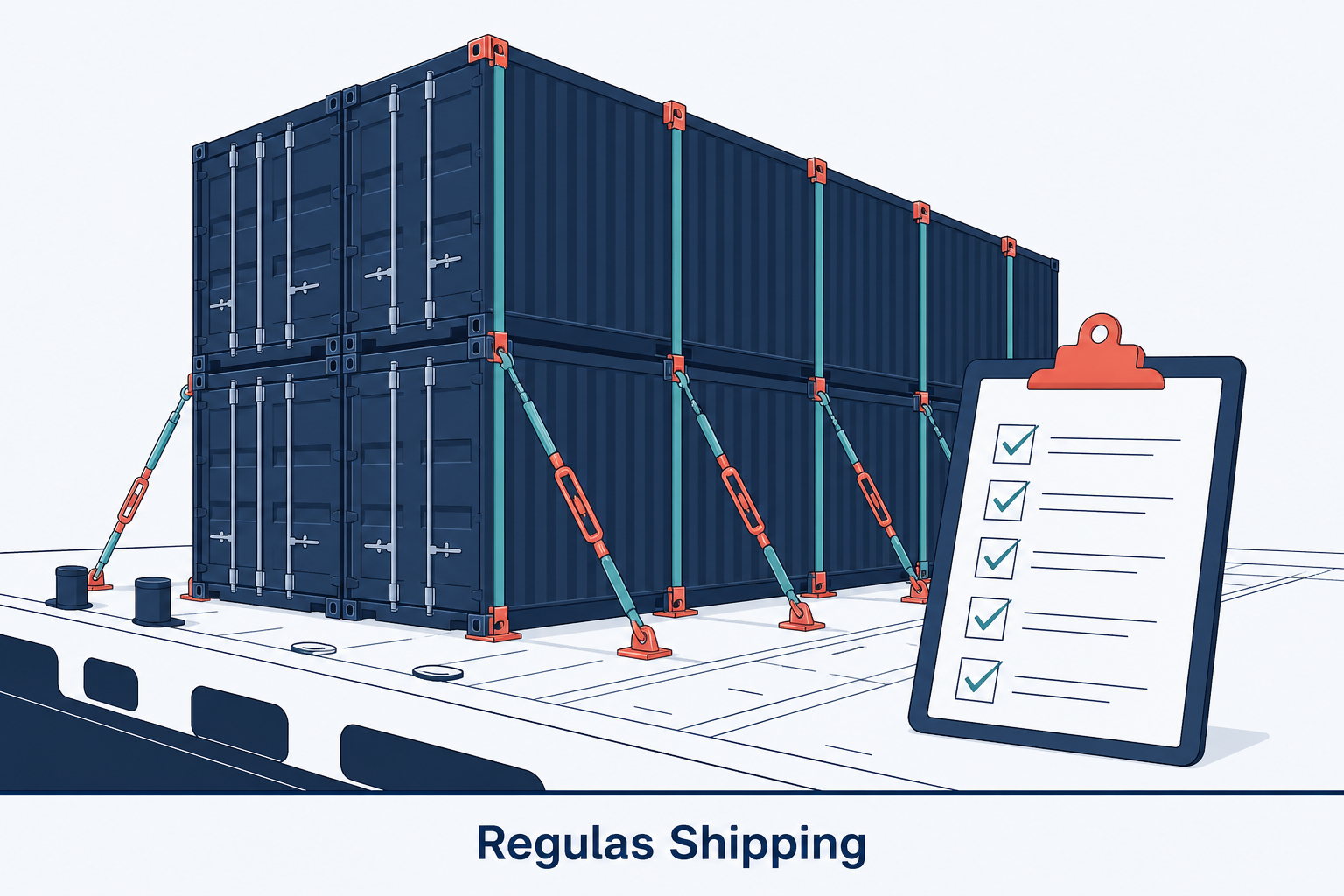
Shore-side support is the cheaper control. Huatai’s advice to managers on China trades is specific: review SMS heavy-weather and en-route securing-inspection procedures so they are usable on the bridge, not only in the manual; confirm each ship’s CSM is valid and that spare devices are actually on board; buy spares in bulk before the call, because procuring fittings after a deficiency is how a three-hour inspection becomes a cancelled berth; and push the questionnaire to every ship for a documented self-inspection before arrival. On board, the chief officer should walk fixed and portable gear — twistlocks, bridge fittings, turnbuckles, padeyes — and replace anything cracked, deformed or seized, then stand with the PSCO and answer stack-weight and deck-load questions without reaching for the book as if it were unfamiliar. Dedicated lashing plans for locomotives, project cargo and other OOG units should be attached to the stowage file, not promised. VGM for every cargo unit should be on the plan. Walkways on the CSAP should be physically open, not merely drawn.
The calendar is the remaining operational point. As of 8 September the campaign is one week old, with eleven weeks still to run. A ship that calls Shanghai this month and Rotterdam in October can still see two CIC questionnaires — one under Tokyo, one under Paris — because the “one inspection” rule is per MoU, not global. Ships that only trade inside one MoU still get one scored pass. Ships that bounce between Asia and Europe get two. Neither pass is a waiver of ordinary PSC. DNV’s PSC Planner has included the CIC questionnaire from late August through December for that reason: the overlay lasts as long as the campaign, and an ISM finding does not care that the original deficiency was a seized turnbuckle. Treat the next China, Japan, Korea, Singapore, EU or Canadian call as a cargo-securing exam with the rest of the inspection still attached.
What Operators Should Note
- Diary 1 September to 30 November as a live PSC overlay, not a circular. Paris and Tokyo are running the CIC now. China MSA is applying all ten questionnaire items at Shanghai, Shenzhen, Guangzhou, Qingdao, Ningbo, Dalian and Tianjin during ordinary boardings, not as a separate visit.
- Budget one CIC per MoU, not one CIC for the ship. A Far East–North Europe string can take a Tokyo questionnaire and a Paris questionnaire on the same voyage. Neither replaces the rest of the PSC inspection.
- Put the approved CSM in the chief officer’s mouth, not only on the shelf. Huatai reports Chinese PSCOs asking stack-weight limits and deck load capacity as a routine question. An officer who cannot answer is already in major-deficiency territory, even if the manual is on board.
- Do not thin the lashings “from experience.” Major Chinese container ports are applying zero tolerance to reduced securing that is not in the CSM. Count devices against the manual, not against the last calm-weather voyage.
- Make VGM, CSAP and three-month gear logs inspectable in minutes. Missing VGM, blocked safe-access walkways, unapproved or corroded fittings, and absent maintenance records are the detention-grade items on Huatai’s list. Chinese officers weight documents heavily.
- Attach a dedicated lashing plan for OOG and heavy units. Locomotives, project cargo and other special cargo without a ship-specific scheme draw a deeper inspection. A generic CSM annex is not a substitute.
- Treat clustered cargo findings as an ISM risk. DNV notes that several otherwise non-detainable deficiencies can still become PSC Code 15150 if the officer reads a systematic SMS failure. Fix the seized turnbuckle and the procedure that allowed it to stay seized.
- Stage spares before the call. Buying fittings after a deficiency is how a cargo-securing observation becomes a missed berth. Managers on China trades should confirm spare inventory against the CSM before the ship opens the port file.
Regulas Shipping will keep lining the Paris and Tokyo cargo-securing CIC against the deficiencies Chinese and other PSC officers are actually writing this autumn, so operators can see which CSM, VGM and lashing-gear gaps are a paperwork issue and which are a detention clock.