The Philippine Star reported on Saturday, 3 October, that the Maritime Industry Authority’s maritime safety investigation into the 9 September fire on the passenger-cargo ship June Aster had been completed and that lithium-ion batteries in the cargo hold were among the strongest theories for the ignition. Daily Tribune, writing from Palawan on Sunday, 4 October, carried the same finding from investigation chief Luisito delos Santos: rechargeable batteries used for solar-power systems and electric vehicles, together with paint thinners and other flammable or corrosive materials, had been found in the hold, and investigators are examining whether batteries came into contact with salt water. The fire off Coron killed 77 people. Forty-three survived. Eight remain missing. Delos Santos said further forensic work is still needed to establish the exact cause.
That is the working primary. Saturday is a named MARINA cause theory on a domestic passenger-cargo casualty that this desk has used only as opening colour, not as a dedicated fire file. The useful facts for a DPA, a domestic-ferry master and a P&I desk are the completed safety investigation, the lithium-ion and salt-water theory, the break-bulk stowage finding, the possible undeclared gasoline, and the fact that MARINA still separates that safety file from the Philippine Coast Guard crime probe. Do not brief Saturday as a closed EV finding, and do not treat a company EV ban as a national carriage rule.
What MARINA actually said
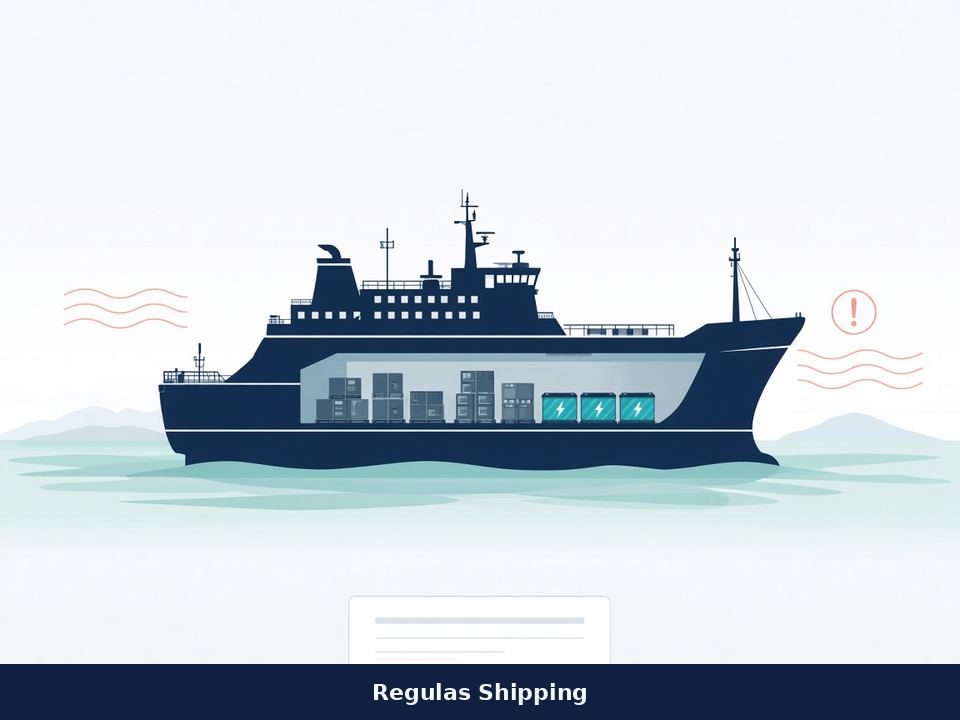
Delos Santos told The Philippine Star that lithium-ion batteries spark when they meet salt water. “That is one of our strongest theories. The batteries interacted with salt water and sparked the fire,” he said. The probe team found rechargeable batteries for solar panels and for electric vehicles, and paint thinners, in the cargo hold. He said further investigation and forensic examinations are still required before anyone can confirm reports that an EV caused the fire. “But we must consider that EVs are transported to the Philippines from other countries through seagoing vessels. So far, there has been no report of any maritime incident involving transport of EVs.” He confirmed an earlier line from MARINA Region IV chief Maximo Bañares that flammable cargo had sparked the fire, without treating that earlier radio interview as a finished identification of the cargo.
Tribune added the stowage finding. Some cargo had not been properly stowed. Break-bulk cargo placed in plastic bags and baskets, and stowed in different parts of the ship, “may contain flammable and corrosive materials including lithium-ion batteries that can be purchased from online stores.” Investigators are also examining whether other flammable materials, including possible undeclared gasoline, were being carried. Delos Santos said MARINA would continue to investigate beyond the safety-investigation result. The safety file is separate from the Coast Guard and other agencies’ maritime-crime probe.
Stay with the theory language. Star’s news lead said MARINA had “blamed” lithium batteries. The quotes underneath are “one of our strongest theories” and a request for more forensic work. Tribune’s Sunday write-through is the safer operator brief: key focus, strongest theories, not a closed root cause. Early survivor accounts of an explosion in the cargo hold before the fire are context for where the hold examination started. They are not a published ignition sequence.
The 9 September casualty this finding sits on
June Aster, a Philippine-flag passenger-cargo ship operated by Atienza Interisland Ferries Inc., caught fire on the evening of 9 September while on the Manila–Coron run, about 1.2 nautical miles northeast of Barangay Marcilla, Coron, Palawan. The Coast Guard’s standing count, repeated by PortCalls as of 28 September and again by Tribune on 4 October, is 77 dead, 43 survivors and eight missing. Open AIS particulars give MMSI 548848200 and call sign DUE2259. There is no IMO number in the primaries. MARINA’s domestic register line, cited in the Philippine Nautical Highway matrix, listed the ship at 490.49 gt, built 2002, with a certified capacity of 277 passengers and 21 crew. Do not invent an IMO to fill that gap.
MARINA’s 18 September clarification, which this desk left unused as a dedicated piece, still matters as the baseline Saturday moved. The agency said then that the cause was under investigation and that no final finding had linked an EV on board to the fire. Bañares, on 27 September, pointed to flammable cargo and improper stowage and declined to name the cargo. Saturday’s lithium-ion and salt-water theory is the increment on that hold file. It is not a rewrite of the 9 September SAR, and it is not a rewrite of Saturday’s Gindara molasses-tanker stand-down in Calaca, Batangas. Gindara is an engine-room fire on a product tanker. June Aster is a passenger-cargo hold fire with a mass-casualty count. Keep the two desks apart.
IMO Secretary-General Arsenio Dominguez used the Coron fire as opening colour at CCC 12 in London, when the public count was still moving. That session is not this article. The dedicated object now is MARINA’s completed safety investigation and the lithium-ion theory that investigation put on the record.
What this does — and does not — do to EV carriage
The Department of Energy told a Senate budget hearing that existing regulations do not specifically prohibit the carriage of electric vehicles by sea and that it is working with MARINA on specific rules. Energy Utilization Management Bureau director Patrick Aquino said there had been an electric vehicle on the Coron ship and also internal-combustion vehicles, and that there was then no finding that the EV caused the fire. DOE is also in the 2026 Fire Code implementing-rules draft with the Bureau of Fire Protection on lithium-ion risk. Those instruments are still drafts. They are not Saturday’s circular.
Domestic operators have already filled the gap with their own standing orders. Montenegro Lines banned electric and hybrid vehicles from its ships after the fire, as a preventive measure against thermal runaway. Lite Shipping Corp., in a 2 October advisory reported by PortCalls, said EVs remain allowed on Lite Ferries in the Visayas and Mindanao if they are stowed in a well-ventilated space, switched off for the voyage, kept empty of drivers and passengers, and covered by dedicated electrical and lithium-ion firefighting equipment. Lite Shipping tied that policy to Republic Act No. 11697, the Electric Vehicle Industry Development Act, and said there is no general international ban on carrying EVs by sea. That advisory is industry reaction. It is not a MARINA carriage rule, and it is not a finding that June Aster’s fire was an EV fire.
The operational implication is that a completed safety investigation can name lithium-ion batteries as the strongest theory without closing the EV question, and that a DPA still has to run two files at once: the hold-stowage and dangerous-goods file that Saturday actually opened, and the still-unwritten national EV-carriage standard. A passenger-cargo ship that accepts break-bulk in bags and baskets is now on notice that those packages can hide lithium-ion cells bought online. An operator that accepts a declared EV still has no MARINA circular that tells the master how to stow it. Company bans and company permissions are not substitutes for that circular.
Operational implications
A 77-fatality passenger-cargo fire whose safety investigation now points at lithium-ion batteries and salt water is a cargo-declaration and fire-party event before it is a fleet EV policy. Masters on Philippine domestic routes need a written hold plan that treats undeclared batteries, paint thinners and possible gasoline as live IMDG-adjacent risk even when the ship is under 500 gt and the cargo arrives in baskets. The fire party has to have a lithium-ion method, not only a Class A hose team. Next-of-kin, P&I and the MARINA compensation line already started in September. Saturday re-opens the cargo manifest, the stowage plan and whether the hold had a salt-water path to the batteries.
Managers who recognise June Aster or another Atienza Interisland hull as theirs should assume MARINA, PCG, BFP and the crime investigators will ask for the cargo list, the EV or battery declarations, the hold photographs, and whether break-bulk was accepted without a dangerous-goods check. Do not brief Saturday as proof that every domestic ferry must ban EVs, that every lithium-ion cell on a Philippine ship is undeclared, or that the crime probe has adopted the safety theory. The confirmed facts are a completed MARINA safety investigation, a strongest-theory finding on lithium-ion batteries and salt water, improper stowage, possible undeclared gasoline, and a still-open forensic and crime file.
What Operators Should Note
- Treat Saturday as a MARINA cause theory, not as a closed EV verdict. June Aster, 9 September, Coron. Delos Santos: lithium-ion batteries in the hold, salt-water contact one of the strongest theories, solar and EV batteries plus paint thinners found, further forensic work still required. Star’s “blamed” lead is not the quote. Do not put “EV fire confirmed” on the first notice to underwriters.
- Keep the casualty count on the Coast Guard line. Seventy-seven dead, forty-three survivors, eight missing. Atienza Interisland Ferries Inc. Philippine flag. MMSI 548848200, call sign DUE2259. No IMO in the primaries. MARINA register colour: 490.49 gt, built 2002, 277 passengers plus 21 crew. Do not invent an IMO.
- Open a break-bulk and declaration file, not only an EV file. Improper stowage. Bags and baskets in different parts of the ship. Possible undeclared gasoline. Online-bought lithium-ion cells. That is a dangerous-goods and hold-plan problem on a domestic passenger-cargo ship, including ships that never accept a car.
- Hold company EV orders as company orders. Montenegro’s ban and Lite Shipping’s 2 October ventilated-stow, switched-off, no-occupants, lithium-ion-extinguisher rule are operator standing orders under RA 11697. DOE and MARINA are still drafting a national carriage standard. Existing rules do not specifically prohibit EV carriage by sea. Saturday does not issue that standard.
- Keep the safety investigation and the crime probe on separate desks. MARINA said it would continue beyond the safety result. PCG, BFP and police have their own files. A lithium-ion theory in the safety report is not a charging decision and not a class recommendation.
- Keep this off the Gindara, Hormuz and Odesa desks. It is not a molasses-tanker engine-room fire, not a projectile, and not a war-risk circular. CSO, DPA, MARINA and domestic P&I own the file until a forensic cause or a national EV-carriage instrument is published.
Regulas Shipping will keep lining MARINA’s lithium-ion and salt-water theory against the still-open forensic file and the unwritten national EV-carriage rule so operators can treat June Aster as a live hold-stowage and passenger-fire problem, not as a closed electric-vehicle verdict or a substitute for a MARINA circular.