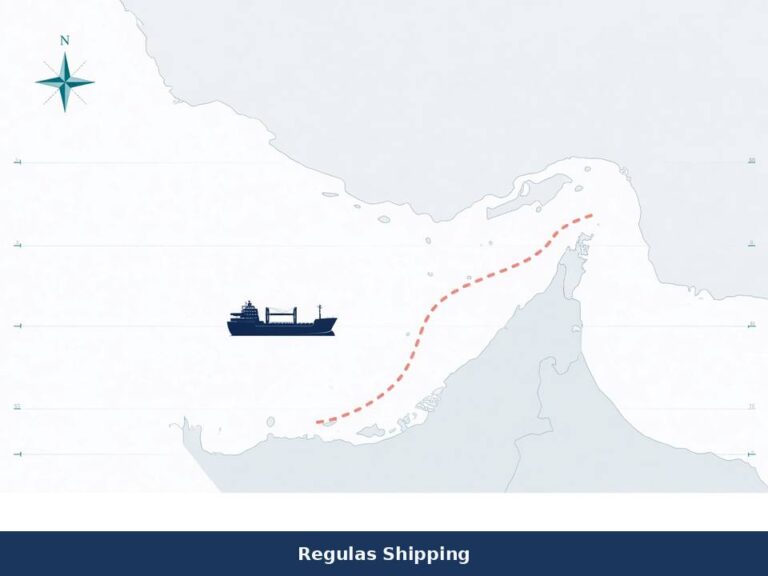
The U.S. Navy-led Joint Maritime Information Center published Update 103 to its regional advisory note on 8 October, with an information cut-off of 081500 UTC. The note, JMIC# 001 26, is the first numbered public update since Update 102 of 4 October. Hormuz remains at SEVERE. The Arabian Gulf stays MODERATE, the Gulf of Oman MODERATE, and Bab el-Mandeb / the southern Red Sea SUBSTANTIAL. The confirmed-incidents table now prints eight files since the last report: UKMTO 151-26 through 158-26. Two of those hulls are named. 151-26 is CHRYSTAL SKY. 157-26 is ON PEACE. 158-26, the 7 October strike 51 nautical miles north of Qatar, is still “Name withheld UFN,” but the narrative is no longer the UKMTO warning’s “multiple projectiles” and unnamed casualties. Update 103 says three UAVs, an engine-room fire that was extinguished, one crew injury, and a ship that continued its voyage.
That is the working primary. Thursday’s note is a numbered regional instrument, not a Hormuz reopen and not a rewrite of the dedicated 5–8 October UKMTO pieces. The useful facts for a DPA and a bridge team are the SEVERE/MODERATE split after an Arabian Gulf hit, the two named hulls, the 158-26 casualty line reduced to one injury, NAVAREA IX 363/26 in the Bab el-Mandeb TSS, and the traffic counts for 4–7 October. Do not treat industry matching of Acers as a JMIC naming, and do not treat a time-late UKMTO warning issued on Thursday as if it sat on Update 103’s printed list.
What Update 103 actually added
Update 102’s information cut-off was 041500 UTC on 4 October. It already carried 147-26 through 150-26, still unnamed, and it left Hormuz at SEVERE. Update 103 does not downgrade that rating. It adds the next eight products and, for the first time on this tape, prints two names.
On 151-26, the original UKMTO warning of 4 October, sourced to a company security officer at 1650 UTC, described a tanker that sighted multiple explosions in close proximity about 60 nautical miles south of Al Mukha / Mokha, with crew safe and no environmental impact reported. Update 103 keeps the file as suspicious activity, not an attack, and names the tanker CHRYSTAL SKY. The JMIC narrative is tighter and geographically different from the original warning: about 15 nautical miles off Yemen, northwest through Bab el-Mandeb, a loud explosion in the air within 100 metres of the starboard bow, then seven to eight smaller explosions, no damage, no injuries, voyage continued. The southern Red Sea paragraph assesses the event as a probable intercepted aerial threat, with no attribution confirmed. Keep both geometries on the file. Do not collapse UKMTO’s 60-nautical-mile Mokha range into JMIC’s 15-nautical-mile BAM line, and do not brief a confirmed Houthi hit.
Industry matching, not a JMIC IMO: Insurance Marine News and Seatrade identified products tanker Chrystal Sky, IMO 9334569, Marshall Islands, about 73,976 dwt, built 2008, operated by Singapore-headquartered Executive Ship Management, northbound Sikka–Barcelona. Vanguard timed the report at 1650 UTC about 60 nautical miles south of Mokha. Screen the IMO against the named hull. Do not treat the voyage colour as a JMIC finding, and do not invent a cargo grade.
On 157-26, Update 103 names ON PEACE and states that the Indian Ministry of External Affairs reported an unknown-projectile strike on 5 October while the tanker was transiting the Strait of Hormuz outbound, with 12 crew injured and evacuated, vessel damage unknown. That is the first JMIC naming of the hull that India and Oman had already identified on 6 October. It is not a rewrite of the dedicated 7 October 03:30 On Peace piece, and it is not a UKMTO naming of the original 157-26 warning, which remained an unnamed time-late Attack product. Keep 157-26 and the India/Oman casualty on the same named file. Do not add Thursday’s 159-26 to it.
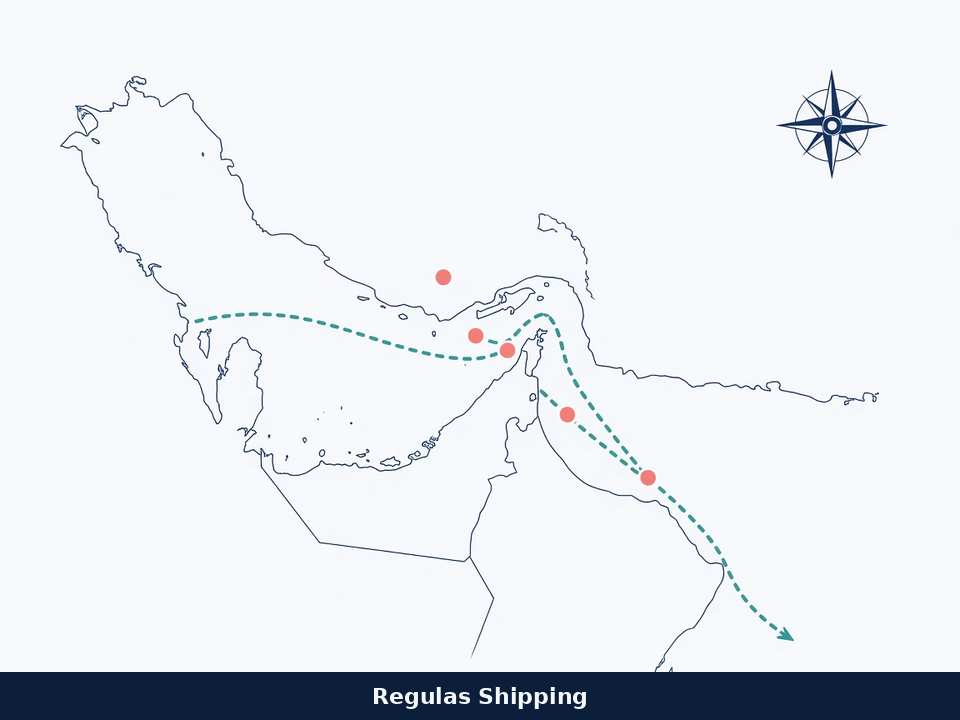
On 158-26, Update 103 still withholds the name. The CSO, not the master, is the source. The location is the central Arabian Gulf, about 51 nautical miles from the Qatari coast, matching UKMTO Warning 158-26’s 51 nautical miles north of Madinat ash Shamal. The weapons line is three UAVs. A fire ignited in the engine room and was subsequently extinguished. One crew member injury is reported. The vessel continued. The Arabian Gulf operational summary calls this the first confirmed attack or disruption inside the Arabian Gulf since 9 September (UKMTO 130-26 and 131-26), with 129-26 the same day recording disabling fire on several merchant vessels in the northern Gulf amid military activity. The last reported attack unrelated to those early-September events, on JMIC’s account, was 1 June (UKMTO 063-26). Stay with one injury and three UAVs on the numbered note. UKMTO’s 7 October warning said “multiple projectiles” and “casualties” without a count. Seatrade, BBC and gCaptain later carried Vanguard matching of Antigua-and-Barbuda oil/chemical tanker Acers, IMO 9301902. That matching is still industry colour. It is not on Update 103’s table. Reuters, writing on 8 October, also used Acers and “minor injuries.” Do not brief a UKMTO-named hull, a death tally, or a confirmed IRGC claim.
The remaining files stay unnamed. 152-26 is the inbound IRGC VHF turn-back already treated in the dedicated 6 October 03:30 Advisory 152-26 piece; Update 103 adds a position, 26°23′N 056°19′E, at 0827 UTC on 5 October, and confirms the ship aborted. 153-26 is an inbound LNG carrier struck by a suspected UAV on 4 October, no injuries, voyage continued. 154-26 is an inbound tanker struck by two unknown projectiles on 4 October in the vicinity of the Musandam Peninsula, no injuries. 155-26 is an inbound tanker struck by an unknown projectile on 3 October, no injuries, voyage continued. 156-26 is now printed as an outbound LNG carrier, not a generic tanker: unknown projectile on 5 October, engine-room fire extinguished, no injuries, voyage continued. Do not assign 156-26 to Maran Gas Mystras. Greece’s ministry named that LNG carrier against a Sunday 4 October waterline hit; UKMTO 156-26 remains a Monday 5 October master report. Update 103 does not print Maran Gas Mystras.
Bab el-Mandeb, traffic, and what sits off the list
The southern Red Sea paragraph pairs CHRYSTAL SKY with NAVAREA IX 363/26. Pakistan’s NAVAREA IX board, still showing the warning as in force on 8 October, issued it at 071900 UTC: piracy activity reported at 12°58.00′N 043°12.00′E in Bab al-Mandab, mariners advised to keep clear and exercise extreme caution, cancel this message 142359 UTC October 2026, cancel NAVAREA IX 361/26. Update 103 places that position in the TSS, 12 nautical miles west of Dhubab. It is a piracy NAVWARN, not a Houthi projectile file and not a rewrite of CUL Klang. JMIC still records Houthi control of Mocha, Mayun/Perim, Zuqar and the Hanish islands after the 10–12 September seizures, and traffic below the 20 July selective embargo. The threat level stays SUBSTANTIAL. Expansion into indiscriminate targeting of all commercial shipping is described as possible but not the declared policy, which remains selective against assets treated as Israeli-, Saudi-, or Yemeni internationally recognised government-linked.
Traffic is the other operator number. Independent tracking in Update 103 still shows single-digit Hormuz transits each way. U.S. NCAGS averaged about 30 vessel transits per day over the last 96 hours. U.S.-facilitated Strait of Hormuz transits for 4–7 October are printed as 120. CENTCOM said on 7 October that traffic was still moving, including about 20 million barrels of crude. Do not add the 120 and the 30. They are different series. The annex cargo-vessel table, drawn from S&P Maritime / SeaVision for non-facilitated traffic above 1,000 dwt excluding Iranian-port calls adjacent to the strait, shows Strait of Hormuz daily totals of 0, 3, 2, 6, 10, 0 and 4 from 1 to 7 October. Bab el-Mandeb cargo transits for 4–7 October are 97 against a 2023 baseline of about 61 per day. Tanker-only annex rows stay thin: Hormuz tanker totals of 1, 2, 1, 0, 2, 1 and 4 across the same week.
Gulf of Oman blockade hygiene is unchanged from Monday’s CENTCOM line, now carried as the latest available official figure dated 5 October: 130 commercial vessels redirected, three disabled, two boarded for compliance, and 13 destroyed over 12 weeks as blockade violators or IRGC shadow-network hulls on CENTCOM’s account. Neutral transit remains permitted. Visit-and-search, a 30-nautical-mile standoff from U.S. units, AIS-on unless constrained by security threats, and a humanitarian-cargo exemption via NAVCENT NCAGS are still the published tools. Approved humanitarian vessels may transit to Iranian ports but remain subject to inspection and may not load cargo in Iran beyond fuel and stores. That is blockade procedure. It is not a 158-26 naming.
Northern Red Sea colour in the same note: ship loadings resumed at Yanbu after the 10–11 September East–West Pipeline strikes, and as of the morning of 6 October had reached 5.8 million barrels, confirmed by Saudi Arabia’s energy minister and corroborated by ship-tracking data. A possible 1 October strike on Yanbu caused minor port-operation disruptions. Suez remains functional both ways. MT ASANA, the Tanzanian-flag product/chemical tanker hijacked on 17 July about 65 nautical miles southwest of Mukalla, is still listed as the one merchant vessel remaining hijacked. Confirmed vessel incidents since 1 March are printed as 135.
Thursday also produced UKMTO Warning 159-26, issued 8 October, a time-late verified-source Attack product: unnamed crude-oil tanker struck by an unknown projectile in the Strait of Hormuz at 1709 UTC on 6 October, no casualties reported, damage and environmental impact unknown. Anadolu carried the same unnamed delayed report. 159-26 is not on Update 103’s confirmed-incidents table. Do not fold it into 157-26 / On Peace, into 156-26, or into the 4–7 October traffic counts. It is a later UKMTO tape, still unnamed, still without a pollution volume.
Operational implications
A numbered JMIC update is a routing and manning problem before it is a count of who was hit. Hormuz is still SEVERE, with deliberate attacks called highly likely, AIS-on targeting risk, and directed hails toward the northern Iranian-controlled route. That guidance did not move because Qatar saw one UAV strike. What moved is the Arabian Gulf paragraph: MODERATE is retained, an attack is still described as possible but not likely, and 158-26 is called an unusual disruption that requires continued monitoring. Masters already inside the Gulf, at Ras Laffan, Mesaieed, Bahrain, Ras Tanura or Mina Al Ahmadi, should not brief a Hormuz-only threat. They also should not brief a Gulf-wide combat area because one unnamed tanker was hit 51 nautical miles north of Madinat ash Shamal. Update 103 did not raise the Arabian Gulf rating.
CSOs should replace the 4 October Update 102 pack with Update 103 in the master’s folder and in the charterer’s security clause file. The new named lines are CHRYSTAL SKY on 151-26 and ON PEACE on 157-26. The new casualty line on 158-26 is one injury, not an open “casualties” warning. The new position on 152-26 is 26°23′N 056°19′E. The new ship-type on 156-26 is LNG carrier. None of those edits is a flag circular, a class condition, or a completed MARPOL finding.
Red Sea and BAM transits need two products on the same passage plan: the CHRYSTAL SKY airburst as a probable intercepted aerial threat, and NAVAREA IX 363/26 as a piracy warning in the TSS west of Dhubab until 142359 UTC on 14 October. Those are different instruments. A BMP5 citadel and a lookout for small craft do not answer an airburst 100 metres off the bow, and an air-search radar watch does not answer a piracy NAVWARN. Houthi control of both BAM channels remains the coastal geography. It is not a UKMTO closure.
Do not merge Thursday with the dedicated 8 October 03:30 158-26 / wartime-weekly-high pair, with the dedicated 8 October 11:30 CUL Klang / Unity pair, or with Japan’s 35-IMO permit and the UK’s 1 October LNG specifications. Update 103 is a regional threat note. It names two hulls, keeps Hormuz at SEVERE, and leaves 158-26 unnamed. It is not a sanctions list and not a completed weekly IMO board.
What Operators Should Note
- Log Update 103, ICOD 081500 UTC 8 October, not a Hormuz downgrade. JMIC# 001 26. Hormuz SEVERE. Arabian Gulf MODERATE, with 158-26 called the first confirmed Gulf attack since 9 September and an unusual disruption to monitor. Gulf of Oman MODERATE. Bab el-Mandeb / southern Red Sea SUBSTANTIAL. 135 incidents since 1 March. Replace Update 102 in the master’s pack.
- Name only the two hulls JMIC named. 151-26 is CHRYSTAL SKY, suspicious activity, probable intercepted aerial threat, no damage, no injuries, voyage continued. Keep UKMTO’s original 60 nautical miles south of Mokha and JMIC’s 15 nautical miles off Yemen / BAM northwest transit on the same file; do not collapse them. 157-26 is ON PEACE, 5 October outbound Hormuz, 12 injured and evacuated, damage unknown. Industry matching of IMO 9334569 on Chrystal Sky is particulars colour, not a JMIC IMO print.
- Read 158-26 as one injury and three UAVs, still unnamed. CSO source. Central Arabian Gulf, about 51 nautical miles off Qatar. Engine-room fire extinguished. Vessel continued. UKMTO Warning 158-26 remains the 7 October “multiple projectiles / casualties” product. Vanguard / BBC / Reuters matching of Acers, IMO 9301902, is still not a UKMTO or JMIC naming. Do not brief a death tally.
- Keep 152-26 through 156-26 unnamed, and do not force 156-26 onto Maran Gas Mystras. 152-26 now has 26°23′N 056°19′E and a confirmed abort. 153-26 inbound LNG, suspected UAV, 4 October. 154-26 inbound tanker, two projectiles, Musandam, 4 October. 155-26 inbound tanker, 3 October. 156-26 outbound LNG, engine-room fire extinguished, 5 October, voyage continued. Greece’s Maran Gas Mystras file stays the dedicated 7 October 11:30 ministry naming.
- Put NAVAREA IX 363/26 on BAM passage plans until 14 October. 071900 UTC 7 October: piracy activity 12°58.00′N 043°12.00′E, TSS, 12 nautical miles west of Dhubab, keep clear, extreme caution, cancels 361/26, self-cancels 142359 UTC 14 October. Distinct from CHRYSTAL SKY and from CUL Klang.
- Do not add Thursday’s traffic numbers into one throughput figure. NCAGS about 30 transits per day over 96 hours. U.S.-facilitated Hormuz transits 4–7 October: 120. CENTCOM 7 October: traffic still moving, including about 20 million barrels of crude. Independent series still single-digit each way. BAM cargo transits 4–7 October: 97. CENTCOM 5 October blockade line remains 130 redirected, three disabled, two boarded, 13 destroyed over 12 weeks. UKMTO 159-26 (6 October 1709 UTC unnamed crude, no casualties, issued 8 October) is not on the Update 103 table. Yanbu loadings 5.8 million barrels as of 6 October morning is a pipeline-recovery line, not a Red Sea clearance. Asana is still hijacked.
Regulas Shipping will keep lining Update 103’s 081500 UTC cut-off against UKMTO 151-26 through 159-26 so operators can treat Thursday’s named hulls, the one-injury 158-26 line and the Dhubab piracy NAVWARN as a live routing pack, not as a Hormuz reopen or a completed Gulf-wide combat-area circular.