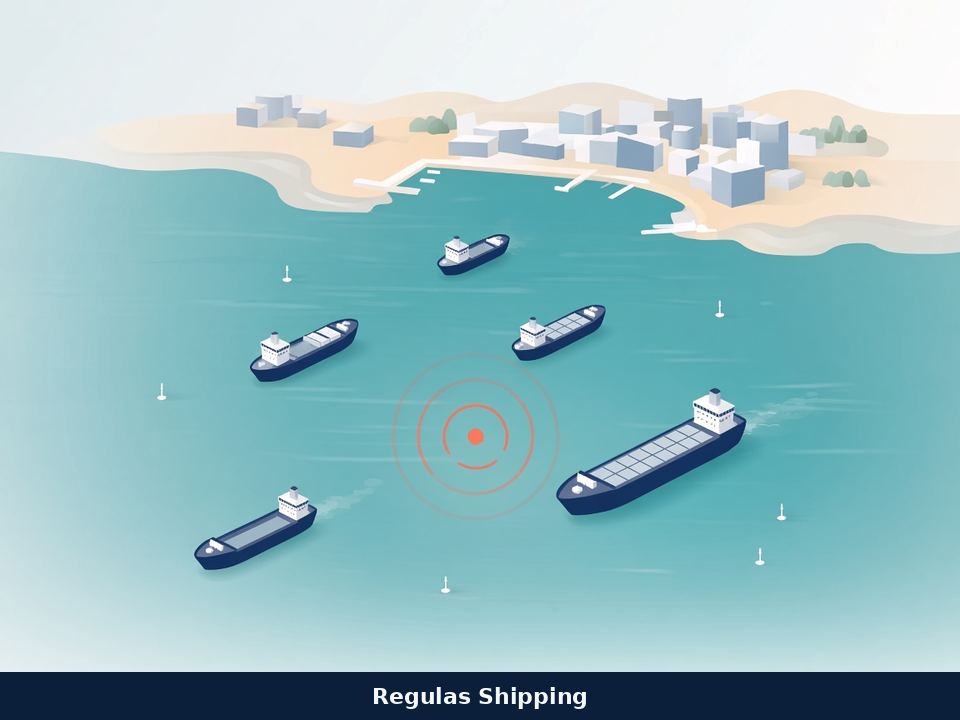
The United Kingdom Maritime Trade Operations centre issued Advisory 161-26 on Saturday, 10 October. It is a Suspicious Activity product, source Master, timed at 1850 UTC. UKMTO said it had received a report from several masters in the vicinity of Ras Al Khaimah, United Arab Emirates, that they had been directed via VHF broadcast to move from their anchorages. Authorities were investigating. Vessels were requested to continue to report any further suspicious activity. The official PDF named neither the station that made the broadcast, the channel, the wording of the order, how many ships heard it, whether any ship weighed, nor a responsible party.
Anadolu Agency and Reuters, carried on Devdiscourse, carried the same unnamed Saturday-evening master report. That is the working primary. 161-26 is a UAE-coast anchorage file, not a Strait of Hormuz Attack warning, not a reprint of Monday’s dedicated Advisory 152-26 north of Khasab, and not a later-tape increment of Thursday’s dedicated Joint Maritime Information Center Update 103. The useful facts for a DPA and a Gulf master are the several-masters line, the VHF broadcast, the instruction to leave the anchorage, and a product that reports no hit, no fire and no damage. Do not invent an IRGC hail to fill the UKMTO gap, and do not treat the 1850 UTC advisory as the opening paragraph of Saturday’s 1920 UTC Warning 162-26.
What UKMTO published, and what it did not
161-26 is an Advisory classified as Suspicious Activity, not an Attack warning. The master line is short: several masters, vicinity of Ras Al Khaimah, directed via VHF broadcast, move from their anchorages, investigating. Anadolu said UKMTO did not identify who issued the instructions, did not say whether any vessels complied, and reported no attacks or damage to ships in connection with the incident. Reuters said the advisory provided no further details. Hold those omissions. A VHF order to weigh is a routing and collision-avoidance problem before it is a kinetic one. It is not a projectile, a boarding, a detention or a pollution event.
UKMTO did not name the caller as IRGC, as a UAE port authority, as a coalition warship, or as a spoofed station. Monday’s dedicated 152-26 did name IRGC on an inbound tanker 11 nautical miles north of Khasab and printed an explicit “turn back or be targeted” instruction that the master confirmed. Saturday’s product does none of that. Do not back-fit the Khasab hail onto Ras Al Khaimah. Do not write that the ships were ordered onto the northern Iranian-controlled route. Do not write that they were ordered to sea for a named security zone. The PDF says move from their anchorages. That is the whole instruction as published.
A Ras Al Khaimah anchorage file, not a Hormuz TSS product
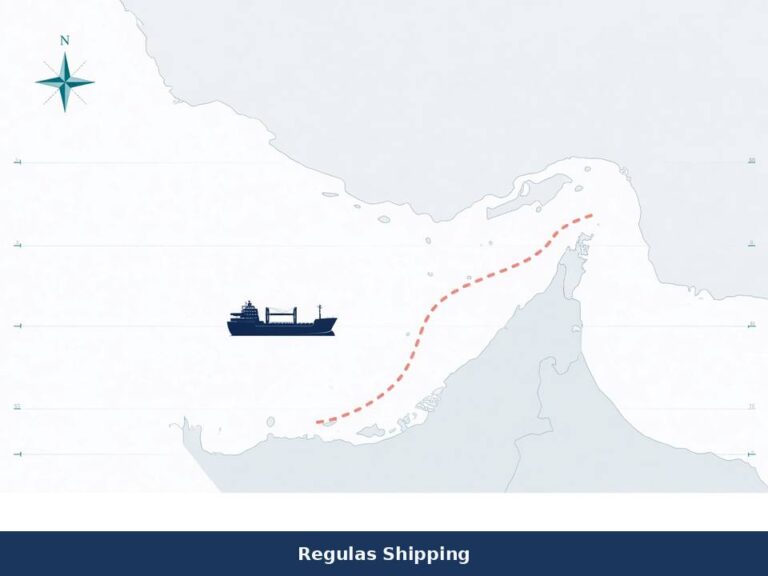
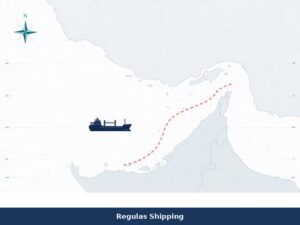
The geography is the operational point. UKMTO placed the reports in the vicinity of Ras Al Khaimah, UAE. That is the Emirates’ inner-coast anchorage water, on the western side of the Musandam approaches, not the Strait of Hormuz traffic-separation scheme and not the Fujairah / Gulf of Oman roadstead. Friday’s dedicated Warning 160-26 sat 13 nautical miles west of Al Jazeera, further south along the same inner coast, as a projectile-and-fire Attack product. Saturday’s 161-26 does not reuse that range, does not reuse that reference point, and does not report a strike. Do not invent a latitude and longitude, a named RAK, Al Hamriyah or Khalidia box, or a territorial-sea call. UKMTO did not make a coastal-state finding.
Update 103, information cut-off 081500 UTC on Thursday, 8 October, is still the last numbered JMIC regional note on the bridge. It held the Arabian Gulf at MODERATE and the Strait of Hormuz at SEVERE, called 158-26 the first confirmed Gulf attack or disruption since 9 September, and asked for continued monitoring. Saturday’s 1850 UTC product sits outside that cut-off. Do not treat Update 103 as a Saturday all-clear for UAE-coast waiting areas, and do not treat a Hormuz SEVERE rating as a finding that inner-Gulf anchorages are quiet. Do not rewrite Update 103 on the strength of one later advisory.
Thirty minutes later is a different product
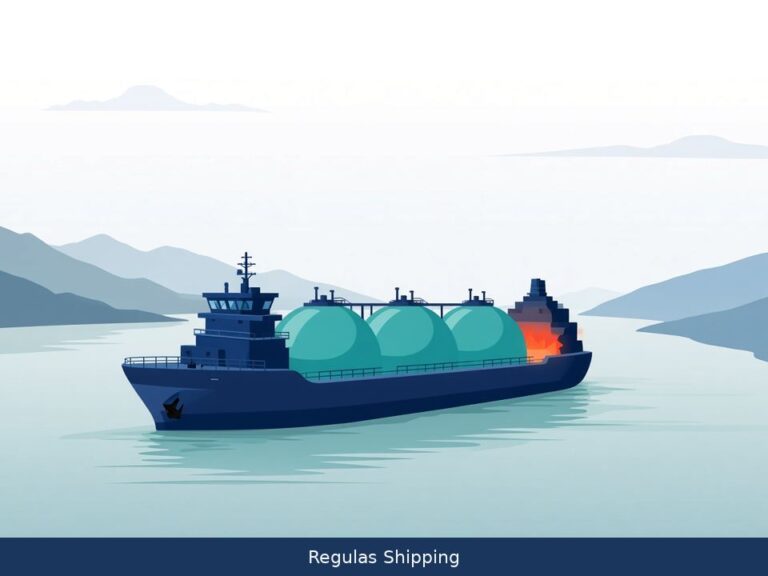
Warning 162-26, issued the same evening at 1920 UTC, is a separate Attack file: outbound tanker, Strait of Hormuz, unknown projectile, port side, fire on board, crew safe. The two clocks are 30 minutes apart. The two geographies are not the same. A VHF order off Ras Al Khaimah is not a Hormuz projectile, and a Hormuz projectile is not proof that the RAK broadcast was a prelude. Keep the two numbers on two desks. Masters who heard the 1850 UTC broadcast and masters who were already in the TSS at 1920 UTC are not automatically the same ships.
Saturday afternoon’s IRGC mine claim, via Sepah News as carried by Xinhua, Anadolu and Iran International, is likewise a different product: an unnamed crude supertanker on an unauthorized southern route, mines, explosion, no UKMTO number. Do not brief the RAK VHF move as a coastal-state reaction to that IRGC statement, and do not brief the IRGC statement as the source of the broadcast. UKMTO named no caller.
What this is not
161-26 sits after a week of hail, projectile and inner-Gulf products that already have dedicated files. Advisory 152-26, 5 October, 0827 UTC, master, inbound tanker 11 nautical miles north of Khasab, IRGC hail, turn back or be targeted, master complied. Warning 160-26, 9 October, 1000 UTC, source third party, unnamed vessel 13 nautical miles west of Al Jazeera, fire extinguished. Warning 158-26 remains the Qatar multiple-projectile casualty. Saturday is a new numbered advisory, not a second Khasab hail, not a 160-26 increment, and not a JMIC Update 104.
Do not fold 161-26 into Yanbu loadings, the UAE MPCI container-filing mandate, Japan’s 35-ship vessel-level permit, Thursday’s OFAC/State 22-tanker package, Oman’s Article 10 AIS-on territorial-water rule, or Iran’s Persian Gulf Strait Authority declaration channel. Those are crude-export, documentation, sanctions and coastal-state products. Saturday’s file is several unnamed masters, a VHF broadcast of unknown origin, an order to leave a Ras Al Khaimah anchorage, no reported hit and no reported damage.
Operational implications
A VHF order to weigh, heard by more than one master and logged as suspicious activity, is a night-order problem for every ship already swinging off Ras Al Khaimah, Al Hamriyah, Umm Al Quwain and the nearby waiting boxes. The first risk is not a projectile. It is a simultaneous weigh in a crowded anchorage: cables across, AIS clutter, a ship that moves because the next ship moved, and a master who cannot tell whether the caller is a port authority, a warship, or a spoofed station. Company security officers need a written rule for that call: identify the station, require a repeat on a working channel, log the time and the wording, report to UKMTO and the flag, and decide whether the ship weighs, holds with extra lookouts, or requests verification from the UAE coast guard or the local agent. 161-26 records the reports. It is not a standing order to put to sea.
Ships that do weigh leave a waiting area that Friday’s 160-26 already put on a projectile watch. A move from RAK toward the Musandam approaches or toward the TSS is a move toward Saturday’s 162-26 geometry, not a move into sanctuary. A move south along the Emirates coast is a move back through the Al Jazeera range. Neither direction is a completed risk transfer. Passage plans for ships stemming Sharjah, Ajman, Ras Al Khaimah and the Hamriyah boxes should now carry both a VHF-authentication step at anchor and a projectile watch once the hook is up.
Oman’s Article 10 AIS-on rule inside territorial waters was not withdrawn and does not apply as a UAE instrument. A ship that goes AIS-off to reduce hail and spoofing risk off Ras Al Khaimah still has a coastal-state and collision problem in a busy anchorage. UKMTO did not say whether the ships that heard the broadcast were AIS-on. Do not treat Saturday as a waiver of AIS discipline, and do not treat it as a UAE instruction to darken ship.
Hold the published hygiene from Update 103 for the strait itself: neutral transit, prompt answers to military queries, NAVCENT NCAGS for any Iran-port humanitarian exception, and no cargo loaded in Iran beyond fuel and stores on an approved exemption. Saturday’s advisory does not rewrite that blockade picture. It also does not convert a RAK anchorage into an Iran-port call. CENTCOM’s running redirect count against ships entering or leaving Iranian ports remains a separate enforcement channel. A master answering an unidentified VHF order to leave a UAE anchorage is not the same event as a CENTCOM redirect. Do not merge the two on the bridge log.
What Operators Should Note
- Log a new Saturday Suspicious Activity advisory, not an Attack warning. Advisory 161-26, 10 October, 1850 UTC, source Master, several masters in the vicinity of Ras Al Khaimah, UAE, directed via VHF broadcast to move from their anchorages, investigating. Report further suspicious activity to UKMTO. Do not invent a caller, a channel, a hull count or a compliance tally.
- Keep it off the projectile desk. 161-26 reports no hit, no fire and no damage. Anadolu said UKMTO identified neither the station nor whether any ship weighed. A VHF order to leave an anchorage is a routing and collision problem. It is not a confirmed attack, a boarding, a detention or a pollution event.
- Do not back-fit Advisory 152-26 onto Ras Al Khaimah. Monday’s Khasab product named IRGC, printed turn-back-or-be-targeted, and recorded the master’s compliance on an inbound tanker 11 nautical miles north of Khasab. Saturday’s product names no caller and no threat language. Brief the difference.
- Write an authentication step into the RAK night order. Identify the station, require a repeat, log the wording, report to UKMTO and the flag, then decide whether to weigh, hold or seek verification. A simultaneous weigh in a crowded box is the immediate risk. 161-26 is not a standing order to put to sea.
- Do not merge 161-26 with Warning 162-26 or with Friday’s 160-26. The Hormuz outbound fire is 30 minutes later and a different geography. The Al Jazeera projectile fire is Friday’s Attack file. Ships that weigh off RAK still have a projectile watch toward Musandam and back along the Emirates coast.
- Do not rewrite Update 103. ICOD remains 081500 UTC 8 October. Arabian Gulf MODERATE. Hormuz SEVERE. 161-26 sits outside that cut-off. Do not recast Saturday as a UAE closure, a PGSA transit-rule instrument, a confirmed IRGC hail, or a completed weekly tape.
Regulas Shipping will keep lining Advisory 161-26 against the Khasab hail file and Saturday’s separate Hormuz Attack product so operators can treat the Ras Al Khaimah VHF move as a new unnamed-caller anchorage warning, not as a confirmed hit and not as a reason to assume waiting areas inside the Emirates coast have gone quiet.