The IMO Sub-Committee on Carriage of Cargoes and Containers opened its 12th session at IMO Headquarters in London on Monday, 14 September 2026, for a five-day sitting through 18 September. The agenda is cargo and fuel safety, not a political communiqué: amendments to the IGF Code and guidelines for alternative fuels, a safety framework for greenhouse-gas technologies, IMSBC and IMDG Code amendments, and a harmonized performance standard for lashing software as a supplement to the Cargo Securing Manual. Chair David Anderson of Australia and Vice-Chair Christian Allgeier of Germany will run the week. Three working groups are expected to start on day one, covering alternative-fuel guidelines, the GHG safety framework, and the Cargo Securing Manual revision.
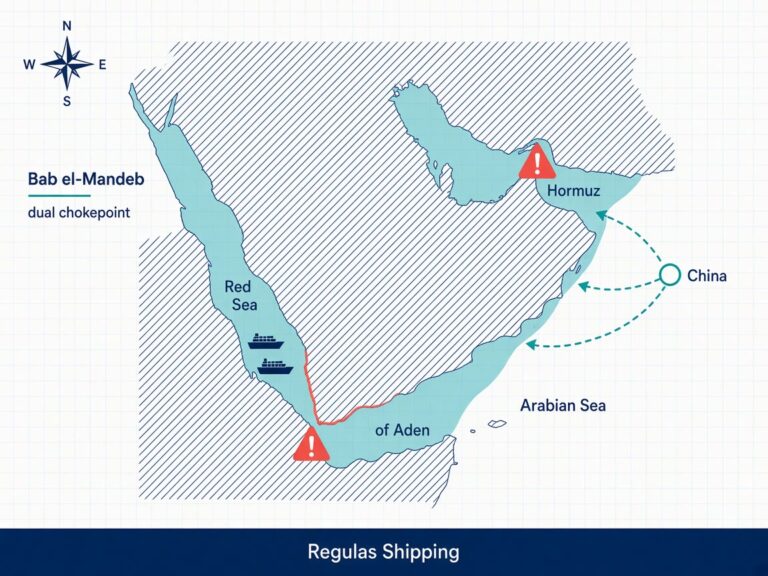
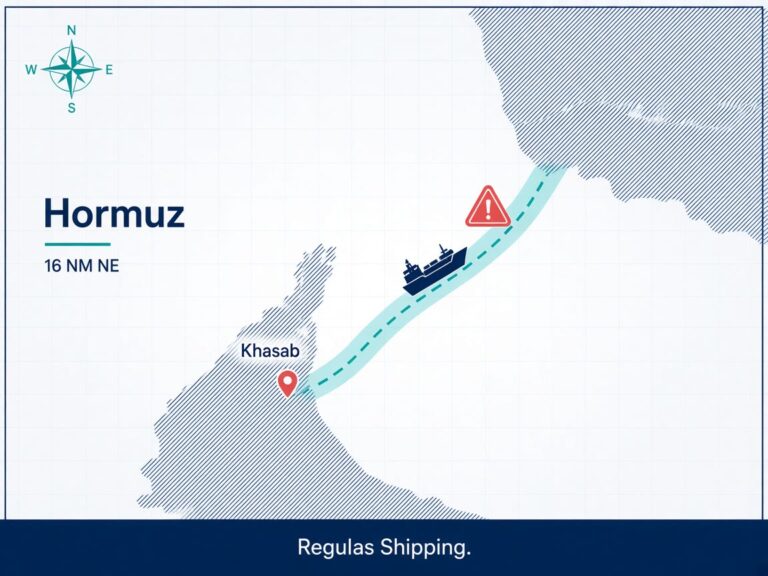
Secretary-General Arsenio Dominguez opened the session by tying that technical agenda to a casualty week. He said the Organization was deeply saddened by the fire on the ferry MV June Aster off Coron, Palawan, on 9 September, which has claimed 76 lives, with 13 people still unaccounted for. He also referred to the capsizing of Virgo Transport 8 in the Java Sea on 13 September, with at least six dead and 129 still missing. He then pointed to attacks on merchant ships in and around the Strait of Hormuz, the Black Sea and Sea of Azov, the Red Sea, and off Somalia and in the Gulf of Aden, noting weekend casualties among seafarers. His instruction to the room was operational: shipowners, operators and flag States must conduct realistic risk assessments before sending vessels through those regions. “From my point of view, no country has any excuse to attack any merchant vessel or any innocent seafarer,” he said.
The Sub-Committee’s first working product is expected to be the revision of the Interim guidelines for the safety of ships using methyl/ethyl alcohol as fuel, following last week’s Intersessional Working Group on technical provisions for alternative fuels. CCC 12 is also expected to push toward finalization of draft interim guidelines for ships using low-flashpoint oil fuels, including the HVO and biofuel questions that have been sitting in the work plan since CCC 11. New on the table is the start of interim guidelines for ships using onboard carbon capture and storage systems, an output the earlier work plan had aimed at the end of the decade and that operators ordering OCCS-ready tonnage now need as a yard specification, not as a 2029 aspiration. Mandatory provisions for methyl/ethyl alcohols and further work on fuel-cell provisions remain on the IGF track. None of that is a licence to bunker methanol or ammonia this week. It is the difference between a ship that can show an administration a current circular and a ship that is still arguing from a 2020 interim text.
Ammonia sits beside the Sub-Committee rather than only inside it. The IMO Future Fuels and Technology Project will hold a technical seminar on ammonia as a marine fuel on 17 September at Headquarters, also streamed on the IMO YouTube channel. The programme covers production pathways and bunkering, onboard applications and engines, spill response, safety, and ammonia effluent management. MSC 111 already approved interim guidelines for using ammonia cargo as fuel on gas carriers. CCC 12’s job is the wider fuel-safety file: ships that will carry ammonia as bunkers rather than as cargo, and the shore–ship interface that ports have not yet standardised. Operators ordering dual-fuel ammonia tonnage, or taking time-charter positions that assume an ammonia-ready notation, should treat Thursday’s seminar and the week’s working-group text as the same file. A charter that promises “ammonia-ready” without saying which circular, which tank arrangement, and which spill-response standard is a specification gap, not a green premium.
Cargo rules run in parallel with the fuel work. CCC 12 will consider the next set of IMSBC Code amendments covering classification, loading, carriage and cargo-related hazards for solid bulks, and IMDG Code amendments covering packaged dangerous goods — classification, packing, marking, labelling, documentation, stowage and segregation. The Sub-Committee will also take reports of dangerous-goods and marine-pollutant incidents on board and in port areas, which is the feedback loop that turns undeclared or poorly documented cargo into a circular rather than into another hold fire. A separate World Shipping Council proposal to close the Special Provision 188 gap on lithium-battery containers is before this session; that loophole was already the subject of a dedicated industry submission this month. The operator point for the rest of the IMDG agenda is simpler: documentation and declaration remain the control, whether the cargo is batteries, alternative-fuel samples, or a bulk that shifts the ship’s stability. Unified interpretations of SOLAS, MARPOL and related conventions are also on the list, which is where class and flag will look for the wording that surveyors actually apply.
The Cargo Securing Manual revision is the item most bulk and container operators can use before any fuel guideline is adopted. CCC 12 is expected to finalize a revision of MSC.1/Circ.1353/Rev.2 so that a harmonized performance standard allows lashing software to be used as a supplement to the Cargo Securing Manual. That is a survey and cargo-operations change, not a software-vendor story. Ships that already run lashing programs as a convenience will need to show that the program meets the performance standard and that the approved Cargo Securing Manual still governs. Ships that have been treating the software as the manual will have a non-conformity waiting at the next CIC or class survey. Paris and Tokyo MoU cargo-securing concentrated inspection campaigns have already put lashing, securing and cargo documentation in the inspection window through 30 November. A finalized circular this week is the text those inspectors will eventually quote.
The practical implication for owners, managers and flags is that London this week is writing the safety layer under fuels and cargoes that commercial teams have already sold. Methanol dual-fuel orders, HVO blending, OCCS retrofits, ammonia-ready options, and lashing software on container and bulk ships are all ahead of mandatory instruments. CCC 12 will not finish the net-zero political fight that stalled at ISWG-GHG 22. It can finish, or at least freeze, the circulars that a master, a bunker supplier and a cargo planner need when those fuels and those lashings are already on the ship. Dominguez’s opening casualties are the reminder that the same Sub-Committee still has to look at dangerous-goods incident reports while ferries burn and merchant ships are used as leverage in conflicts that have nothing to do with their cargo. The risk assessment he asked for before sending ships through Hormuz, the Red Sea, Somalia or the Black Sea is a company decision. The alcohol-fuel, low-flashpoint, OCCS and lashing texts are the documents that decision will be measured against in a few years’ surveys.
What Operators Should Note
- Treat CCC 12 as a five-day working session, 14–18 September, not as a press conference. Alternative-fuel guidelines, IMSBC/IMDG amendments and the Cargo Securing Manual revision are the products. Chair David Anderson (Australia) and Vice-Chair Christian Allgeier (Germany) will take the report to MSC and MEPC.
- Watch the methyl/ethyl alcohol interim guidelines for finalization this week. Last week’s intersessional group teed up a revision of MSC.1/Circ.1621. Ships already burning or bunkering methanol should check whether their IGF documentation, tank arrangements and crew training still match the text that leaves London.
- Put low-flashpoint oil fuels and OCCS on the same specification sheet. Draft interim guidelines for low-flashpoint oil fuels, including HVO/biofuel questions, are due to move toward finalization. Onboard carbon capture guidelines are starting now. Yard options sold as “OCCS-ready” need a circular to point to, not a brochure.
- Send the technical team to the 17 September ammonia seminar, or to the recording. The FFT Project session covers production, bunkering, engines, spill response and effluent. MSC 111’s ammonia-cargo-as-fuel guidelines do not automatically cover ammonia as bunker on a dry or container ship. Charter and newbuilding language should name the instrument.
- Expect a lashing-software performance standard as a supplement to the Cargo Securing Manual. The revision of MSC.1/Circ.1353/Rev.2 is scheduled for finalization. Software that is not shown to meet the standard will not replace the approved manual. Paris and Tokyo MoU cargo-securing CICs run through 30 November.
- Keep IMDG/IMSBC declaration discipline in the same pack as the fuel work. Incident reports on packaged dangerous goods and marine pollutants are on the agenda. Undeclared concentration of hazards — batteries or otherwise — remains a hold-fire and port-state problem whether or not a special-provision amendment is agreed this week.
- Do not read Dominguez’s opening as a new routing circular. His risk-assessment instruction for Hormuz, the Black Sea, the Red Sea and Somalia is company and flag business. CCC 12 will not reopen those waterways. It will write the cargo and fuel safety rules that still apply to ships that go, wait, or divert.
Regulas Shipping will keep lining CCC 12’s alcohol-fuel, low-flashpoint, OCCS, ammonia and lashing texts against the IMDG/IMSBC file so operators can treat this week in London as a specification and survey problem, not as a slogan about alternative fuels.