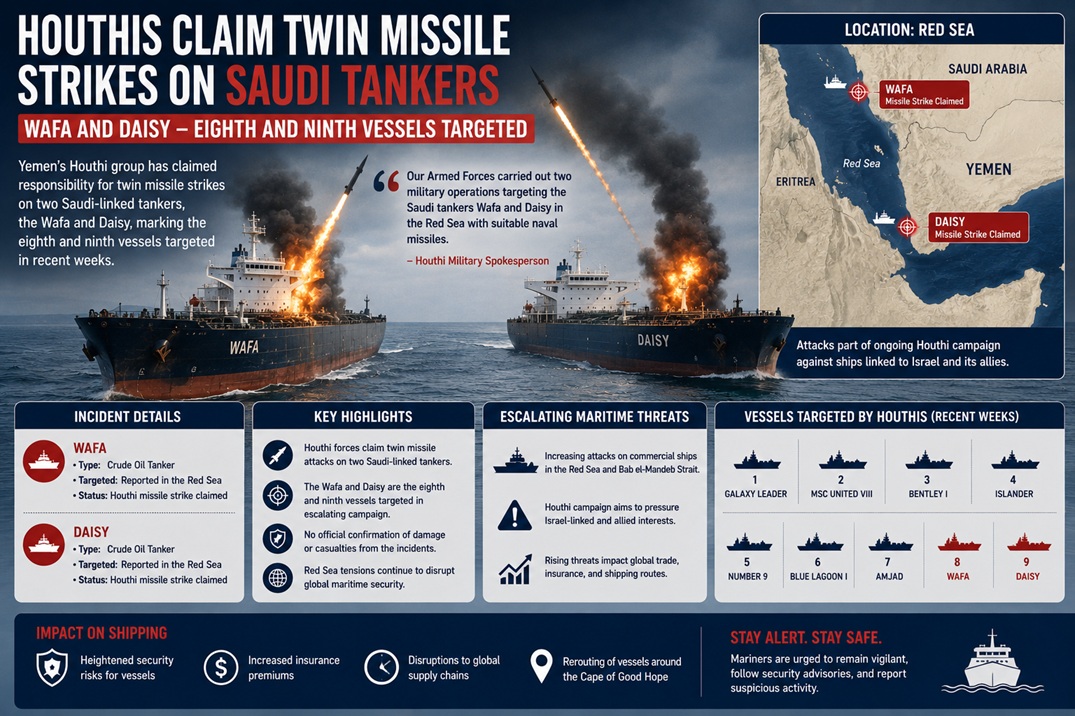
Yemen’s Iran-aligned Houthi movement claimed two separate missile attacks on Saudi-linked oil tankers on 5 August, hours apart, marking the eighth and ninth vessels the group says it has targeted since declaring a maritime blockade against Saudi Arabia on 20 July.
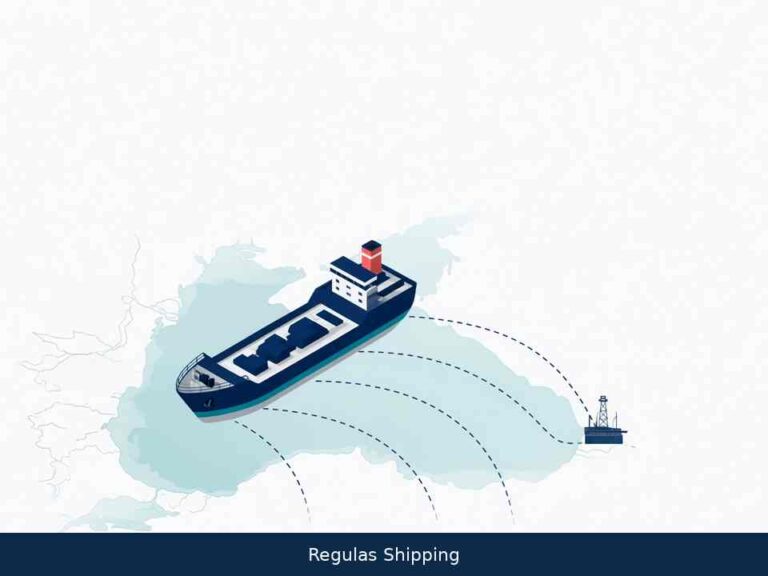
Houthi military spokesman Yahya Saree said forces struck the tanker Wafa in the northern Red Sea off Yanbu with multiple ballistic missiles, calling the hit precise. Later the same day, Saree said a second tanker, Daisy, was struck by a ballistic missile in the Gulf of Aden and forced to turn back. Both claims describe the strikes as part of the group’s declared “blockade-for-blockade” policy against Saudi Arabia. Neither claim has been independently verified, and Saudi authorities had not issued an official comment on either incident at the time of writing.
Separately, UK Maritime Trade Operations (UKMTO) reported it received word of a loud explosion near a tanker approximately 95 nautical miles southeast of Aden at 1430 UTC on 5 August. The center said the crew and vessel were safe and no environmental impact was reported, though it remains unclear whether this incident corresponds to either of the Houthis’ claimed strikes.
A Shifting Trade Pattern Under Fire
The Wafa strike is notable for its location: Yanbu, on Saudi Arabia’s northern Red Sea coast, has become an increasingly important export point as Saudi Arabia has rerouted crude away from the southern approaches to the Bab el-Mandeb Strait since the blockade began. According to data from maritime tracker Kpler, Saudi seaborne crude exports transiting Bab el-Mandeb rose roughly eightfold between March and mid-July compared with the same period last year, with April and May seaborne exports departing exclusively from Yanbu. The Houthis have said they will escalate attacks in the northern Red Sea specifically because tankers have been redirected there.
Saree also claimed that 29 Saudi-linked vessels have either been turned back or prevented from transiting the Red Sea since the blockade’s declaration, a figure that, if accurate, would represent a substantial disruption to the kingdom’s primary seaborne export routes.
What This Means for Operators
- Yanbu-linked and Saudi-flagged or chartered tonnage face materially elevated targeting risk in both the northern Red Sea and Gulf of Aden.
- Ownership and charter-party affiliation with Saudi Arabia now appears to be the primary targeting criterion, independent of flag state.
- UKMTO advisory monitoring for the Gulf of Aden and northern Red Sea approaches to Yanbu should be treated as essential, not supplementary, for any affected voyage planning.
- War-risk premiums for Saudi-linked Red Sea transits are likely to see further upward pressure following this second confirmed multi-vessel targeting day.
RegulAsShipping continues to monitor the situation in the Red Sea and Gulf of Aden and will report further verified details on vessel status and responsibility as they emerge.