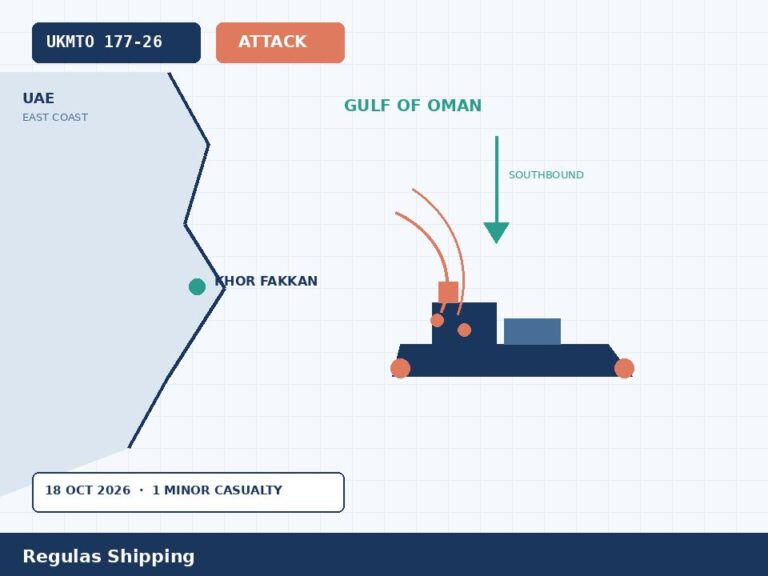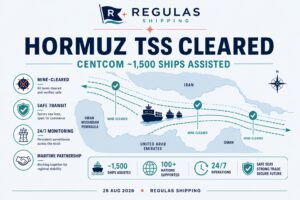
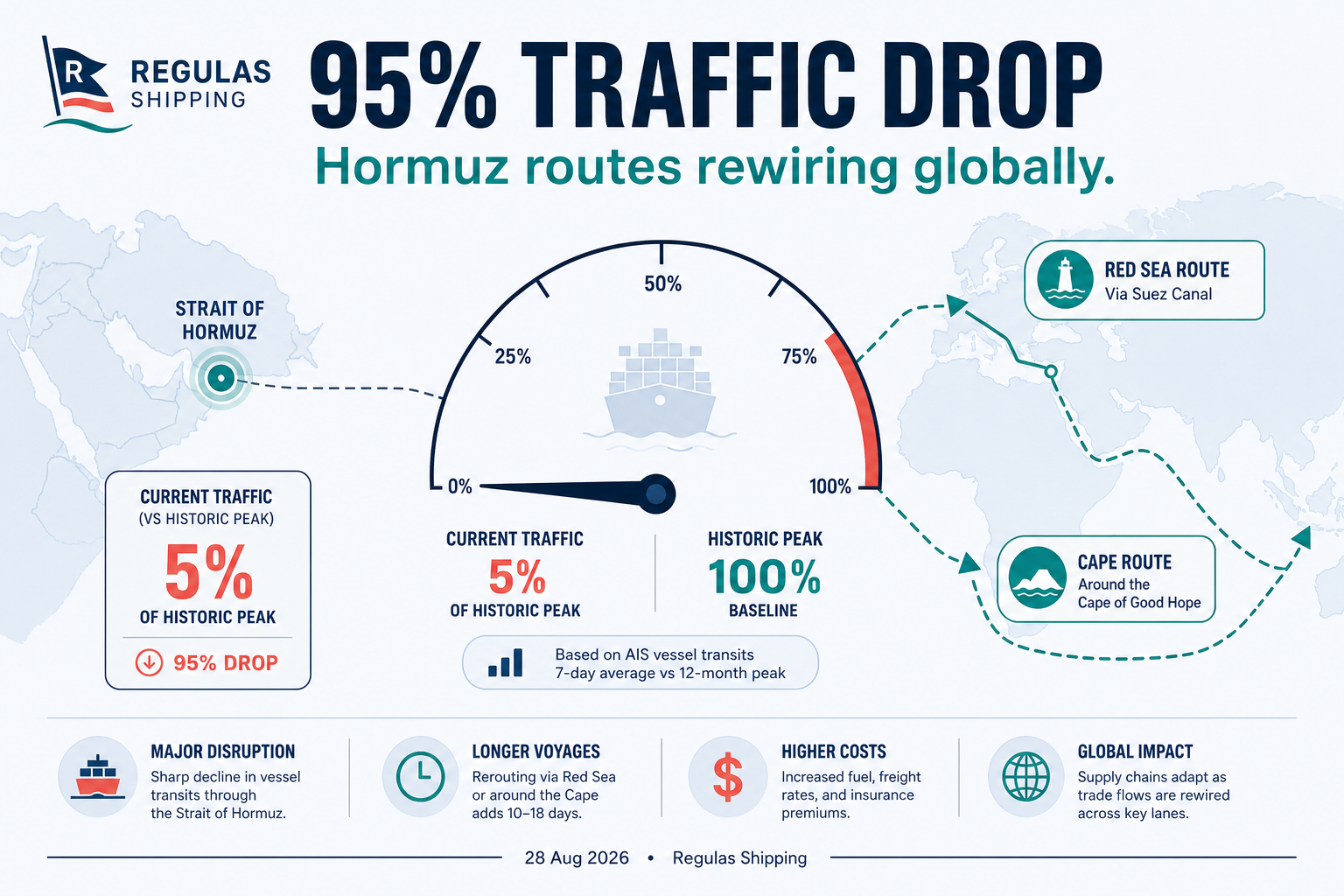
As of late August 2026, commercial traffic through the Strait of Hormuz remains structurally depressed. Industry and open-source analyses circulating around 27–28 August describe an approximate 95 percent drop from pre-war norms: where the strait once handled on the order of 130–140 vessels a day and a large share of seaborne oil and LNG, recent windows have averaged only about five commodity vessels a day for extended stretches, with occasional single-digit recoveries that still sit far below the old baseline.
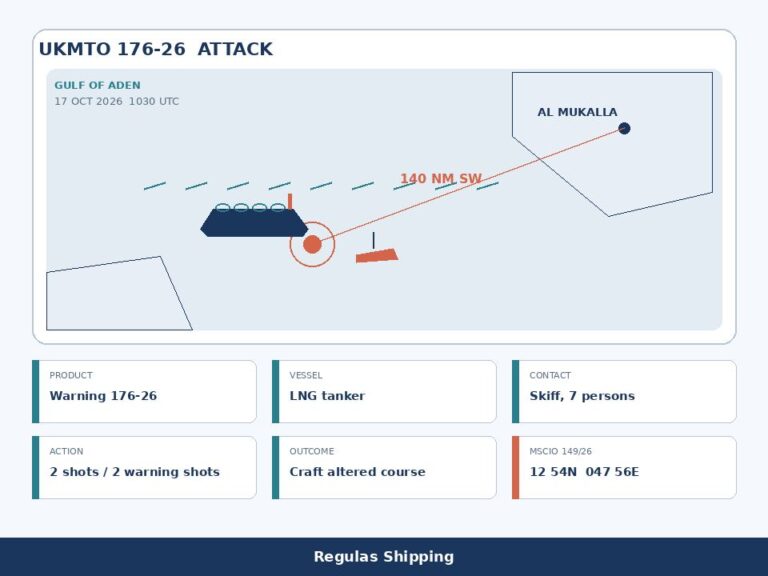
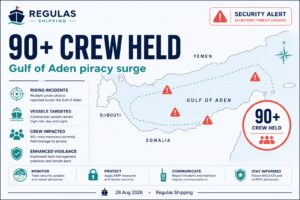
The operational consequence is a rewired trade map, not a brief weather delay. Gulf export programmes have leaned harder on pipeline-to-Red Sea options where available, ship-to-ship and shuttle arrangements outside the Gulf, and Asian hubs in places such as Singapore and Malaysia for redirected energy logistics. Saudi Arabia has been relatively more resilient on some port-call metrics because of East–West pipeline access to Red Sea terminals — but that alternative corridor itself faces Houthi naval pressure around Bab el-Mandeb and Yanbu-linked approaches, creating a dual-chokepoint problem rather than a clean substitute for Hormuz.
For owners, charterers and cargo interests, the “Hormuz closed / Hormuz open” binary is less useful than a capacity and cost model: longer Cape or Red Sea routings, higher bunker burn, elevated war-risk premiums, tighter tonnage availability for Gulf-related stems, and schedule instability when either Hormuz or Bab el-Mandeb deteriorates. Late-August tanker projectile incidents and still-active mine-danger messaging show why many commercial desks continue to treat full TSS restoration as a political aspiration until daily crossings, insurance pricing and advisory levels move together.
What Operators Should Note
- Plan on suppressed Hormuz capacity until multi-day transit counts and insurer appetite recover in tandem.
- Stress-test fixtures against dual failure — Hormuz constraints plus Red Sea/Bab el-Mandeb escalation.
- Build explicit diversion, STS and pipeline-outlet options into charter-party and voyage instructions.
- Track Asian hub and Cape tonnage effects on freight and laycan flexibility for Gulf-related cargoes.
- Keep crew-change and stores plans realistic for vessels holding outside the Gulf waiting for clearance windows.
Regulas Shipping will keep mapping Hormuz volume recovery against Red Sea alternatives so commercial and safety decisions stay aligned.