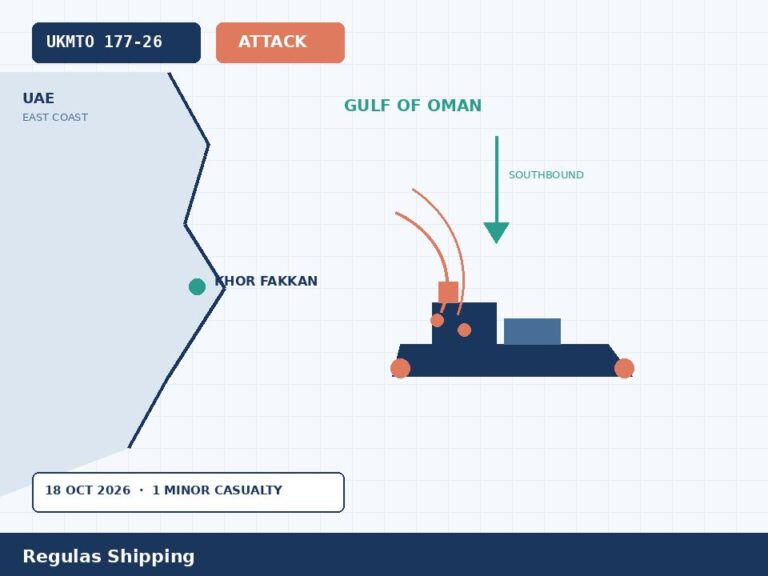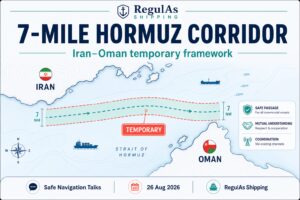
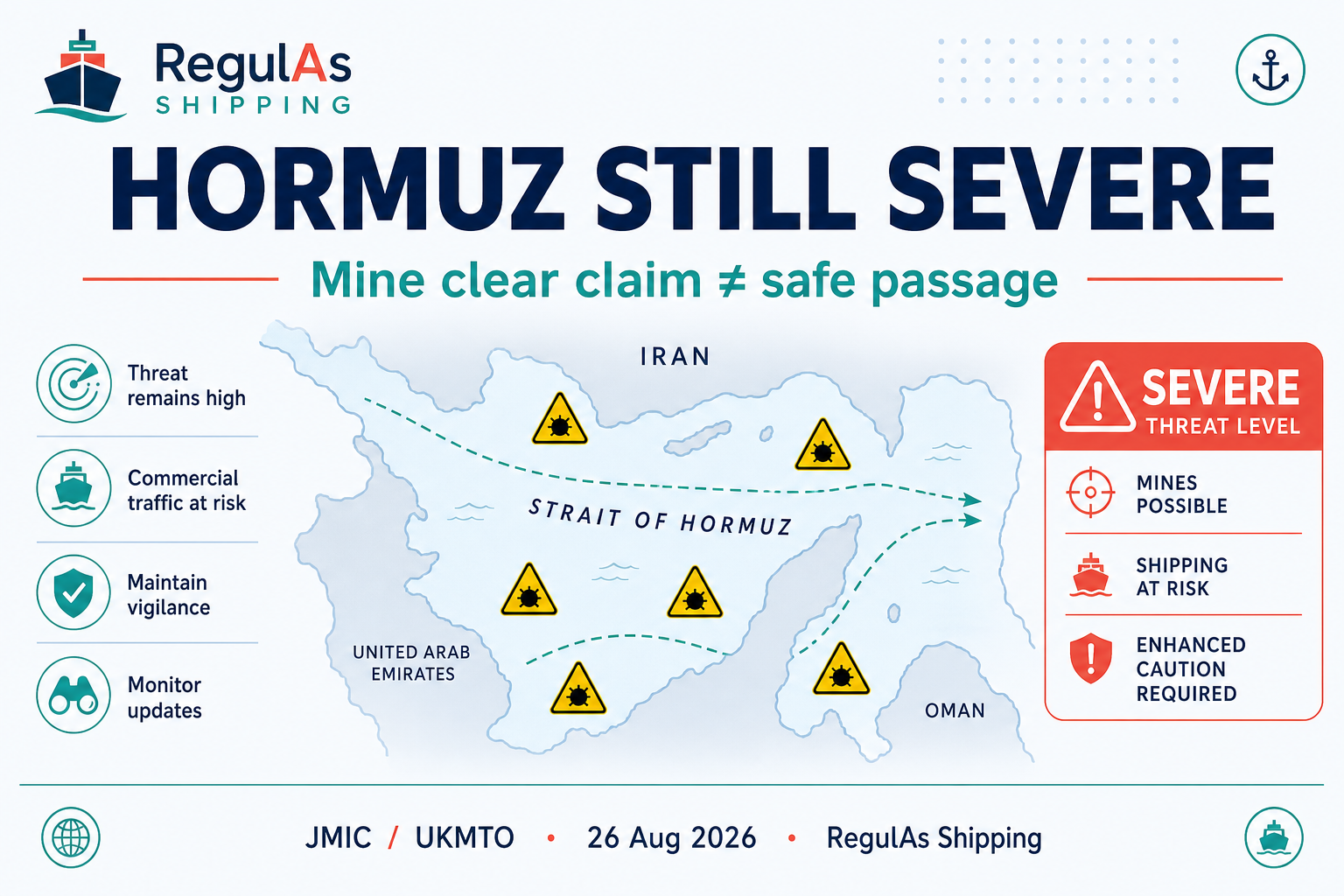
On 26 August 2026, commercial operators faced a sharp messaging split over the Strait of Hormuz. U.S. President Donald Trump said the U.S. Navy had removed or detonated all mines in the strait’s international waters and warned that any vessel laying new mines would be destroyed. Hours after that political declaration, the Joint Maritime Information Center (JMIC) still assessed the waterway at SEVERE, citing a continued risk of drifting or uncharted mines in and near the traffic separation scheme and active mine-danger areas. UKMTO likewise signalled that mine-danger reporting remains relevant.
Maritime analysts told industry media that clearing known mines in monitored lanes is not the same as making Hormuz safe for merchant traffic. Iran disputed the U.S. claim, insisted the strait remains closed under its control, and warned U.S. mine-countermeasure vessels could become targets. Experts emphasised that even if key lanes are swept, drones and anti-ship cruise or ballistic missiles — not sea mines — have been the dominant kinetic threat to commercial ships, while war-risk premiums remain elevated and a durable ceasefire is still absent.
What Operators Should Note
- Treat political “mine-free” claims as incomplete until JMIC/UKMTO downgrade threat and mine-danger areas.
- Obtain current NCAGS mine-danger coordinates before any TSS transit planning.
- Keep missile/drone and engine-room damage drills active — mines are only one layer of risk.
- Do not assume insurance rates will fall on a single announcement; underwriters will wait for sustained calm.
RegulAs Shipping will continue tracking JMIC/UKMTO advisories against political reopen narratives for masters and CSOs.