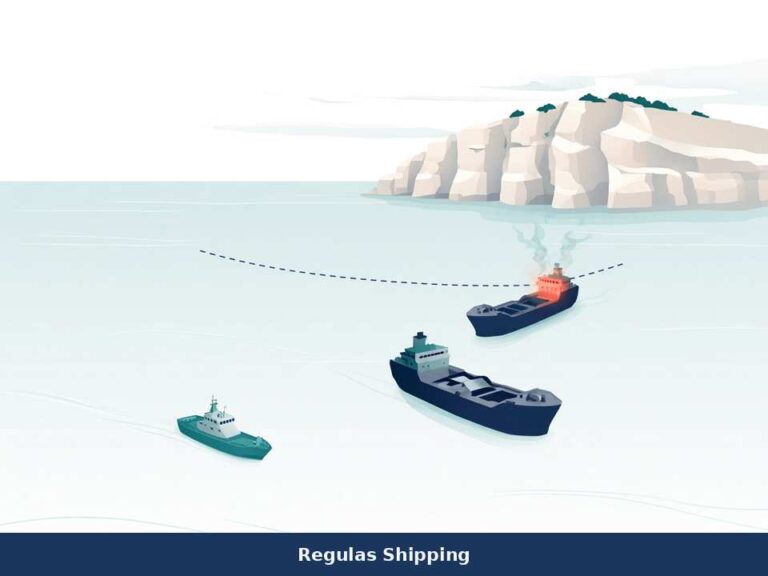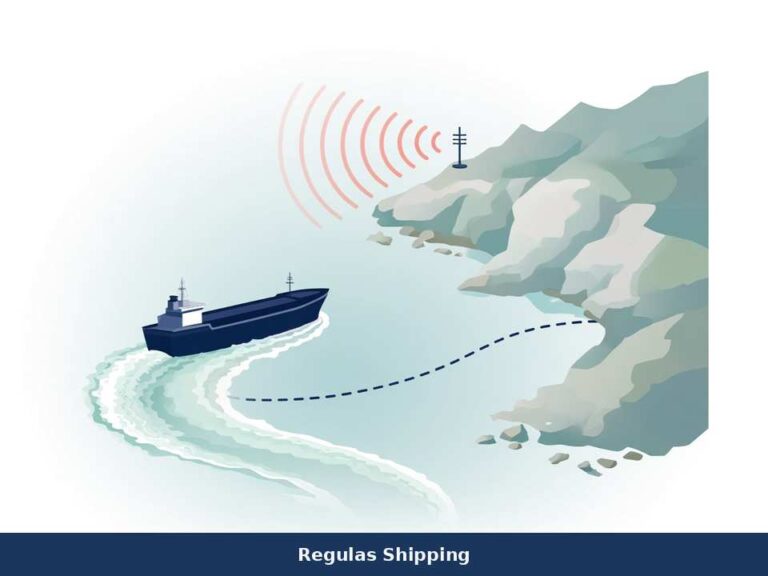
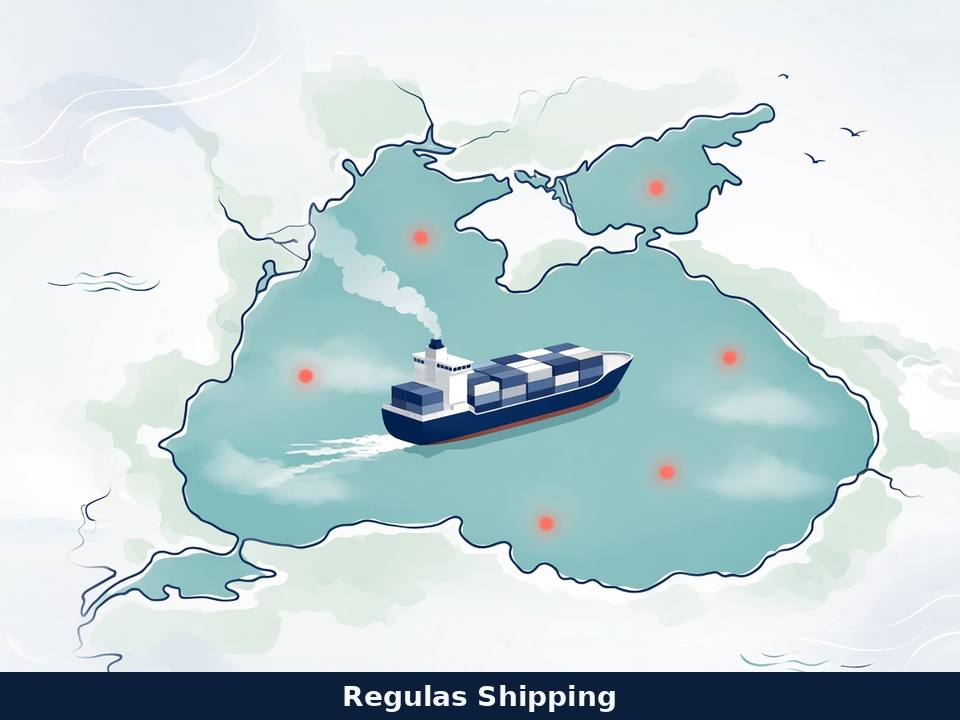
At least 45 merchant vessels have been attacked over the past 12 months in parts of the Black Sea that had not previously been classified as high-risk, maritime risk firm Ambrey said on Wednesday, 23 September. No attacks were recorded in those areas in the previous 12 months. The increase, Ambrey said, was driven by strikes farther from the Russian and Ukrainian coasts, which is what prompted underwriters to reassess the basin. More than 70 percent of the attacks recorded so far this year took place after 1 July. AFP carried the assessment the same Wednesday; Turkish Minute and TradeWinds followed on Thursday, 24 September. That census is the primary for this note. It is not a rewrite of Joint War Committee circular JWLA-035, which the 20 September Regulas article already covered as the listed-area change.
Ambrey’s geography is specific. Attacks blamed on Ukraine against shipping linked to Russia occurred mainly off Turkey’s northern coast and in open waters south of Novorossiysk and Sochi. Tomas Alexa, a senior Ambrey analyst, said adding those stretches to the war-risk list “reflects a war that has already expanded beyond Russian and Ukrainian waters.” The listed-area point is context, not the news: JWLA-035, dated 16 September and reported by Reuters on 18 September, replaced a coordinate box with “Black Sea excluding territorial waters of adjoining countries other than Russia and Ukraine.” Turkish, Romanian, Bulgarian and Georgian territorial seas remain outside that Black Sea item. Exclusive economic zones of those four states are inside it. Russian and Ukrainian waters were already listed. Sea of Azov remains a separate line. Ambrey’s contribution is the attack count that shows why the map moved, and why a ship that never intended to enter a Ukrainian or Russian port is still in a basin where the old “coastal only” assumption has failed.
The old high-risk belt got worse as the war left it
The previously listed waters did not quiet down while the war spread. Ambrey recorded at least 156 merchant vessels attacked in Russian and Ukrainian waters between 1 July and 21 September, against 12 in the same stretch last year. It also recorded 139 strikes on ports in that period, against 21 a year earlier. Those are Ambrey tallies, not a UKMTO or IMO product, and they are not a named-hull list. They sit beside figures already on this blog as separate files: İMEAK DTO’s Tamer Kıran told the 27 August assembly that 226 civilian and commercial ships had been targeted since the invasion as of 26 August, 163 of them — more than 70 percent — in the first eight months of 2026; the Turkish Shipowners’ Association counted 146 confirmed non-military cases from 24 February 2022 to 26 August 2026, 82 of them in 2026, 34 Turkish-owned or controlled and five Turkish-flagged. Erdoğan’s 22 September UNGA line that recent Black Sea commercial-ship attacks are “unacceptable, regardless of who is responsible,” covered on 23 September, did not create a corridor, an escort or a start date. Fidan’s 20 September NTV readout that both sides had answered a draft memorandum and that positions remain hard to reconcile is still the last official Turkish settlement picture. Ambrey’s Wednesday numbers explain why those diplomatic sentences have not pulled hulls out of the envelope.
The operational implication is the one owners have been trying not to write into the passage plan. A Novorossiysk or Odesa call was already a listed, UAV-and-port-strike voyage. A crossing that only used the high seas toward a Turkish, Romanian, Bulgarian or Georgian berth was, until this summer’s spillover, often treated as a different product. Ambrey says that distinction has already been broken in the water, mainly off northern Turkey and south of the Russian Caucasus ports. Lionfish, the Turkish feeder hit on an Ambarlı–Novorossiysk run on 13 September and diverted to Trabzon after a container-bay fire, was an early named example of a commercial box ship taking a drone in a theatre that was not supposed to look like a tanker war. Ukrainian claims against Russian-linked hulls near Sochi, including Armada Leader on 12 September, sit on the other side of the same open-water belt. Neither of those files is reopened here. They are why Alexa can say the war has already left the old coastal list.
Port and river workarounds do not cancel the basin count. Sulina’s decision to clear inbound ships in the Black Sea rather than inside the canal, covered on 23 September, was a queue-management change for a two-week Danube backlog. It moves the inspection offshore. It does not put those waiting hulls outside Ambrey’s open-water attack set, and it does not restore Ukraine’s deep-sea ports. Drifting unexploded USVs, UAVs and mines remain an indiscriminate hazard on Ambrey’s own earlier Black Sea assessments, independent of a ship’s cargo or ownership story. A grain coaster that has been told the canal will accept it after an offshore clearance still needs a war-risk notice for the sea leg that gets it there.
A wider list is a notification and a premium, not a ban
JWLA-035 does not prohibit navigation. It changes who must notify, who pays additional premium, and how a seven-day war-risk policy is underwritten for a crossing that used to sit outside the Black Sea item. World Ports, summarising the circular on 18 September, put the market point in one line: underwriters are no longer treating Black Sea war risk as a handful of ports or coastal zones. Ambrey’s Wednesday file is the casualty evidence behind that sentence. TradeWinds, on Thursday, summarised the same Ambrey warning as no end to ship attacks in the Black Sea this year and said the expanded war-risk area will not be reduced while the conflict keeps spreading. That is an intelligence-firm outlook, not a JWC promise to keep JWLA-035 frozen, and not a safe-lane certificate for traffic that stays inside a 12-mile belt.
The carve-out still matters and is still easy to misuse. A ship that remains inside Turkish, Romanian, Bulgarian or Georgian territorial sea for the entire voyage may still fall outside the new Black Sea notification item. A ship that leaves that belt to cross the basin does not, even if the berth itself is in an adjoining state. Hugging a Romanian or Turkish coast for part of the passage does not carry the high-seas stretch with it. Russian and Ukrainian territorial waters remain listed. Crew-bonus, BMP and next-of-kin language written for “Ukrainian ports only” or “Russian ports only” will miss a ship that is hit south of Sochi or off northern Turkey on a voyage that never filed a Ukraine call. Association tests — cargo, last port, AIS history, STS partner, beneficial ownership — now sit on both sides of the war, which is why Ambrey can record Ukrainian-blamed strikes on Russia-linked hulls in waters that adjoining states still treat as their EEZ.
None of Wednesday’s figures is a substitute for a named UKMTO or NAVAREA product on a specific hull. Ambrey did not publish a 45-ship annex in the AFP account. Operators who need to know whether their ship is in that set still have to match their own noon positions, AIS gaps and damage reports against club and flag correspondence. The use of the number is directional: the previously unlisted water is no longer an unused column, the post-1 July acceleration is the live pattern, and the 156/139 counts inside the old zone show that the coastal war intensified in the same quarter the spillover began. That is enough to rewrite a Black Sea risk assessment that still talks only about Odesa, Chornomorsk and Novorossiysk. It is not enough to treat Varna, Constanta, Batumi or a Turkish Black Sea port as a civilian sanctuary, and it is not a reason to brief Erdoğan’s UNGA sentence or a future November meeting as cover.
What Operators Should Note
- Put Ambrey’s 45-ship, 12-month spillover in the risk assessment, not only JWLA-035. The circular, already covered on 20 September, is the insurance map. Wednesday’s census is the reason the map moved: zero attacks in those waters a year earlier, at least 45 in the year to 21 September, most of this year’s activity after 1 July, concentrated off northern Turkey and south of Novorossiysk and Sochi.
- Keep the old listed belt on its own ledger. Ambrey counted at least 156 merchant vessels attacked in Russian and Ukrainian waters from 1 July to 21 September, against 12 a year earlier, and 139 port strikes against 21. A decision to avoid Ukraine does not, on those figures, make a Russian-port or Russia-linked voyage look like last summer.
- Do not treat adjoining-state territorial waters as a basin transit corridor. JWLA-035 carves out Turkish, Romanian, Bulgarian and Georgian territorial seas. It lists their EEZs and the high seas. A Constanta or Samsun berth does not carry an open-water crossing off the list. Write the notice, premium and crew-bonus trigger against the track, not against the port name.
- Separate Ambrey’s tally from any named-hull file. Lionfish, Armada Leader, the 19 September unnamed Odesa and Chornomorsk Geran claims, and the 17 September Tanzanian-flag captain remain separate posts. Wednesday’s 45 and 156 are aggregate. If your ship may be in the set, confirm through flag, club and the master, not through an AFP paragraph.
- Do not brief UNGA language or a Danube procedure as a security product. Erdoğan’s “unacceptable” line and Fidan’s hard-to-reconcile memorandum are diplomacy. Sulina’s offshore clearance is a queue rule. Neither is an escort, a start date or a reduction in Ambrey’s open-water envelope.
- Rework association and lookout language for EEZ and high-seas legs. Cargo, last port, AIS history and beneficial ownership can put a non-belligerent flag inside a targeting story in water that is not Russian or Ukrainian territorial sea. Drifting USVs, UAVs and mines remain basin-wide. Citadel, AIS and fire-party assumptions written only for a port approach will miss a hit on passage.
- Treat TradeWinds’ “no end this year” line as an Ambrey outlook, not a listed-area freeze. JWLA-035 is contract-specific and can be revised. Until a later circular narrows it, price notification and additional premium for any Black Sea high-seas leg, and do not assume the 45-ship spillover reverses because the last named attack was closer to a coast.
Regulas Shipping will keep lining Ambrey’s 45-ship spillover and 156-vessel coastal tally against the JWLA-035 basin list so operators can treat a Black Sea crossing as a priced war-risk voyage across open water, not as a coastal problem that stops at the old Russia–Ukraine line.