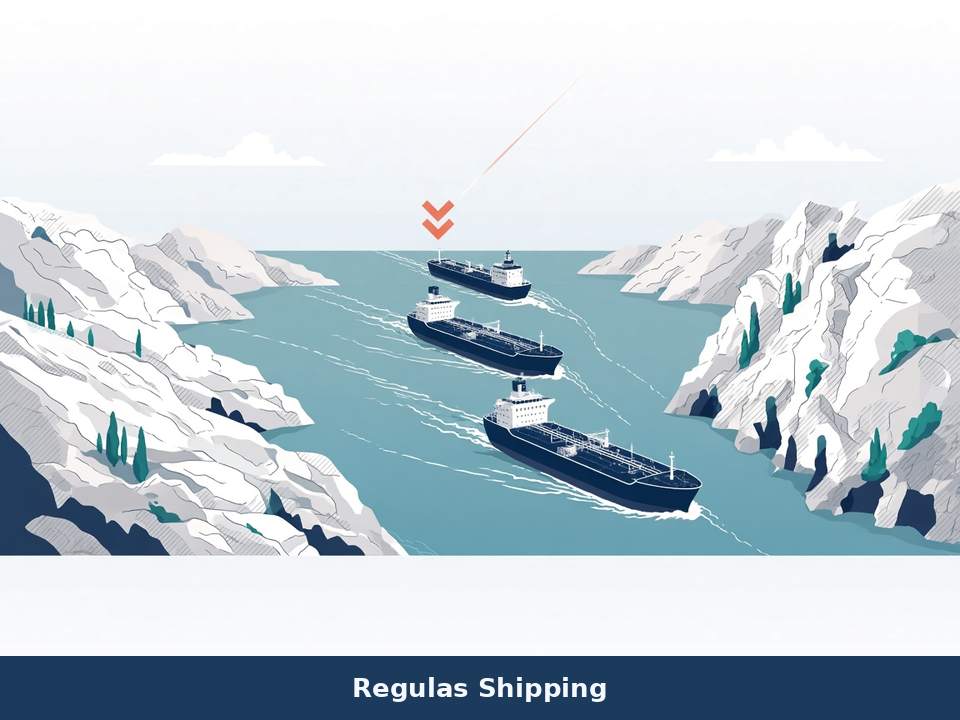
The United Kingdom Maritime Trade Operations centre issued three separate attack warnings on Wednesday, 30 September — 144-26, 145-26 and 146-26 — after verified, time-late reports that tankers had been struck by unknown projectiles in the Strait of Hormuz on Tuesday, 29 September. Each product lists the report date as 29 September, the report time as to be confirmed, the issue date as 30 September, and the source as verified. UKMTO named no ships, flags, managers, positions, casualties, damage or pollution. It said authorities were investigating and advised traffic to transit with caution and to report suspicious activity. These three warnings are the primary for this note. They are not a rewrite of Warning 143-26 on the Kuwait Oil Tanker Company very large crude carrier Al Funtas, already on this blog from Tuesday’s third-party fire product, and they are not a confirmation of Iran’s weekend claim of 19 targeted or intercepted vessels.
Warning 144-26 is the most specific official sentence: a crude oil tanker was struck on the port side by an unknown projectile. Warning 145-26 says a tanker transiting inbound was struck by an unknown projectile. Warning 146-26 says only that a tanker was struck by an unknown projectile. All three are classified as attacks, not as suspicious activity. That is a harder label than Tuesday’s Al Funtas product, which UKMTO kept as suspicious activity even while reporting a projectile and a fire. gCaptain, writing on Wednesday, said the three new warnings add to a growing information gap: some Hormuz incidents become public hours or days after they occur, and the public picture of the strait remains incomplete. UKMTO runs a voluntary reporting scheme. If masters, companies or other authorities do not pass the information, the centre cannot publish it in time, and it may not publish it at all.
Industry names three hulls. UKMTO still does not
Seatrade Maritime, citing Vanguard Tech, identified the three Tuesday incidents as the 2008-built very large crude carrier Mersin Prosperity, the Liberia-flagged tanker Sinbad, managed by Anglo-Eastern, and Al Ruwais. Vanguard called Al Ruwais an LNG tanker. Open particulars show a Liberia-flagged LR2 crude/products tanker owned and operated by ADNOC Logistics & Services, not an LNG carrier. Equasis-facing sources used in the same reporting put Mersin Prosperity under ADNOC management. Vanguard said the extent of damage to the three vessels remained unclear. UKMTO published none of those names. Operators should keep the official products as unnamed, time-late attack warnings and treat the identifications as industry matching, not as a UKMTO hull confirmation.
Open particulars for the industry set are as follows. Mersin Prosperity, IMO 9327554, MMSI 636026356, call sign A8SN7, is a 2008-built Liberia-flag crude tanker of about 299,319 deadweight tonnes, 157,808 gross tonnes and about 332 metres overall. MagicPort lists ADNOC Logistics & Services as ISM manager and Aransa Prosperity Ltd as registered owner; earlier names include Bunga Kasturi Enam. Sinbad, IMO 9413688, MMSI 636019327, call sign D5TZ9, is a 2009-built Liberia-flag Aframax/LR2 crude tanker of 115,949 deadweight tonnes, 61,248 gross tonnes and about 249 metres. Anglo-Eastern Tanker Management in Hong Kong is the ISM manager; Chessworth DMCC is listed as commercial manager and Sinbad Maritime Shipping SA as registered owner. Al Ruwais, IMO 9828405, MMSI 636020894, call sign 5LBF8, is a 2021-built Liberia-flag LR2/Aframax of 114,695 deadweight tonnes, 65,552 gross tonnes and about 250 metres, with ADNOC Logistics & Services as ISM and commercial manager and Al Ruwais Inc as registered owner. If a later official product uses different names, start from that product. Do not treat this paragraph as a casualty list.
Seatrade said that of the three ships identified by Vanguard, only Sinbad appears on Iran’s Persian Gulf Strait Authority non-compliance list. PGSA has warned that listed vessels face fines, detention or confiscation on later passages. The operational point is the same as on Al Funtas, which was not on the published list and was still hit in the industry identification: a name on or off the NCL does not decide whether a projectile arrives. OFAC’s May 2026 SDN designation of the PGSA and FAQ 1249 — safe passage without payment; cooperating with declarations, fees or questionnaires can create U.S. exposure — remain the counter-stack. A listing is not a reason to file a PGSA declaration.
A 24-hour window that the public record caught late
Taken with Tuesday’s Warning 143-26, Wednesday’s pack covers four tankers reported struck in the strait across Monday evening 28 September and Tuesday 29 September. Seatrade framed that as four vessels in 24 hours. The useful fact for a passage plan is narrower. UKMTO itself did not publish a same-day attack product for Tuesday. The three verified warnings landed on Wednesday with times still marked TBC. Lloyd’s List, writing the same day, said the three attacks had been disclosed as U.S.–Iran ceasefire talks failed, that the hulls it named had been transiting with AIS off, and that most of the handful of recent visible crossings used the Larak Island detour, with no traceable crossings recorded on Tuesday. Those Lloyd’s List movements are context. They are not a UKMTO finding and they are not a sailing window.
Iran had claimed over the weekend that its forces struck or intercepted 19 vessels on 25 and 26 September. UKMTO’s new warnings do not identify who fired the projectiles and do not confirm that census. gCaptain made the same point: competing claims over how many ships are being targeted sit against a delayed official tape. The three new products show that more incidents are being added after the fact. They do not turn a 19-ship military claim into a verified commercial count. JMIC’s severe rating of 27–28 September still stands from this blog’s earlier note: deliberate hostile action in the strait was assessed as highly likely, with UAV overflight, targeted surveillance and occasional VHF hailing described, and commercial traffic below 2025 levels. Monday evening’s Al Funtas fire and Tuesday’s three unnamed tankers land after that 72-hour quiet line. They do not retire the severe product.
The last named merchant fatality in the strait on this blog remains Cape Dao on 23 September. The Middle East marine death toll on this blog reached 25 after TradeWinds and the Forum for Seafarers’ Unions of India confirmed that the two seafarers missing from El Gaia had been recovered dead. UKMTO’s Wednesday pack publishes no casualties and no damage state. Do not add those three tankers to the fatality count. Do not assume they were undamaged. Vanguard said damage was unclear. That is an open survey question, not a “crew safe, underway” line of the kind UKMTO gave for Al Funtas.
Operational implications of three unnamed attacks in one issue cycle
A voluntary reporting centre that issues three verified attack warnings a day late, without names or times, is telling operators that the public tape is a lagging indicator. The useful sentence from the bridge is still a first-party voice report while the event is happening — flag, P&I, war-risk and a named company officer who owns next-of-kin — not a Wednesday industry identification that UKMTO may never make. Ships that choose not to join the UKMTO Voluntary Reporting Scheme, or that go dark and stay silent on UKMTO and MSCIO, leave the next inbound or outbound tanker to discover the event in a time-late PDF. Dark AIS can be a war-risk instruction. It is not a reason to go silent on the reporting chain that other ships use to decide whether to enter the strait that watch.
Charterers and cargo interests should not treat “no published damage” as a sound stem. A crude VLCC struck on the port side, an inbound tanker struck by an unknown projectile, and a third tanker struck with even less official detail are casualties until class, flag and the company say otherwise. If the industry names are yours, start a port-of-refuge or next-port survey before anyone assumes the original discharge window. If they are not yours, still budget for a strait in which four tankers can be hit across two evenings and the official products arrive the next day. BMP MS, citadel and firefighting readiness belong on the pre-arrival checklist. MARAD’s 30-nautical-mile standoff from U.S. units and the standing instruction not to comply with Iranian over-the-horizon VHF or email routing orders are unchanged. A southern Omani facilitation track, or a Larak Island detour, is not a convoy escort and is not a guarantee against a projectile.
The PGSA list does not sort the risk. Seatrade’s reading that only Sinbad of the three named hulls appears on the NCL means two of the industry-identified ships were hit while not on that list, if the matching holds. That is the same lesson as Al Funtas. It is not a reason to treat listed ships as the only targets, and it is not a reason to pay, declare or answer a PGSA questionnaire. FAQ 1249 still treats that cooperation as U.S. exposure. Keep the list in the intelligence brief as an Iranian administrative threat, not as a transit filter.
What Operators Should Note
- Put Warnings 144-26, 145-26 and 146-26 in the bridge pack as three verified, time-late attacks, not as a rumour and not as a rewrite of Al Funtas. Report date 29 September, times TBC, issued 30 September, source verified. 144-26: crude oil tanker struck on the port side by an unknown projectile. 145-26: inbound tanker struck by an unknown projectile. 146-26: tanker struck by an unknown projectile. No names, casualties, damage or pollution. Authorities investigating. Transit with caution. Report to UKMTO.
- Treat Mersin Prosperity, Sinbad and Al Ruwais as industry matching, not as UKMTO names. Seatrade / Vanguard: 2008 VLCC Mersin Prosperity (IMO 9327554, ADNOC-managed in Equasis-facing sources); Liberia Sinbad (IMO 9413688, Anglo-Eastern ISM); Al Ruwais (IMO 9828405, ADNOC LR2 — Vanguard said LNG; open particulars say crude/products). Damage unclear. If a later official product differs, follow that product.
- Do not transit silent just because AIS is off. Lloyd’s List said the hulls it named were dark and that Tuesday left no traceable crossings. Dark AIS is not a substitute for a voice report to UKMTO and MSCIO. Register the voyage under the Voluntary Reporting Scheme and make the first call while the event is happening.
- Budget a survey before anyone treats a Tuesday stem as sound. Unlike Al Funtas, these three warnings carry no “crew safe, fire out, underway” line. A port-side VLCC hit and two other unnamed tanker strikes are class and P&I events until a survey says otherwise. Charterers should not assume the original discharge window.
- Do not read the NCL, the 19-ship claim or a Larak detour as a clearance. Seatrade: only Sinbad of the three named hulls appears on the PGSA list. Iran’s weekend 19-vessel claim remains unverified. A detour is not an escort. None of that is a JMIC downgrade or a Hormuz reopen.
- Keep OFAC and Iranian routing instructions in the SMS. FAQ 1249 still treats PGSA declarations, fees or questionnaires as U.S. exposure. Do not comply with Iranian over-the-horizon VHF or email routing orders. MARAD’s 30-nautical-mile U.S.-unit standoff is unchanged.
- Keep Tuesday’s Al Funtas fire, Cape Dao and Sunday’s severe product in the same briefing. Warning 143-26, the 23 September Capesize fatality, and JMIC’s severe rating are not cancelled by a Wednesday PDF pack. Brief the next Musandam transit on projectile, fire, dark AIS and time-late reporting.
Regulas Shipping will keep lining UKMTO Warnings 144-26, 145-26 and 146-26 against the industry identifications of Mersin Prosperity, Sinbad and Al Ruwais so operators can treat three time-late Hormuz tanker attacks as a reporting, survey and passage-planning problem, not as a closed same-day tape.