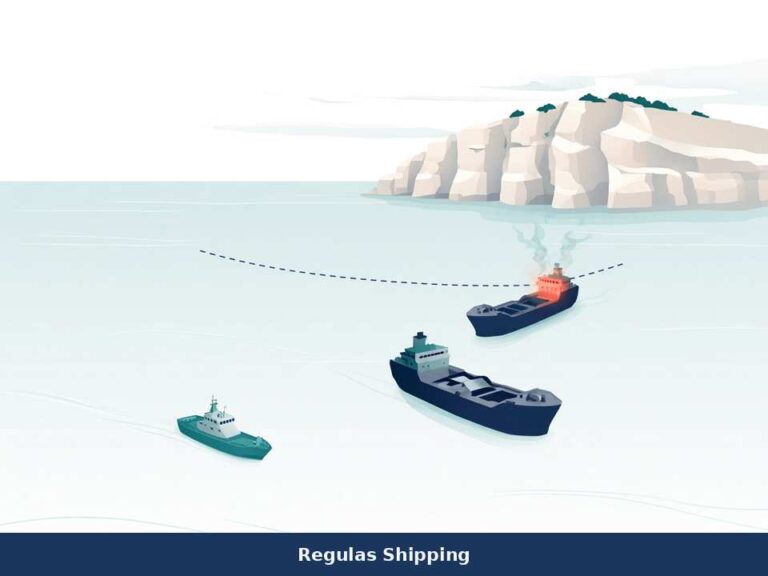
United Kingdom Maritime Trade Operations (UKMTO) said on Wednesday, 23 September, that a cargo vessel transiting the Strait of Hormuz had been struck by an unknown projectile at around 0630 UTC. The company security officer reported that the ship caught fire and was drifting without control. All crew were evacuated. UKMTO initially recorded two casualties and said no environmental impact had been reported. Authorities were investigating. The product is a new Hormuz hull file, not a re-issue of Monday’s unnamed inbound tanker (Warning 140-26) or the delayed outbound LPG debris report the same day.
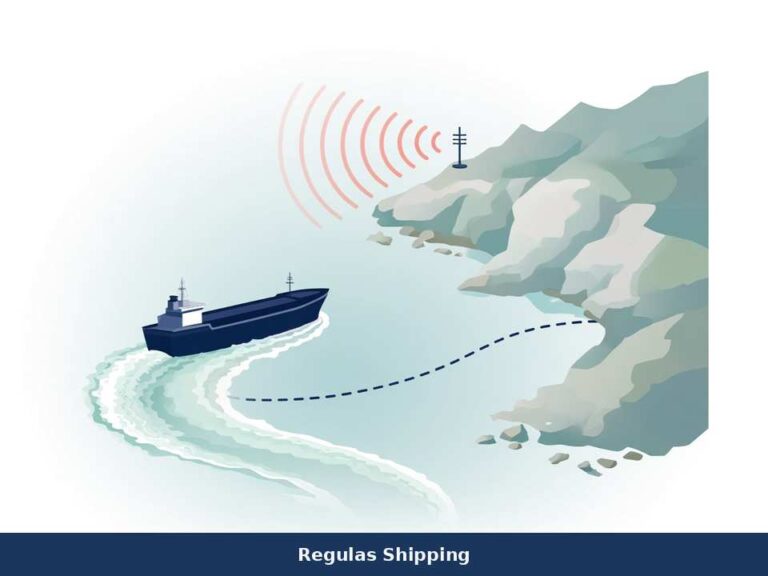
Oman’s Maritime Security Centre later placed the attack about 2.5 nautical miles from the Musandam Governorate, said the fire was in the engine room, and confirmed that a Royal Navy of Oman unit evacuated 27 surviving crew and provided medical care. One crew member was killed. India’s embassy in Muscat identified the dead seafarer as an Indian national and said it was coordinating with Omani authorities over the safety of 19 other Indian crew. The Forward Seamen’s Union of India (FSUI) named him as Suraj Yadav, 26, a wiper from Deoria in Uttar Pradesh. Industry reporting identified the ship as the Antigua and Barbuda-flagged Capesize bulk carrier Cape Dao (IMO 9219020).
Incident context
Cape Dao is a 2002-built, gearless Capesize of about 170,089 dwt, 84,448 gt and 289 metres length overall, MMSI 305017400, call sign V2C2017. Commercial and ISM management is listed as Peonies Shipmanagement FZE; the registered owner is ForthMarin Corp Ltd. Former names include Cape Qingdao, Bluemoon and Formosabulk Energy. FSUI said the ship was sailing from Mina Saqr in the United Arab Emirates toward India with 28 people on board, 20 of them Indian. India’s Directorate of Maritime Administration, as reported in the Indian press, said Yadav died of a head injury, that the attack occurred at about 0635 GMT, and that survivors were landed on a jetty in Oman. The same report said the Indian complement came from three RPSL manning agents: Keyline Maritime Services (17), NavSukh Marine (1) and Caspia Shipmanagement (2).
UKMTO described a single unknown projectile. FSUI said the hull was struck twice on the port side — once on the C-deck accommodation and once on the hull near the engine room — and used the word “torpedoes.” That union description has not been adopted in the UKMTO product. Operators should treat the official report as an unnamed-weapon projectile strike with an engine-room fire, a dead-ship drift and one fatality, and should not recast the casualty as a confirmed torpedo attack unless the flag, class or a later UKMTO update says so. Clearwater Dynamics, citing MICA Centre, later said one of the two initially reported casualties had died and that the engines were non-operational. No pollution figure has been published.
Wednesday’s file sits on a waterway that is still only a trickle of pre-war traffic and is still taking hits. UKMTO Warning 140-26 on Monday, 21 September, covered an inbound unnamed tanker struck by an unknown projectile, two crew with minor injuries, vessel under own power. A delayed Monday product described an outbound unnamed LPG tanker hit by debris from unknown projectiles, all crew safe, continuing to the next port. Industry secondaries later named those hulls as the Isle of Man LR Stephanie and the Liberia-flagged LPG carrier Al Maryah; UKMTO has not adopted those names in a public warning. IMO Secretary-General Arsenio Dominguez told CCC 12 on 16 September that the Secretariat had verified 80 Hormuz-theatre attacks since 28 February, with 22 seafarer deaths. Industry reporting this week citing the IMO tracker put the series at 83 confirmed incidents and 23 deaths before Wednesday. Cape Dao adds another named fatality. Indian press, citing the Directorate of Maritime Administration, said Yadav was the 11th Indian seafarer killed in the Hormuz series, across four Indian ships and 60 foreign-flagged vessels, with 12 injured in that count.
The diplomatic track in New York does not pause the projectile risk. A senior Iranian official told Reuters on Tuesday that Hormuz could reopen within seven days if Washington eased military pressure and lifted the blockade of Iranian ports; that remains a political statement, not a UKMTO, NAVAREA or IMO sailing window. CENTCOM has separately said it has redirected more than 100 commercial vessels under the Iran blockade and has assisted partner crude through the strait. None of that changes the fact that a dry-bulk Capesize bound for India was left on fire and adrift off Musandam on Wednesday morning.
Operational implications
A gearless 170,000 dwt Capesize that loses the engine room off Musandam is a salvage, towage and wreck-removal problem as well as a crew case. The ship was not a tanker, so the immediate oil-spill risk is lower than the recent Hormuz products and crude files, but a fire in the machinery space on a drifting hull still has to be treated as a live marine-casualty until class, the flag and the coastal state say otherwise. Owners and charterers need a condition report before anyone talks about a tow to an Omani or UAE port, a cargo survey, or a substitute stem. AIS history for this hull had pointed at Khor Fakkan earlier in September; the voyage narrative from Mina Saqr toward India means the casualty sits on the Gulf-of-Oman / Hormuz gateway, not inside a load-port berth.
The crew picture is the operational centre of the file. Twenty of 28 people on board were Indian. One is dead. Twenty-seven are ashore in Oman. That triggers flag, P&I, manning-agent, embassy and next-of-kin work in parallel: identification, medical care, statements, and repatriation of both the survivors and the deceased. FSUI has asked New Delhi for a naval presence, escorts and a 24-hour crisis team for Indian crews on Indian- and foreign-flag ships in Hormuz, the Gulf of Oman, the Red Sea and the Black Sea. That is a union demand, not an authorised escort programme. Operators with Indian ratings in the Gulf should assume families, unions and the embassy will ask for a written account of the voyage, the BMP/ISPS posture and the medical response, even when the ship is not Indian-flagged.
Commercially, a Capesize that cannot proceed is a cancelled or delayed cargo, a possible general-average discussion, and a war-risk claim on a hull that was already pricing Hormuz as a listed area. Counterparties will want to know whether the ship was on a CENTCOM-facilitated transit, an Iranian-route transit, or a commercial passage with AIS on or off. Public sources have not answered that. Until they do, charterers should not assume the hull was in a protected lane, and they should not treat Wednesday as evidence that dry-bulk ships are safer than tankers. Recent UKMTO notes have repeatedly pointed to the southern Omani side of the strait and to engine rooms as the typical point of impact. Cape Dao fits that pattern: Musandam, machinery space, crew off, ship adrift.
The casualty also lands beside a thin AIS picture. Reuters, citing Kpler, put visible Hormuz commodity transits at two ships on Monday and three exits on Tuesday, against a 10-day average in the mid-teens and a pre-war norm of about 125 large commercial vessels a day. Visible counts exclude AIS-off liftings. A Capesize that is hit and then goes dark or adrift will not show up as a “safe transit” in the next morning’s snapshot. Masters still have to treat UKMTO, JMIC and NAVAREA IX products as live. JMIC’s recent SEVERE posture — hostile action highly likely, UAV overflight, VHF hailing and surveillance — has not been withdrawn because one dry-bulk ship was evacuated.
What Operators Should Note
- Treat Cape Dao as a new named Hormuz file, not a continuation of Monday’s tanker warnings. UKMTO’s Wednesday product is a cargo vessel, unknown projectile, fire, adrift, crew evacuated, initially two casualties. Oman has confirmed one dead and 27 ashore. Do not merge it with Warning 140-26, the Monday LPG debris file, or the still-unadopted Stephanie / Al Maryah names.
- Keep the weapon description at “unknown projectile” unless the flag or UKMTO updates. FSUI’s two port-side impacts (C-deck accommodation and engine-room hull) are useful for damage-control planning. They are not a confirmed torpedo finding. Internal reports should match the master’s facts: time, position, number of impacts, fire location, propulsion status, pollution, and crew state.
- Plan for a dead-ship Capesize off Musandam, not a ship that limps to the next port. MICA Centre reported engines non-operational. That is a towage, salvage and possible wreck-removal case. Confirm class, P&I, hull war-risk and wreck-removal wording before committing to a destination port or a cargo survey.
- Start crew and manning-agent work immediately if you have Indian ratings in the theatre. Twenty of 28 people on this hull were Indian. Embassy, RPSL and next-of-kin coordination is already under way for this ship. Other owners should have a named contact, a next-of-kin pack and a medical-evacuation plan before the next Hormuz or Gulf of Oman transit, not after the first fatality on their own list.
- Do not read New York diplomacy or a low AIS count as a sailing window. Tuesday’s seven-day Hormuz reopen remark is a political condition, not a UKMTO or NAVAREA product. Two- and three-ship AIS days do not mean the threat has paused. Dry-bulk ships are not outside the target set.
- Brief engine-room and accommodation hits as the default case on the southern Omani side. Citadel plans, fire parties, and a reduced-power or abandon-ship exit toward Omani waters should be walked through before the TSS. If the main engine is lost, the next decision is evacuation and a coastal-state report, not an attempt to keep the voyage alive.
- Log and report in parallel. UKMTO, the flag, the DPA and, where relevant, the Indian embassy and manning agent should get the same facts. Secondaries will circulate a named hull and a union weapon description quickly. Internal records should not wait for those details to settle.
Regulas Shipping will keep monitoring UKMTO, Omani and Indian official products on the Cape Dao file and will update operators if the weapon assessment, pollution picture or salvage plan changes.